
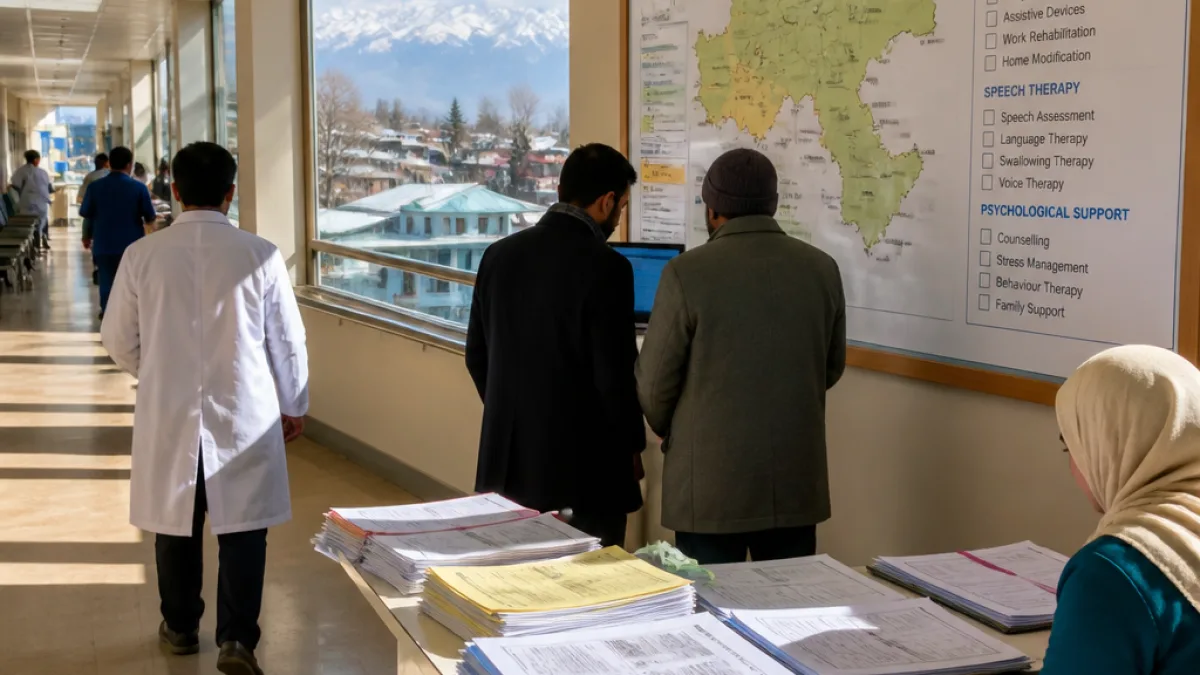
District administration begins pilot implementation in Srinagar
The Deputy Commissioner (DC) of Srinagar, Akshay Labroo, on Monday reviewed the preparedness for the Phase‑I rollout or pilot of the Rehabilitation & Socio‑Economic Reintegration Scheme for Drug Abuse Victims, 2026 at the Institute of Mental Health and Neurosciences (IMHANS) in Srinagar. The pilot is being coordinated by the Social Welfare Department and seeks to test a rehabilitation model before wider expansion across Jammu and Kashmir, the report said.
During the visit, the DC took stock of arrangements for the pilot in Srinagar district, assessing the availability of rehabilitation services, existing coordination mechanisms among concerned departments and institutions, and other operational measures intended to support effective implementation.
- Objective: Test the pilot model on the ground, identify operational gaps and refine Standard Operating Procedures (SOPs).
- Focus: Ensure recovery, rehabilitation and socio‑economic reintegration of beneficiaries into mainstream society.
- Coordination: Close collaboration among Social Welfare, health institutions and other concerned agencies to deliver seamless services.
The DC emphasised the need for a comprehensive strategy and directed departments to adopt a coordinated, outcome‑oriented approach to rehabilitation. In particular, he highlighted the importance of beneficiary registration and documentation of field experiences so that lessons from the pilot can inform adjustments prior to wider rollout.
“A holistic, coordinated and outcome‑oriented approach towards rehabilitation of drug abuse victims is necessary, with focused attention on their recovery, rehabilitation and socio‑economic reintegration into mainstream society,” the DC said, according to the report.
According to the account, Labroo also called for effective monitoring and regular assessment of rehabilitation interventions to ensure the pilot meets its objectives and that beneficiaries receive sustained support throughout the rehabilitation and reintegration process. He urged timely identification of implementation challenges and corrective measures based on documented field learnings.
Practical steps under review
The review at IMHANS covered several practical elements required for operationalising the pilot in Srinagar district. These included:
- Availability and capacity of rehabilitation services at the facility;
- Coordination mechanisms among District administration, Social Welfare Department, health institutions and other agencies;
- Procedures for registering affected persons and documenting case histories and field experiences;
- Monitoring and evaluation protocols to track outcomes and identify gaps for SOP refinement.
| Area | Purpose |
|---|---|
| Service Availability | Assess capacity to provide clinical and psychosocial support |
| Coordination | Ensure inter‑departmental delivery of rehabilitation and reintegration services |
| Documentation | Record field experiences and beneficiary data to refine SOPs |
| Monitoring | Measure outcomes and implement timely corrective actions |
The pilot is framed as a learning exercise to help the Social Welfare Department and partner institutions tailor the scheme for broader implementation across Jammu and Kashmir. By documenting operational challenges and field experiences, authorities aim to strengthen the standard procedures before launching the programme at scale.
Officials overseeing the pilot were directed to ensure seamless delivery of services to beneficiaries and maintain a sustained support framework during and after rehabilitation. The DC underlined that close coordination among all concerned departments and institutions is essential to achieve the intended objectives.
The review at IMHANS marks the commencement of a locally based testing phase for a scheme that has administrative and social implications across the Union Territory. The outcomes of the Srinagar pilot will be used to refine the model and guide the phased expansion of the programme, the report said.