Kozhikode, Aug 9: The Kerala Forest Department's vigilance unit arrested six persons and recovered an elephant tusk at Narikuni in Kozhikode district on Sunday, officials said. The piece of ivory is estimated to be worth around ₹1 crore, and inquiries are underway to establish whether the tusk was obtained illegally and the purpose behind the transaction, the officials added.
Operation followed a tip-off, officials say
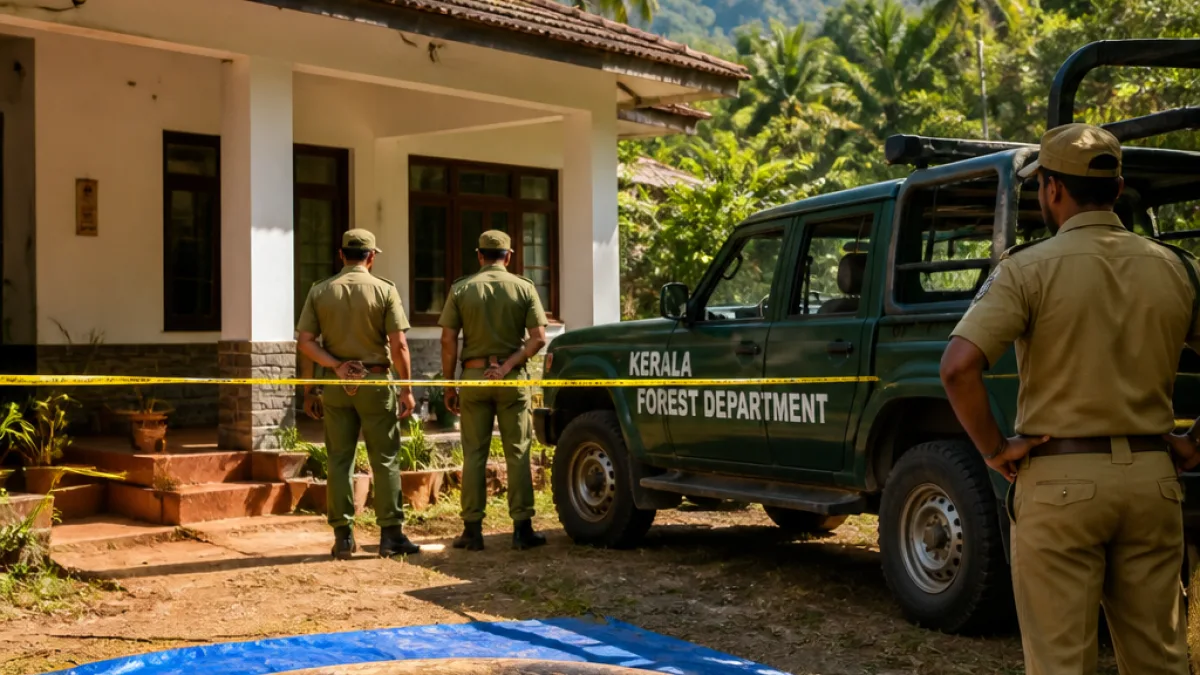
The arrests were made after the Kozhikode Forest Vigilance team acted on a tip-off and conducted a search at a house in Narikuni on Sunday afternoon, according to a statement circulated by officials and reported by PTI. The six persons — identified as Aseel and Muhammad Rihan (both from Palath in Kozhikode), Dinsad (Mangalapuram, Thiruvananthapuram), Vincent K V (Pampady, Kottayam), Pareed (Thamarassery, Kozhikode) and Sudheer (Palippuram, Thiruvananthapuram) — were allegedly present at the house to complete a sale or purchase of the tusk.
Investigation to determine origin and intended use
Forest Department sources said the accused are being interrogated to ascertain whether the ivory resulted from the hunting of an elephant and to determine for what purpose the tusk was being purchased. The probe will examine links to larger trafficking networks and whether any protected-species or anti-poaching laws have been violated.
- Seizure location: Narikuni, Kozhikode district
- Number arrested: Six
- Estimated value of tusk: ₹1 crore (approx.)
- Agencies involved: Kozhikode Forest Vigilance team
Legal and conservation context
India's wildlife protection laws strictly prohibit the hunting of elephants and the trade in ivory. Kerala has been taking enforcement action in recent years against illicit wildlife trafficking and timber smuggling, deploying vigilance teams and coordinating with police and forest range officers. Confiscations of ivory — whether whole tusks, cut pieces or worked items — frequently prompt forensic and legal procedures to track origin and network links.
Authorities will typically follow statutory procedures after such a seizure: register a case under the relevant sections of the Wildlife (Protection) Act, 1972, conduct forensic examination where possible, and seek intelligence on supply chains. Officials did not detail the specific legal sections invoked in Sunday’s action, but said the detained persons were being questioned as part of the ongoing inquiry, PTI reported.
Implications for enforcement in Kerala
Kerala's forests and adjoining rural landscapes have occasionally been implicated in wildlife crime and in the movement of contraband items. Recoveries like the Narikuni seizure underscore the continued risk to large mammals from illegal trade, and also place attention on monitoring of transit points and marketplaces where ivory might be moved or sold. The Forest Department's vigilance units operate both reactive and proactive patrols and often act on citizen or departmental intelligence to intercept suspected transactions.
| Item | Details |
|---|---|
| Recovered item | Elephant tusk |
| Estimated value | ₹1 crore (approx.) |
| Place of seizure | Narikuni, Kozhikode |
| Persons arrested | Aseel, Muhammad Rihan, Dinsad, Vincent K V, Pareed, Sudheer |
Forest department officials said the matter remains under investigation and that further legal action would depend on interrogation outcomes and forensic findings. PTI reported the development; details made public so far were limited to the names and home places of those detained and the broad outline of the operation.
Conservationists and law-enforcement agencies regard ivory trafficking as a trans-regional crime with cross-border demand dynamics. In Kerala, continued vigilance and inter-agency cooperation with police, customs and forensic units are central to disrupting such trades and bringing offenders to court.