NCW head cites steep prevalence, urges community action
Jalandhar: National Commission for Women (NCW) Chairperson Vijaya Rahatkar on Tuesday highlighted the rising burden of substance abuse in Jalandhar, saying the problem carries grave emotional, social and economic consequences for women and families and requires a comprehensive response focused on prevention, awareness and rehabilitation.
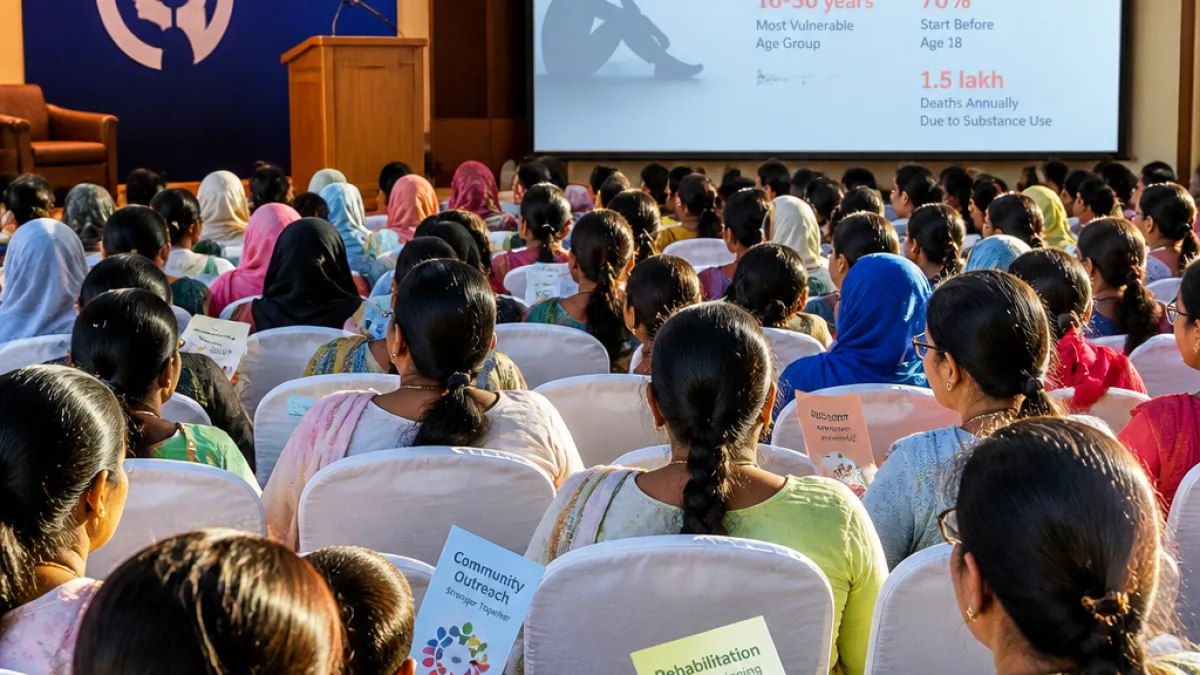
Speaking at a programme at the Red Cross Auditorium during her official visit to the city, Rahatkar called for greater involvement of communities, families and local institutions in tackling drug dependence. She underlined that responses must go beyond law enforcement to include sustained community engagement and accessible treatment services.
Local data show widespread use and heavy treatment load
Health officials from a Jalandhar de-addiction centre presented figures that depict a substantial local problem. A district Health Department study cited by officials found substance use, including alcohol, heroin and cannabis, among 45 per cent of the district population — a figure the officials said includes both women and children.
District-level treatment statistics further reflect the scale of demand on services:
- 350–400 admissions for de-addiction treatment every month
- 600–700 patients attending outpatient (OPD) clinics monthly
- 34 patients at the district methadone clinic
- About 19,000 patients registered with Opioid Agonist Treatment (OOAT) clinics
| Indicator | Figure |
|---|---|
| Estimated prevalence (district study) | 45% |
| Monthly de-addiction admissions | 350–400 |
| Monthly OPD visits | 600–700 |
| Methadone clinic patients | 34 |
| OOAT clinic registrations | 19,000 |
Women and children among the affected; emphasis on prevention
Rahatkar stressed that the human cost of substance abuse is frequently borne disproportionately by women and children. She urged district and civil society actors to scale up prevention and awareness initiatives and to ensure rehabilitation services are gender-sensitive and family-centred.
At a review meeting with senior district administration officials, the NCW chairperson also emphasised strict compliance with the Prevention of Sexual Harassment (POSH) Act, 2013, signalling attention to institutional safeguards alongside public-health measures.
Community-led models and youth engagement
To illustrate the potential of community interventions, Rahatkar cited the example of Vicharpur, a small tribal village in Madhya Pradesh that transformed its identity through youth engagement in sport. Once known for illegal liquor trade, the village adopted football as a constructive outlet and went on to produce multiple state- and national-level players.
“Vicharpur is now known as ‘Mini Brazil’,” Rahatkar said, presenting the village as a reminder of how sustained community participation and positive alternatives can deter substance abuse among young people.
She presented the Vicharpur case as a model for Jalandhar and urged the revival or strengthening of community sports and cultural programmes as part of a prevention strategy that reaches vulnerable youth.
Implications for Jalandhar's policy and services
The figures and the NCW’s intervention underline several policy imperatives for the district: expand outpatient and inpatient de-addiction capacity; strengthen OOAT and methadone services where necessary; design outreach targeting women and children; and support community-led, preventive programmes that provide alternatives to drug use.
Local civil society groups and health providers will be expected to coordinate with district officials to translate the NCW chairperson’s recommendations into concrete action plans. Given the large number of OOAT registrations and monthly treatment loads, administrators face an operational challenge in ensuring continuity of care and support for affected families across urban and rural pockets of the district.
Rahatkar’s visit has brought renewed public attention to substance abuse in Jalandhar and put a spotlight on the need for holistic, community-rooted solutions that protect women and children while expanding treatment and rehabilitation services for all.