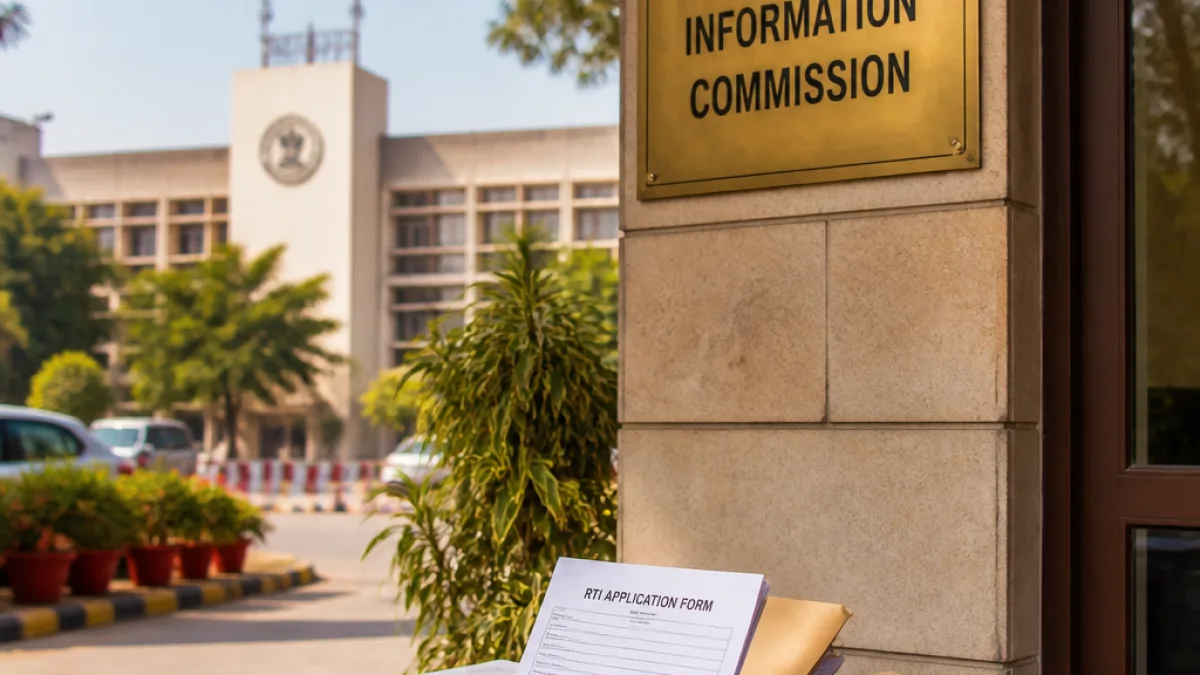
Chandigarh: The Punjab State Information Commission has held that private universities established through laws passed by the state legislature qualify as public authorities under the Right to Information (RTI) Act, 2005, a determination that will bring all 18 such institutions in Punjab within the transparency regime.
Background of the order
The order, issued on 14 August in a case concerning Akal University, Talwandi Sabo (Bathinda), directs the university to designate a public information officer (PIO) and a first appellate authority (FAA), and to publish the mandatory disclosures specified under the RTI law on its website. The commission’s chief information commissioner, Inderpal Singh, said the decision arises from the university having been founded by an Act enacted by the Punjab Legislature.
The matter originated from an appeal filed by Ramandeep Kumar, a former assistant professor in the physics department at Akal University, who sought salary slips for the period July 2015 to October 2021. Akal University had argued that it was not a public authority within the meaning of Section 2(h) of the RTI Act; the commission rejected that contention and applied the statutory definition that covers bodies constituted by state legislation.
What the ruling requires
By applying Section 2(h)(c) of the RTI Act, the commission clarified that private universities created by the state legislature must implement statutory transparency mechanisms. The order was made applicable to similar institutions across Punjab.
- Appointment of designated officers: Each university must name a PIO and an FAA to handle RTI applications and appeals respectively.
- Routine disclosures: Institutions must publish information required under the RTI Act on their official websites, including governance and financial details.
- Acceptance of RTI applications: Universities will be required to receive and respond to applications under the Act within stipulated timelines.
Practical implications for students, staff and researchers
The ruling is likely to affect multiple stakeholders in the higher education ecosystem. Students and prospective applicants will be able to seek admissions data, fee structures and scholarship information under RTI. Academic and non‑academic staff can request service records, salary particulars and other employment details. Journalists and researchers can obtain information on university governance, utilisation of funds and public appointments.
At present, only a subset of private universities in Punjab maintain dedicated RTI cells or post statutory disclosures voluntarily or following specific directions. This order standardises expectations and creates formal accountability channels for all such institutions created by the state legislature.
Next steps and hearing
The commission has listed the matter for further hearing on 14 October. Until then, affected universities will need to adopt internal mechanisms for receiving RTI applications and ensure required disclosures are visible on their websites. Failure to comply could invite further proceedings before the commission.
| Action required | Who | Immediate effect |
|---|---|---|
| Identify and notify PIO and FAA | Each private university established by state Act | Enables formal receipt and processing of RTI requests |
| Publish statutory disclosures online | University administration | Improves public access to governance and financial details |
| Respond to pending and future RTI applications | Designated PIOs | Brings transparency to administrative and academic records |
Wider context
The commission’s interpretation draws on the RTI Act’s inclusion of bodies constituted by state legislation in the definition of public authority. Legal experts and transparency advocates in Punjab have long argued that universities established through statutes carry public responsibilities because of state involvement in their creation, governance structures and regulatory oversight.
For students and employees, the order should ease access to information that is often essential for redressal of grievances, verification of entitlements and scrutiny of institutional decisions. Administrators will need to balance disclosure requirements with legitimate privacy and commercial confidentiality considerations recognised under the Act.
The decision affects 18 private universities in Punjab that were created by state laws; the commission’s clarification means these institutions must conform to the procedural and substantive transparency obligations that the RTI framework prescribes.
Further proceedings on 14 October will determine the detailed contours of compliance and any exemptions that universities might lawfully claim under the RTI Act.
Reporting from Chandigarh.