
New Delhi: The long‑running dispute between Punjab and Haryana over the Sutlej‑Yamuna Link (SYL) canal appeared to be edging towards a negotiated outcome on Wednesday, the Supreme Court was told as the two States signalled substantial progress in talks on the contentious water‑sharing issue.
Bench notes growing consensus
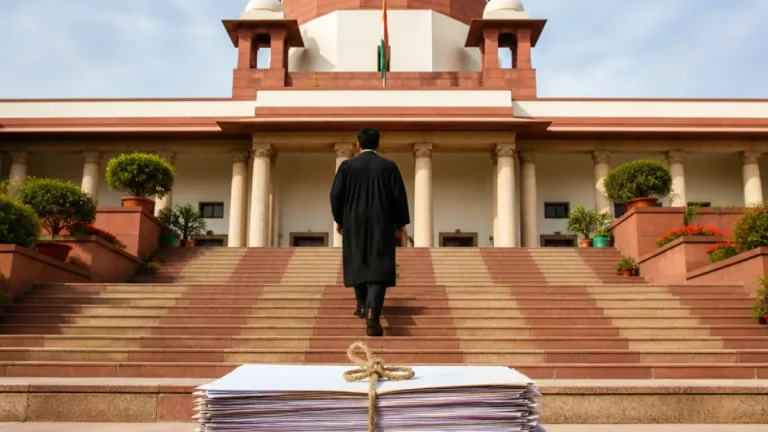
A Bench led by Chief Justice of India Surya Kant, with Justices Joymalya Bagchi and V. Mohana, heard the original suit filed by Haryana in 1996 seeking completion of the SYL canal. During the hearing, Attorney General R. Venkataramani informed the court that both States were increasingly working towards a common position and that Punjab had shown a greater willingness to engage in discussions.
Senior advocate Kapil Sibal also told the Bench that the inter‑State talks had recorded considerable movement. Taking note of these developments, CJI Surya Kant observed that greater openness in talks could unlock a resolution.
“Once the heart opens, the door also opens,”
The CJI's observation underlined the court’s readiness to give the States further time to pursue a negotiated settlement rather than immediately proceed with coercive judicial directives.
Roots of the dispute
The SYL controversy traces back to the reorganisation of Punjab in 1966, when Haryana was carved out and sought its allocated share of Ravi‑Beas waters through the proposed canal. Punjab, however, has consistently resisted transferring what it regards as scarce water resources, arguing it does not possess surplus water to spare.
In 1981, Punjab, Haryana and Rajasthan entered into a water‑sharing arrangement envisaging completion of the SYL within two years. Construction stalled amid intense resistance and violent protests. The Supreme Court directed Punjab to complete the canal in 2002. Punjab then enacted the Punjab Termination of Agreements Act, 2004 to exit the 1981 arrangement; the apex court struck that Act down in November 2016, holding that Punjab could not unilaterally abrogate the inter‑state agreement.
Why this matters for Punjab's farmers
For Punjab's agrarian communities, the SYL issue is not merely a legal dispute but a question of water security and irrigation planning. Completion of the canal would reallocate water flows between riparian states, potentially affecting cropping patterns, groundwater dependence and tubewell use. Any negotiated settlement will have to reconcile Haryana's demand for assured surface water with Punjab's insistence on preserving supplies for its farmers.
What the court allowed
The Bench, noting the progress reported by the Attorney General and senior counsel, signalled it would allow the parties further opportunity to pursue a negotiated settlement. No fresh judicial order was pronounced on Wednesday; the matter remains pending before the Supreme Court.
Timeline of major events
| Year | Event |
|---|---|
| 1966 | Reorganisation of Punjab; Haryana carved out; water sharing dispute begins |
| 1981 | Tripartite water‑sharing arrangement signed; SYL to be completed within two years |
| 2002 | Supreme Court directs Punjab to complete the canal |
| 2004 | Punjab enacts Termination of Agreements Act to withdraw from pact |
| 2016 | Supreme Court holds Punjab cannot unilaterally resile; 2004 Act declared unconstitutional |
| 2026 | Court records that States are making significant progress towards an amicable settlement |
Implications and the road ahead
- Negotiated settlement: If talks succeed, the dispute could be resolved without further escalation to enforcement proceedings; terms will need to balance allocations and mechanisms for implementation.
- Political sensitivities: Any agreement will carry heavy political considerations in Punjab where water issues are deeply emotive and linked to farmers’ livelihoods and regional identity.
- Legal aftermath: Even a negotiated understanding may require legal scaffolding to ensure compliance and prevent future disputes.
While the precise contours of the ongoing inter‑state discussions were not disclosed in court, the recorded shift towards dialogue represents a notable development in a dispute that has shaped Punjab's water politics for six decades. The Supreme Court's willingness to allow time for talks reflects a preference for a consensual solution to a technically complex and politically charged conflict.
The matter remains under the court’s consideration and will be listed for further hearing in due course.