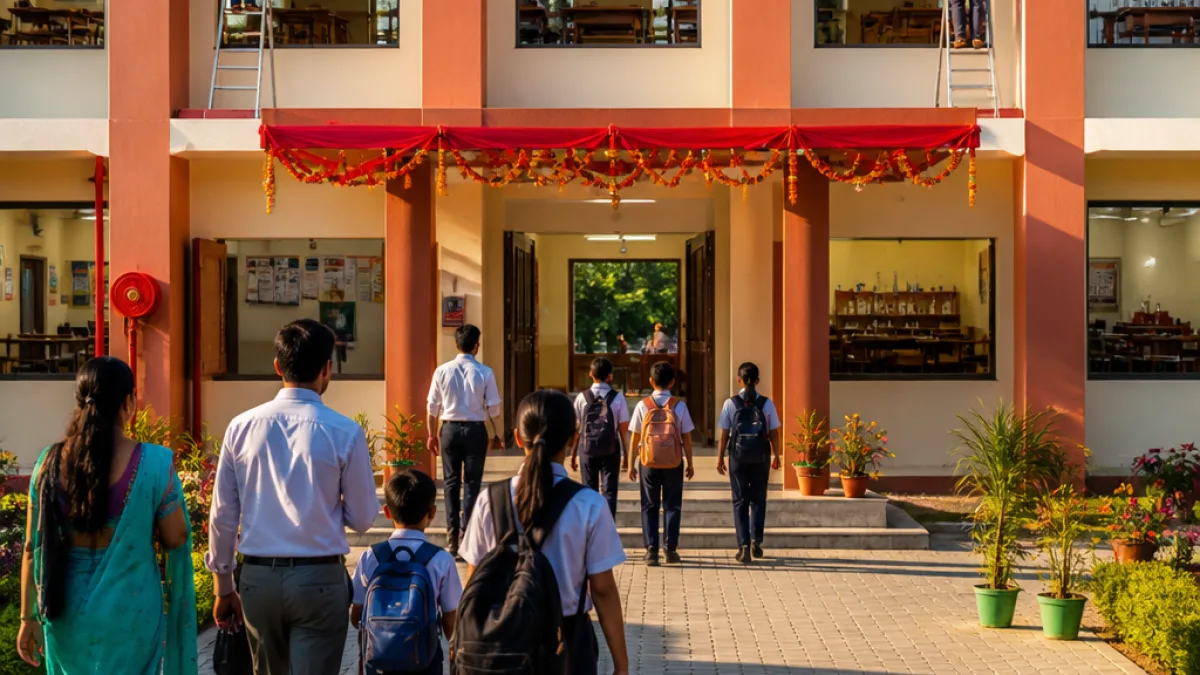
Chandigarh: Punjab Education Minister Harjot Singh Bains on Tuesday said the state government has invested ₹2,300 crore in a comprehensive school-reform programme that, he asserted, has led to a reversal of enrolment from private to government schools and large-scale improvements in basic infrastructure.
Government claims wide infrastructural gains
Presenting a four-and-a-half-year status report on school education, Bains said 3.64 lakh students have moved from private to government schools since 2022, which the minister described as an index of renewed public confidence in government schooling. The figures were reported by PTI on Tuesday.
"AAP national convenor Arvind Kejriwal and CM Bhagwant Singh Mann went to every village and city and asked for one chance to fix Punjab’s government schools. The people of Punjab showed their progressive mindset by giving 92 seats to the AAP on this very narrative. We honoured that trust," Bains said, according to the report.
In outlining the scale of improvements, the minister listed the following headline achievements: construction of 13,920 new toilets; distribution of 2 lakh desks; construction of over 9,000 new classrooms and laboratories; installation of more than 10,000 interactive panels; and upgrading of 5,012 schools with advanced computer labs. He also said all government schools in Punjab now have Wi-Fi and that 99.9 percent of schools have boundary walls.
Why this matters for Punjab’s students and families
The minister contrasted these efforts with deficiencies he said were inherited in 2022: thousands of schools without boundary walls, more than 5,000 schools without functional toilets, about 4 lakh children sitting on the floor, 500 schools lacking drinking water and significant delays in textbook delivery. The reported infrastructure push aims to reverse those conditions and improve classroom learning environments across rural and urban Punjab.
For many farming and rural households, the condition of local government schools is a key factor in education decisions. Improved infrastructure, availability of desks, toilets and clean drinking water can reduce the need for parents to pay private school fees or send children to distant towns.
Numbers at a glance
| Metric | Reported figure |
|---|---|
| Total investment | ₹2,300 crore |
| Students shifted to govt schools since 2022 | 3.64 lakh |
| New toilets constructed | 13,920 |
| Desks distributed | 2 lakh |
| New classrooms and labs | 9,000+ |
| Interactive panels installed | 10,000+ |
Implementation and questions ahead
While the headline numbers indicate intensive spending and upgrades, several practical questions remain for parents, school management committees and teachers tasked with sustaining these gains. These include the quality and maintenance of the new facilities, teacher recruitment and training to use interactive panels and computer labs effectively, and reliable internet provision in rural habitations where intermittent connectivity is common.
Local panchayats and school management committees will play a central role in upkeep. For many gram panchayats, ensuring running water, sanitation maintenance and timely repair of furniture will determine whether the capital investment translates into a lasting improvement in learning conditions.
What parents and communities should note
- Parents considering shifting children back to government schools may seek information from cluster resource centres and district education offices about specific upgrades at their local schools.
- School management committees should obtain details on allocations and timelines for maintenance budgets to plan for upkeep of new toilets, desks and digital equipment.
- Teachers and headteachers will require training modules and support to integrate interactive panels and computer labs into everyday lesson planning.
The minister’s report frames the reform drive as the delivery of an electoral promise by the state government. Independent verification of enrolment shifts, the operational status of facilities and the long-term learning outcomes will be needed to assess the full impact of the claimed ₹2,300 crore investment.
Reported by PTI and presented by the state education minister in Chandigarh, these figures mark a significant pledge by the Punjab government to strengthen public schooling across the state.