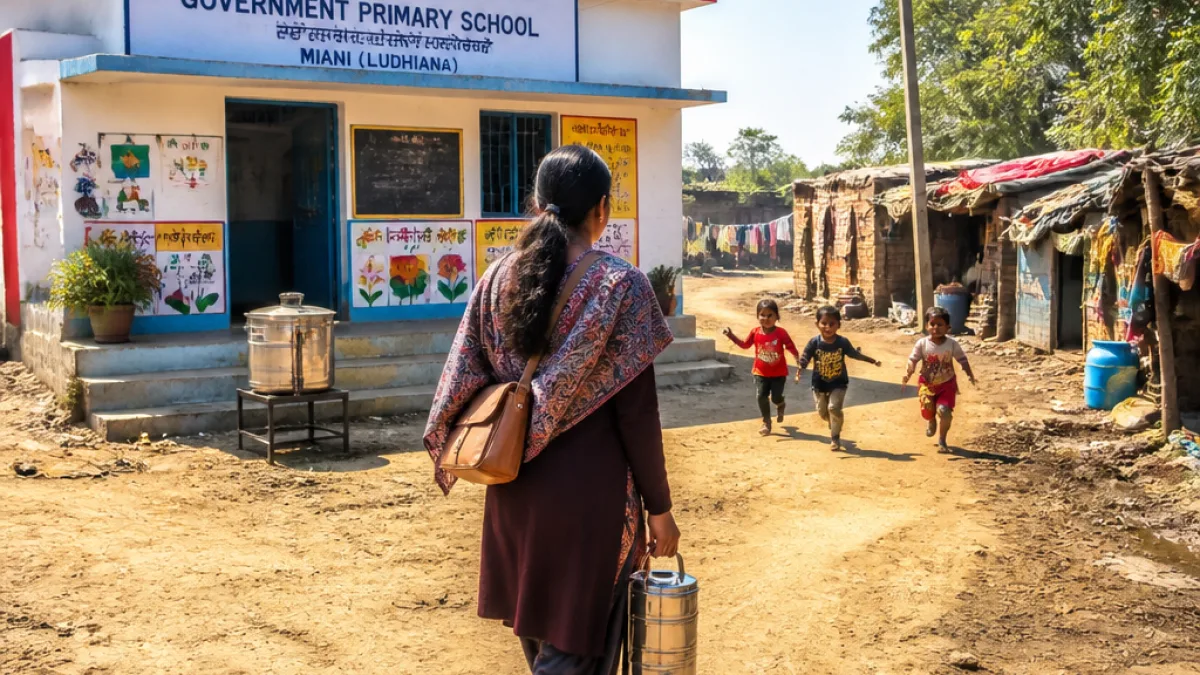
Single-teacher school in Miani struggles to keep children in class
In Miani village near Ludhiana, a lone teacher at the Government Primary School has adopted an unusual but pragmatic method to boost attendance: she walks from house to house to bring absent pupils to class. The Tribune reported that the school, which caters to children from several migrant labour families, has 37 students on its rolls and has been a single-teacher institution for several years.
"For the lone teacher posted at the school, it can also mean stepping out of the classroom and going door-to-door to bring children to school." — The Tribune
The teacher, identified in the report as Jasvir Kaur, manages all academic and administrative duties by herself — from teaching multiple grades simultaneously to maintaining school records and running the mid-day meal scheme. The situation highlights operational constraints in single-teacher schools that are common in rural pockets around Ludhiana.
Why pupils stay away: migration and livelihood pressures
According to the report, a majority of children enrolled at the Miani primary school belong to families that have migrated from other states in search of work and are primarily employed as daily-wage labourers. With parents often out looking for work, regular school attendance becomes difficult to enforce.
- Migrant labour households: Frequent movement and parents’ long work hours reduce supervision and follow‑up on children’s schooling.
- Single-teacher dynamics: One teacher must teach different grades, complete administrative tasks and ensure the midday meal — stretching resources and time.
- Attendance drives: Personal outreach by the teacher — including home visits and reminders about the mid-day meal — is used to persuade children to attend.
The mid-day meal appears to play a practical role in drawing children to the classroom. The report says the teacher often entices pupils by speaking about that day’s menu, using the scheme not only as a nutritional intervention but also as an incentive to improve turnout.
Administrative burden and local education outcomes
The combined burden of instruction and administration in a single-teacher set-up can affect both classroom quality and record-keeping. Managing multiple classes at once requires constant lesson planning and differentiated attention, while attendance tracking and liaison with education officials add to the teacher’s workload.
| Item | Detail |
|---|---|
| School | Government Primary School, Miani (near Ludhiana) |
| Enrolment | 37 students |
| Teaching staff | One teacher (single-teacher school) |
Education experts and local officials have long cautioned that single-teacher schools need targeted support — from periodic teacher assistants to stronger community outreach — to prevent learning gaps and dropouts, especially in areas with migrant populations. The report underlines a grassroots response from the teacher herself, stepping beyond classroom duties to keep the school functioning and children enrolled.
For Ludhiana’s rural and peri-urban communities, the Miani school’s experience is instructive. It shows how frontline teachers often compensate for systemic shortfalls through individual initiative. At the same time, sustained improvement in attendance and learning outcomes will require administrative attention to staffing, monitoring of migrant-child enrolment patterns, and community engagement measures that go beyond the goodwill of a single teacher.
Efforts such as household tracking, flexible timing where feasible for children of migratory families, and stronger coordination with anganwadis and local labour groups may help reduce absenteeism. The Tribune report presents a picture of dedication at the school level, but also underlines the larger policy challenge of delivering consistent education services in areas with mobile labour populations.