CM outlines twin focus on heritage conservation and modern infrastructure
Lucknow is being positioned as a city that will retain its cultural heritage while expanding modern infrastructure and defence-related manufacturing, Uttar Pradesh Chief Minister Yogi Adityanath said on Sunday, announcing a government target to fully clean the Gomti River by the end of this year.
Addressing an event in the city, the Chief Minister described Lucknow as a place with both "narrow lanes" and contemporary urban amenities such as smart roads and routes developed under the CM Grid scheme. He also referred to an outer ring road and compared it to the Kisan Path, asserting these projects reflect a balance between preserving traditional quarters and expanding modern connectivity.
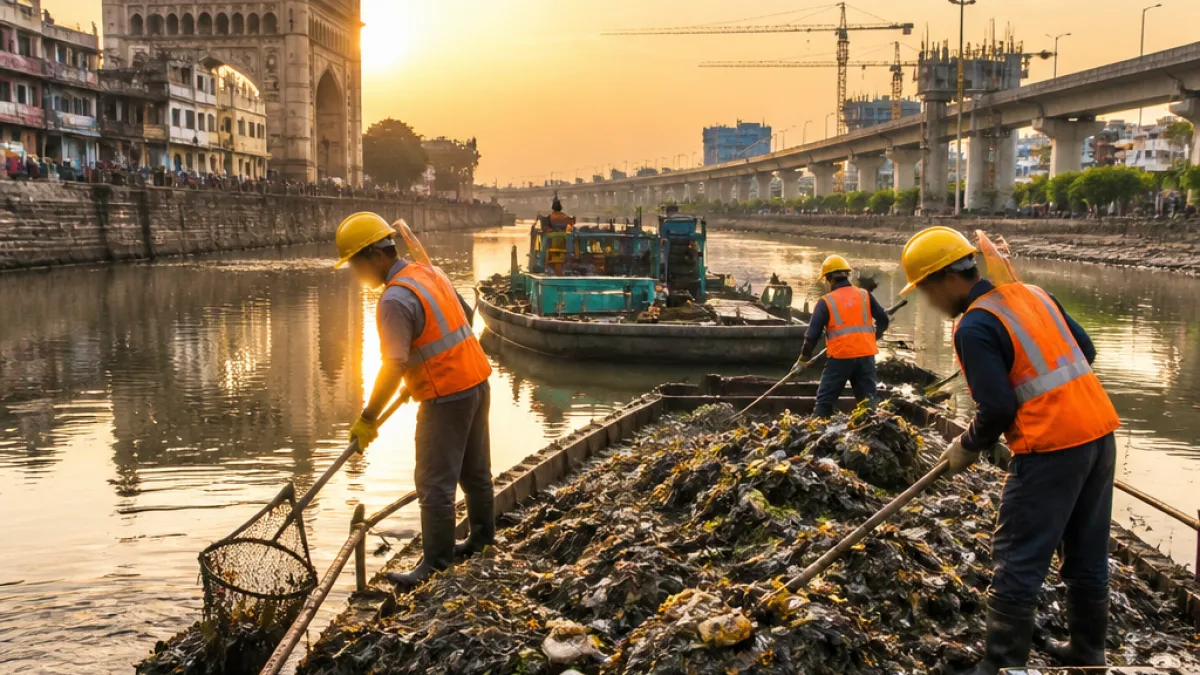
"We are on track to fully clean the Gomti River by the end of this year," the Chief Minister said, adding that the effort is being carried out on a "war footing" with cooperation from the Central Command.
The Chief Minister linked the city's traditional identity — including its celebrated Chikan embroidery and culinary heritage — with recent recognition that gives Lucknow a wider cultural profile. He also highlighted local defence production, saying the city has emerged as a centre for technologies such as the BrahMos missile, framing these developments as contributing to national self-reliance.
Defence Minister and Lucknow MP Rajnath Singh, who was present at the function, praised the pace of development in Lucknow and Uttar Pradesh, according to event reports. He attributed the city's progress to the state government's initiatives and leadership.
What the announcements mean for residents
If the Gomti cleanup target is met by year-end, residents could see visible changes in riverside sanitation, water quality and urban landscape management. The government’s commitment to a timeline signals intensified actions across multiple departments, but officials will have to surmount long-standing challenges including sewage inflows, encroachments and coordination between municipal and central agencies.
Improvements to road networks and the completion of ring roads aim to ease traffic congestion and improve access to peripheral areas. The mention of defence manufacturing and advanced technology units expanding in the city implies continued industrial and employment focus that could affect urban land use and local labour markets.
- Infrastructure: expansion of smart roads, CM Grid projects and outer ring road.
- Environment: target to clean the Gomti River by the end of the year, described as a "war footing" effort.
- Industry: development of defence technology manufacturing, including reference to BrahMos.
- Heritage: preservation and promotion of Chikan craft and culinary status.
| Area | Claim / Focus |
|---|---|
| River | Complete Gomti cleanup by year-end |
| Roads | Smart roads, CM Grid, outer ring road expansion |
| Industry | Defence technologies including BrahMos |
| Cultural | Promotion of Chikan embroidery and culinary heritage |
Officials in charge of the Gomti rejuvenation programme have, in earlier phases, worked on de-silting, sewer diversion and the construction of sewage treatment plants. The Chief Minister’s renewed timeline will require intensified work on remaining gaps: bringing all sewage connections to treatment facilities, preventing industrial effluent discharge, and resolving encroachments along the riverbank that hinder restoration. The reported involvement of Central Command, as mentioned by the Chief Minister, points to inter-agency participation in operations.
Local residents and civil society groups who have followed the Gomti project have in the past called for greater transparency on milestones and independent water-quality testing. Meeting the stated deadline will likely invite scrutiny from environmental groups, municipal watchdogs and the media to verify outcomes against the promise.
On the economic front, references to defence production such as BrahMos underline the state government’s emphasis on attracting strategic manufacturing to the region. Expansion in this sector may create jobs but will also necessitate urban planning to accommodate worker housing, supply chains and transport corridors.
Rajnath Singh’s public praise for the state government's development agenda reinforces political support for the projects in Lucknow. For residents, the developments combine immediate civic concerns — cleaner river, better roads — with longer-term questions about growth, land use and conservation of the city’s historic character.
Implementation and independent verification will determine whether the announced targets translate into tangible improvements for Lucknow's population in the months ahead.