Lieutenant Governor addresses youth at Tagore Hall
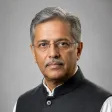
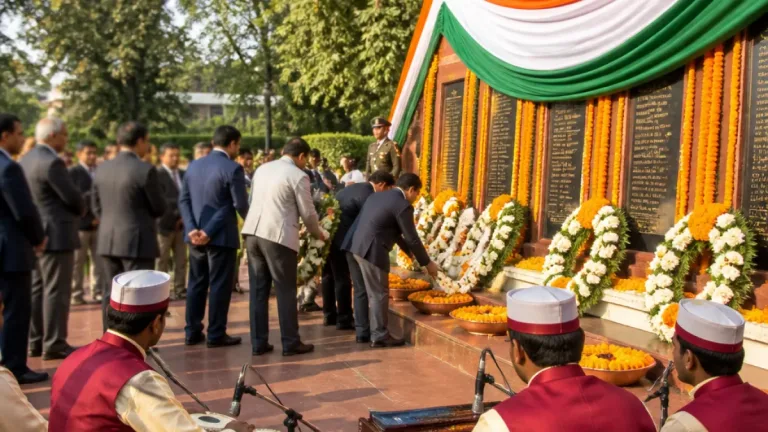
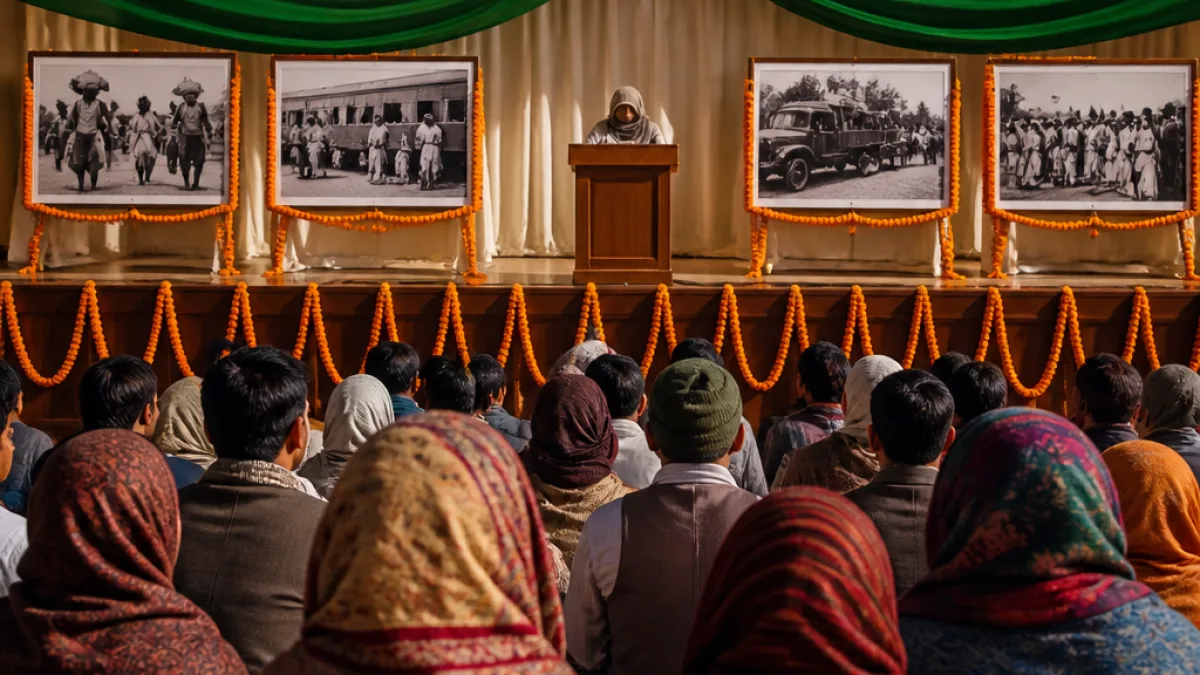
Srinagar, Aug 14: Lieutenant Governor Manoj Sinha on Friday urged the youth of Jammu and Kashmir to ensure that the mistakes of the past are not repeated, asking them to "build bridges of trust" where divisions once existed. The remarks were made during the observance of Partition Horrors Remembrance Day at Tagore Hall, Srinagar, a ceremony marked by collective remembrance and calls for national unity.
The Lieutenant Governor paid tribute to those who suffered in the partition of 1947 and described their sacrifice as an enduring element of the nation's collective memory. He said the wound of partition remains a lingering pain in India's conscience and must be remembered with honesty and sensitivity.
"Decades after the partition, their sacrifice reminds us that the wound remains unhealed, lingering as a generational pain in India's collective soul," the Lieutenant Governor said.
Sinha reiterated that commemorating the victims is a moral duty and that preserving their stories is essential to national consciousness. He urged people across Jammu and Kashmir to treat the day as an occasion for introspection and a renewed commitment to peace, harmony and unity.
Call for inclusive progress and social cohesion
Addressing specific groups in the audience, the Lieutenant Governor called on youth, farmers, workers and women to contribute to a "Viksit Bharat" that is inclusive and forward-looking. He praised citizens who rebuilt their lives after the upheaval and said their resilience had enriched India's social and cultural fabric.
Officials present at the function described the occasion as both solemn and instructive. According to the programme notes, the observance included moments of silence and references to preserving the memories of those who lost their lives or were displaced during partition.
Local implications and context
The observance in Srinagar comes amid ongoing efforts by the administration to emphasise narratives of national integration and social harmony in Jammu and Kashmir. The Lieutenant Governor's appeal to youth mirrors government messaging that stresses development and unity as responses to historical grievances and communal divisions.
While the day's primary focus was memorialisation, officials said the event was also intended to foster dialogue on building trust across communities and reinforcing commitments to non-violence and co-existence.
Why the day matters
Partition Horrors Remembrance Day is observed to remember the mass displacement and suffering that followed the 1947 partition of India. For Jammu and Kashmir, a region profoundly affected by partition-era upheavals and later conflicts, such observances carry particular resonance for families and communities who still recount the impact of those years.
- Event: Partition Horrors Remembrance Day observance
- Venue: Tagore Hall, Srinagar
- Date: Aug 14
- Main speaker: Lieutenant Governor Manoj Sinha
| Aspect | Detail |
|---|---|
| Theme | Remembrance and national unity |
| Primary appeal | Build bridges of trust; inclusive progress |
| Target groups | Youth, farmers, workers, women |
Speakers at the function emphasised that memory must be preserved with "complete truthfulness, honesty, and utmost sensitivity," and that the sacrifices of those affected by partition should remain part of the national narrative so they are neither forgotten nor misrepresented.
Local civil society groups and attendees said the observance offered an opportunity to reflect on shared histories and to promote reconciliation. Organisers noted that public commemoration can help younger generations understand the human cost of communal division and the importance of peaceful coexistence.
The Lieutenant Governor's remarks formed part of a broader administrative emphasis on values of unity and development across Jammu and Kashmir. By addressing young people directly, the message sought to align historical remembrance with present-day efforts to foster social cohesion and economic progress in the Union Territory.
Officials at the ceremony underlined that remembrance is intended not to politicise history but to ensure that the experiences of victims and survivors are recorded accurately and treated with the dignity they deserve.
As the region continues to navigate its complex past and present, events such as the Tagore Hall observance aim to keep communal memory alive while encouraging a focus on constructive, inclusive development.