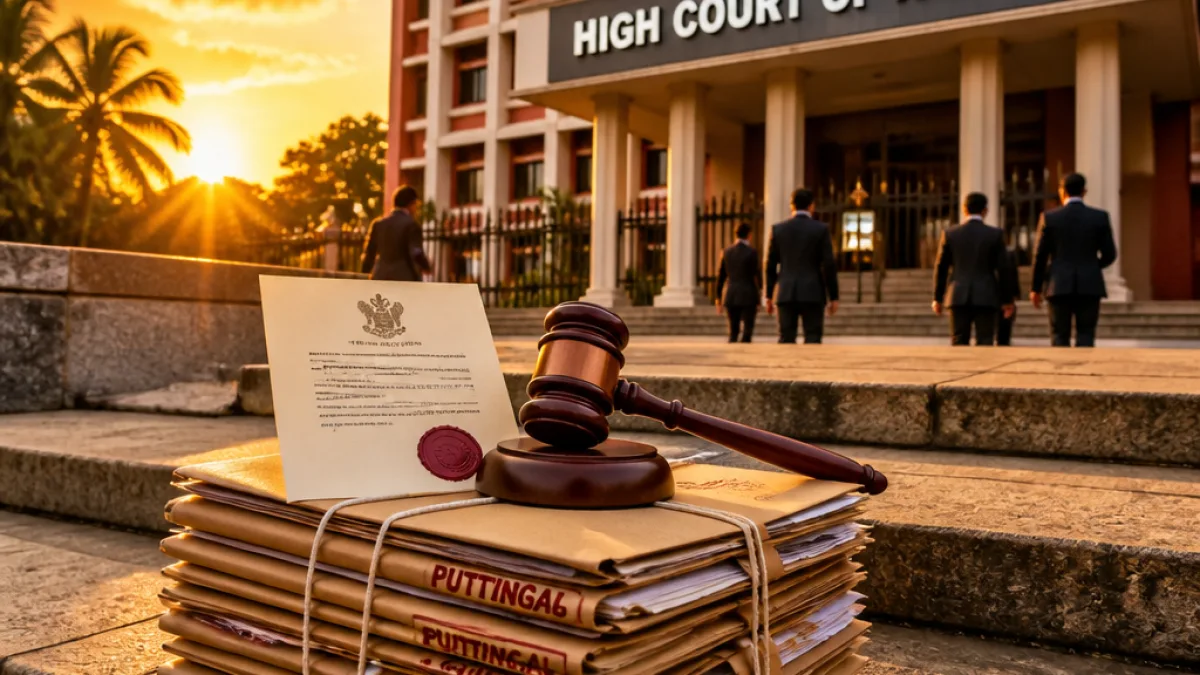
The Kerala High Court on Tuesday stayed the ongoing trial in the 2016 Puttingal Devi Temple fireworks blast case until September 14, after the former special public prosecutor challenged the state government's decision to replace him midway through proceedings, court records show.
Background of the petition
The interim order was passed by Justice G. Gireesh on a petition filed by K. P. Jabbar, who had been appointed by the state government as the special public prosecutor to conduct the prosecution in the case that arose from the April 2016 catastrophe at Paravoor, Kollam district. The government recently issued a notification appointing G. Subhadevan as the new special public prosecutor, prompting Jabbar to approach the High Court seeking a direction permitting him to continue and a stay on the impugned notification.
During the hearing, the additional public prosecutor sought time to file a statement in the petition. The bench granted time and issued the interim stay, restraining the operation of the government's notification until the next date of hearing, the bench record indicates.
Legal and procedural effect
The stay effectively suspends the trial in the additional sessions court, Kollam, where proceedings in the Puttingal case have been ongoing. The stay preserves the status quo with regard to the office of the special public prosecutor until the High Court takes up the question of whether the government could lawfully replace the counsel tasked with conducting the state's prosecution in the matter.
- Interim stay: Trial before the additional sessions court, Kollam, stayed until 14 September.
- Parties involved: Petitioner K. P. Jabbar (former special public prosecutor); respondent G. Subhadevan (newly appointed special public prosecutor).
- Bench: Justice G. Gireesh issued the interim order.
- Next step: Additional time granted for filing of statement; matter listed again on 14 September.
Case history and public interest
The fireworks blast at the Puttingal Devi Temple in Paravoor, Kollam, in April 2016 was one of Kerala's worst public-safety disasters in recent years. The incident led to more than 100 fatalities and extensive injuries and damage to property, and it prompted multiple investigations and criminal proceedings against organisers and others implicated in alleged breaches of safety norms.
Because of the scale of the tragedy, prosecutorial continuity and the independence of the state's legal representation have been matters of intense public and legal scrutiny. The petition challenges the legality of the executive's decision to replace a special public prosecutor who had been conducting the trial, raising questions about separation of roles and the appropriate stage at which such changes may be effected without prejudicing the case.
Implications for victims and trial timetable
The court's interim direction pauses further trial activity and may lead to a rescheduling of hearings already on the calendar. For victims and families who have followed the matter for years, the stay prolongs the adjudication process. At the same time, it allows the High Court to examine whether the substitution of the prosecutor was procedurally valid and whether it could impact the fairness of the proceedings.
| Item | Detail |
|---|---|
| Original incident | Puttingal Devi Temple fireworks blast, April 2016 |
| Casualties | More than 100 people killed |
| Current petitioner | K. P. Jabbar (former special public prosecutor) |
| New appointee | G. Subhadevan |
| Next High Court hearing | 14 September |
What to expect next
On 14 September, the High Court will consider the rival contentions, including the state's rationale for appointing a new prosecutor and the petitioner's submissions regarding the propriety of his removal. The court will also decide whether the substitute appointment affects the trial's continued fairness and integrity. Depending on the court's ruling, the trial could either resume before the additional sessions court or be delayed further pending determination of the challenge.
The interim stay is procedural in nature and does not decide the larger issues of criminal liability arising from the 2016 blast. Observers of the case note that matters concerning prosecutorial appointments and substitutions occasionally require judicial scrutiny to ensure that prosecutorial changes do not compromise the administration of justice, particularly in high-profile, long-running cases with multiple victims and complex evidence.
The matter was reported in court records and publicly available hearing notes on Tuesday.