Centre committee studies Rohingya settlements and Pandit migrant colonies in Jammu
A four-member committee constituted by the Union government to study demographic changes in border States carried out field visits in Jammu on Tuesday, inspecting Rohingya settlements, Kashmiri Pandit migrant colonies and other neighbourhoods, officials said.
The panel, headed by Justice (retd) Prabhakar Navlekar, arrived in Jammu on Monday for a three-day tour to gather information and hold consultations with government functionaries, community representatives and residents, according to officials. It was constituted in May to examine demographic changes in different parts of the country and to suggest measures, officials added.
"The committee has been tasked with suggesting measures to address these changes," officials said.
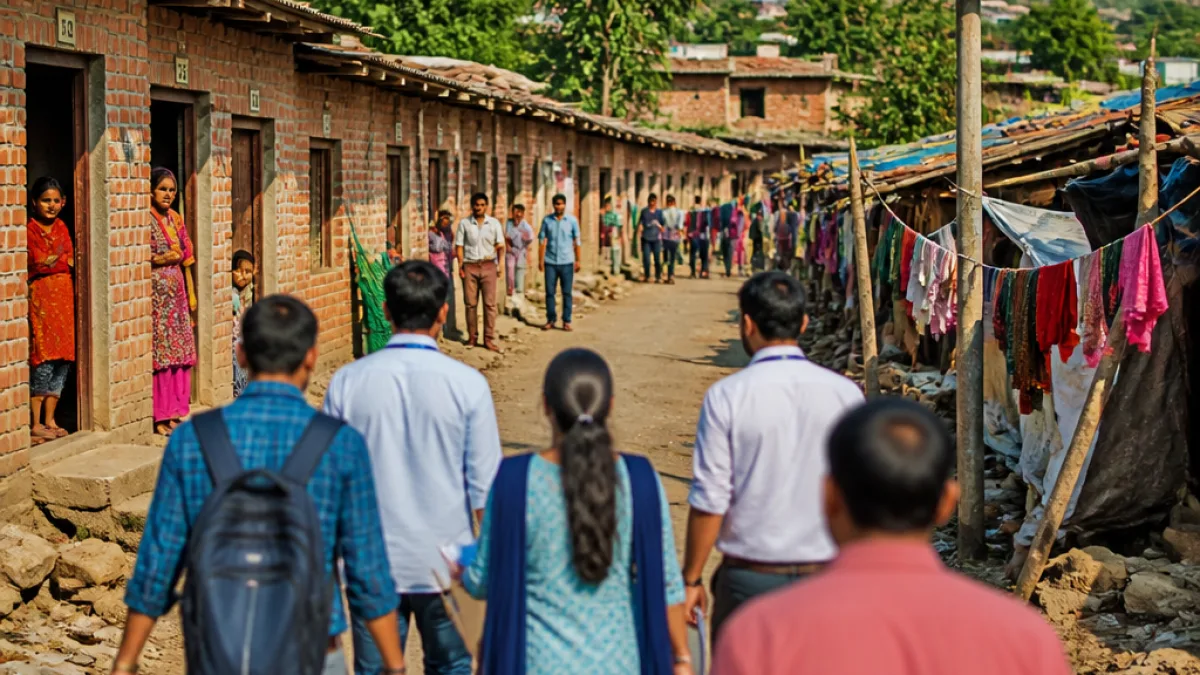
During the Jammu visit the delegation inspected Jagti township, described as the largest designated satellite settlement for displaced Kashmiri Pandits, and met representatives there to record grievances and collect background details, officials reported. The team also visited a slum in Narwal that houses Rohingya immigrants and interacted with community figures and local leaders.
Officials cited available figures to illustrate demographic shifts in the Valley and the wider region. They said the Hindu population in the Kashmir Valley stood at 3.96 per cent in 1981 — the last census before the eruption of militancy — and had fallen to 2.45 per cent in the 2011 census. The 2011 figure, officials noted, comprised mostly non-Pandit Hindus since a large number of Kashmiri Pandits had migrated to Jammu and other places during the militancy years.
| Year | Hindu population in Kashmir Valley |
|---|---|
| 1981 | 3.96% |
| 2011 | 2.45% |
Officials said there are roughly 13,000 Rohingya immigrants in the region and that Gorkha communities are present in the thousands. Unlike Gorkhas, whose ancestors served in the Dogra army and who are seen as long-standing residents, the Rohingya presence has been a point of contention among sections of the Jammu population, officials reported.
Since 2021, authorities have detained hundreds of Rohingya men, women and children at a holding centre inside the Kathua sub-jail, officials said. The committee is expected to examine such law-and-order and humanitarian aspects as part of its mandate.
Local context and implications
Jammu has a long history as a refuge for displaced communities; waves of migrants over decades have included Hindus from Pakistan-occupied Kashmir and Pakistan, as well as Kashmiri Pandits, officials noted. That influx has left an imprint on the city’s demographic profile and its neighbourhoods.
Officials said the committee held consultations with senior government functionaries during the visit and will continue its ground-level interactions over the three-day trip. The panel’s final recommendations to the Union government are expected to address perceived demographic changes arising from illegal immigration and other factors, officials added.
- Panel led by Justice (retd) Prabhakar Navlekar on a three-day Jammu visit.
- Visited Jagti township and Narwal slum; met community representatives.
- Officials highlighted 1981 and 2011 census figures and the presence of 13,000 Rohingya in the region.
The committee’s work in Jammu is part of a wider exercise across border States. Officials said it aims to combine statistical analysis with field observations and stakeholder consultations before formulating any recommendations to address shifting demographic patterns.