The 50th anniversary of the 1969 Woodstock festival is being marked this summer with a new documentary that returns attention to the three days in August that have come to symbolise a generation. The film, produced for the AMERICAN EXPERIENCE series and airing on KPBS, shifts the perspective from performers on stage to the thousands of people who made the event — and the moment — significant.
More than a concert: voices from the crowd
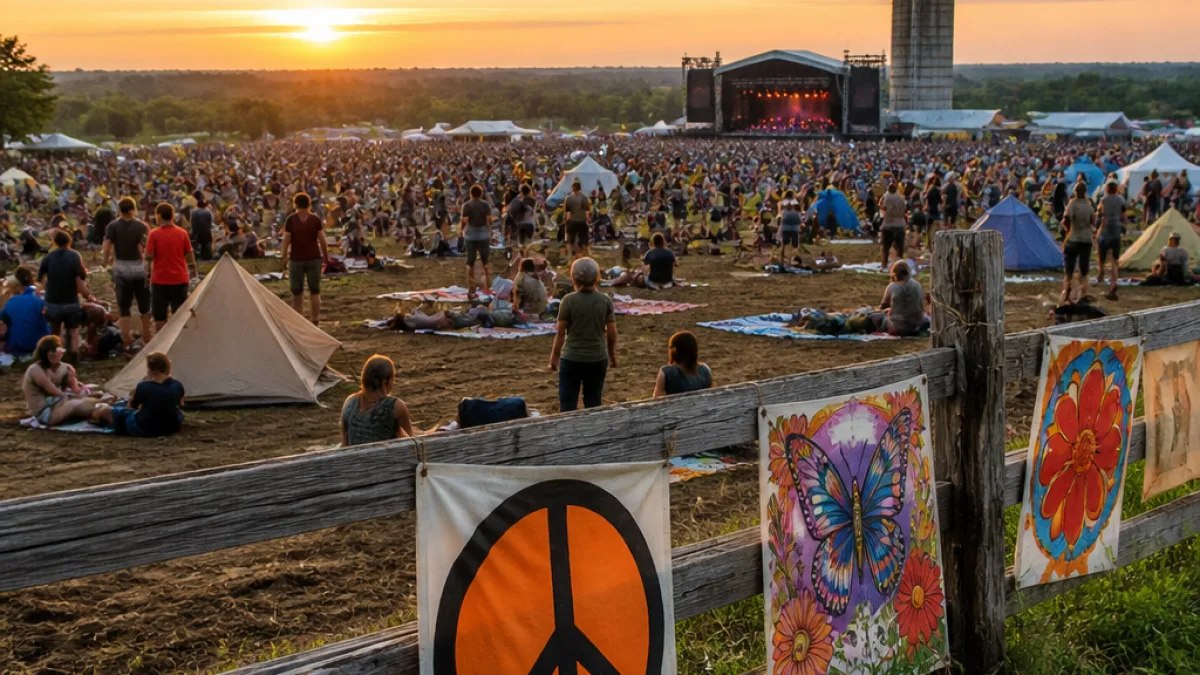
The documentary revisits the turbulent decade that led to the festival — a period defined by opposition to the Vietnam War and disputes over civil and sexual rights — and lets those who were there describe what happened when almost half a million people converged at a dairy farm in upstate New York. Rather than framing the story exclusively through performers or the concert’s production logistics, the film emphasises individual experience: concertgoers, security staff, local residents and even some performers who witnessed the event from the crowd.
The film’s director, Barak Goodman, frames the festival as a test of countercultural ideals. In the documentary he argues that the values of “peace and love” were put under pressure by difficult conditions at the site, and that the behaviour of the crowd in responding to those conditions left a lasting impression on many who attended. AMERICAN EXPERIENCE executive producer Mark Samels said the production intentionally "turns the cameras around, into the audience" to broaden understanding of what Woodstock represented.
“For three days in August, 1969, the values of ‘peace and love,’ loudly championed by the counterculture movement, were actually put to the test in the miserable conditions at Woodstock,” said director Barak Goodman.
Numbers that shaped a myth
The scale of the event is central to its continuing fascination. Contemporary accounts and archival material remind viewers that:
- Nearly half a million people travelled to the site in August 1969.
- The film focuses on more than 400,000 attendees as the lens through which the story is retold.
- What began as a music event evolved into a social experiment in cooperation, sacrifice and generosity for many who were present.
| Item | Figure |
|---|---|
| Approximate attendance | ~500,000 |
| Number referenced in film | 400,000+ |
| Anniversary year | 50 years |
Why this matters in Woodstock, Ontario
For residents of Woodstock and surrounding Oxford County, the anniversary and the new film offer a moment to consider how popular culture and political upheaval can intersect and persist in public memory. Local music venues, municipal events planners and community groups often draw on the mythos of large-scale festivals to plan concerts and cultural gatherings. The film’s emphasis on ordinary people coping with extraordinary circumstances is relevant to small-city planners and community leaders who balance public safety, volunteer labour and the desire to create memorable cultural experiences.
There is also a rural-urban dimension that will resonate here. Woodstock, Ontario sits at a crossroads between agricultural hinterlands and growing urban development. The original Woodstock unfolded on a farm, and the documentary highlights how a rural setting was transformed by an influx of hundreds of thousands of young people — a dynamic not unfamiliar to Ontario towns that host large gatherings, fairs and music events.
Viewing details and wider context
The documentary is available to stream on KPBS+ and is scheduled for broadcast on KPBS TV. For anyone in this region reflecting on how protests, music and social movements have intersected in Canadian and American histories, the film provides a curated look at a brief encounter that has had long-term cultural impact. It offers an opportunity to revisit the lessons of cooperation and civic response in the face of logistical strain and social friction.
Whether remembered as a defining moment of the counterculture or a cautionary tale about managing mass gatherings, the Woodstock anniversary film invites viewers to listen to the people who were there and reassess what such a convergence can mean for communities today.