Debate arrives at a pivotal moment in tight mayoral contest
The two leading contenders in Toronto's mayoral race will meet on television Thursday evening, offering residents a final, extended look at the arguments the candidates are making on the doorsteps and in debates across the city. The commercial-free event, titled Toronto Decides: The Municipal Debate, will air on CP24 and stream on CP24.com and CTVNewsToronto.ca, as well as on the CP24 and CTV News apps and Crave.
What voters will see and hear
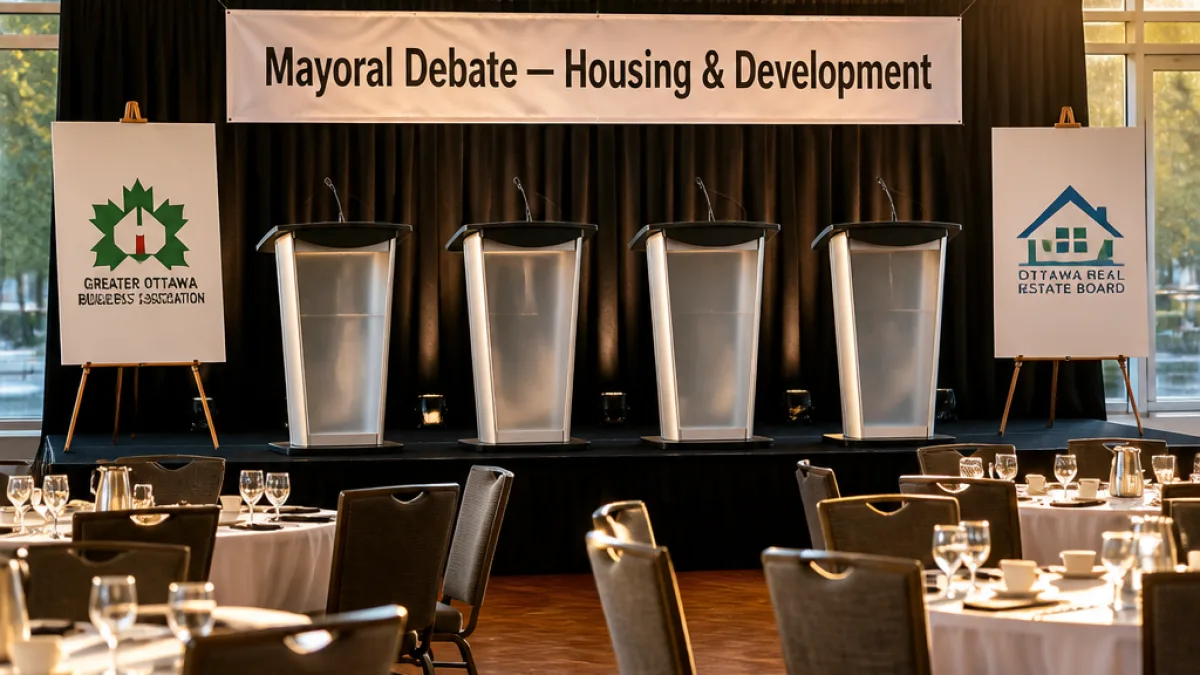
The debate, scheduled for 7 p.m. Thursday, Oct. 22, will pit Olivia Chow and Brad Bradford against one another on issues that dominate conversations in Toronto neighbourhoods: housing and affordability, transit, public safety and the city's finances. CP24 has said it will include questions submitted by viewers, giving a direct channel to residents anxious to hear how each candidate would handle day-to-day challenges.
- When: Thursday, Oct. 22 at 7 p.m.
- Where to watch: CP24, CP24.com, CTVNewsToronto.ca, CP24 and CTV News apps, and Crave
- Moderation: Michelle Dube of CTV News Toronto will moderate; John Moore of Newstalk 1010 will pose viewer-submitted questions.
Why the debate matters
The debate comes four days before Toronto residents vote on Oct. 26. A Nanos Research poll conducted exclusively for CP24 and CTV News Toronto released this week underlines how close the race remains. Among decided voters in that survey, Olivia Chow held 49.8 per cent support to 46.6 per cent for Brad Bradford, while the poll found 16 per cent of respondents remained undecided. Those undecided voters and any late shifts in support could be decisive.
| Candidate | Support (decided voters) |
|---|---|
| Olivia Chow | 49.8% |
| Brad Bradford | 46.6% |
| Undecided | 16% |
“Could be the defining moment of the whole campaign.” — Nik Nanos
“Very consequential.” — John Tory
Those assessments reflect the view of pollsters and some municipal observers that a strong performance on a televised stage can crystallize support or prompt wavering voters to make a choice. The comments were made in the context of the debate's timing and potential to influence the final days of the campaign.
Local stakes and the urban-rural lens
For Toronto residents, the debate is not an abstract contest. It centres on services and policies that shape daily life across the city's diverse neighbourhoods — whether a family in a dense downtown apartment can find affordable housing, if a commuter can rely on frequent and accessible transit, how neighbourhood safety is managed, or how the city balances competing demands on a strained budget. The two candidates have been framing different approaches to those questions on the campaign trail; Thursday's exchange is likely to crystallize contrasts for undecided voters.
Beyond tonight's broadcast, the result will be decided at the ballot box next week. With the poll showing margins within a few points and a substantial share of voters still undecided, the debate's reach — on television and through online streams and apps — makes it a pivotal stop on both campaigns' final push.
Residents who cannot watch live will have multiple online options to view the debate after it airs, and CP24 has signalled it will feature viewer-submitted questions, keeping the focus on issues raised by Torontonians themselves. With little time left before ballots are cast, the discussion promises to be closely watched by voters, campaign teams and observers across the city.