Police say complaints arrive every day
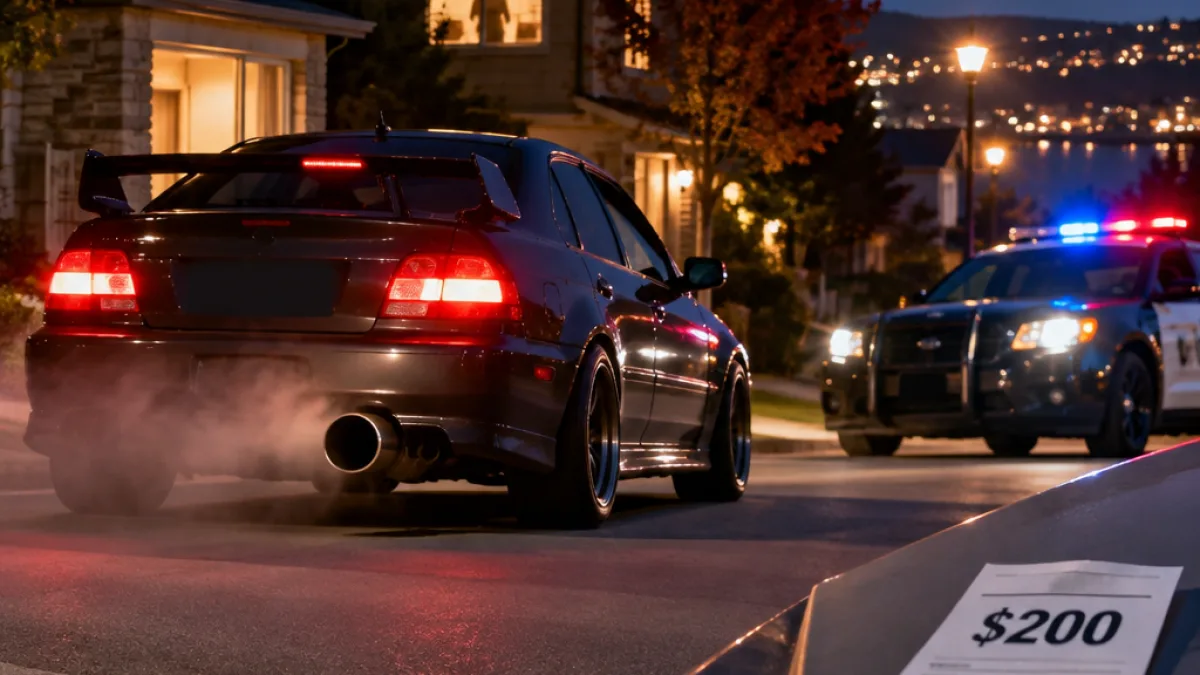
Excessively loud vehicles remain a routine concern in Barrie, where police say residents report modified exhaust systems, aggressively revved engines and vehicles racing through neighbourhoods on a consistent basis.
Det. Const. Ronald Hunt, of the Barrie Police Traffic and Marine Unit, said the service receives complaints every day. Although the issue becomes more noticeable in the spring, summer and fall, he said reports continue during the colder months as well. The pattern places a recurring enforcement issue on the city’s streets rather than limiting it to a short seasonal nuisance.
“It’s every day. We get calls, complaints every day,” Hunt said.
The Ontario government is preparing legislation that would raise the minimum penalty for excessive vehicle noise from $60 to $200. The proposed change would not alter the existing maximum fine, which would remain at $1,000. The measure has been identified by Transportation Minister Prabmeet Sarkaria as a coming provincial initiative, but the source material does not indicate that the legislation has yet been introduced or passed.
Fines seen as one part of enforcement
Hunt said the larger financial penalty could cause some drivers to reconsider installing equipment intended to make their vehicles louder. He welcomed the proposed legislation as a necessary response, while cautioning that a higher fine by itself is unlikely to eliminate the problem in Barrie.
In his view, adding demerit points could provide a stronger deterrent than a fine alone. The proposed change would still increase the immediate financial consequence for drivers who are found operating vehicles with excessive noise, but police say its impact will depend on more than the dollar amount attached to a ticket.
- Proposed minimum fine: $200, up from $60.
- Maximum fine: remains $1,000.
- Additional measure suggested by Hunt: demerit points.
“The demerit point system would actually deter it more,” Hunt said, while adding that the increased fine would likely make some drivers take notice. He described the proposal as potentially helpful, but not a complete solution to the complaints heard by Barrie police.
Noise complaints can overlap with driving concerns
For officers, the issue is not limited to the disturbance created by a loud exhaust. Hunt said some drivers push their vehicles to produce the greatest possible noise, including through backfiring exhaust systems. Police associate that behaviour in some circumstances with speeding and dangerous driving, creating a broader traffic-safety concern alongside the disruption caused to nearby residents.
| Measure | Current or proposed amount |
|---|---|
| Minimum fine for excessive vehicle noise | Proposed increase to $200 |
| Maximum fine | $1,000 |
Barrie police already have authority under the Highway Traffic Act to stop vehicles suspected of having modified or illegal exhaust systems. Officers can inspect a vehicle, including its muffler, to determine whether it meets legal requirements. That authority means enforcement does not depend solely on the proposed provincial change.
Hunt explained that a muffler is intended to reduce the sound generated by an engine. Some vehicles, he said, have a straight pipe running from the engine to the rear, leaving no muffling equipment in place and producing the pronounced noise that prompts complaints. The proposed fine increase would therefore add a stronger financial consequence to an enforcement framework police already use, while leaving the maximum penalty unchanged.
For Barrie residents, the practical effect of the provincial proposal will depend on whether a higher minimum fine changes driver behaviour and reduces repeated disturbances in neighbourhoods. Police support the move, but their assessment is measured: it may lower the frequency of excessive vehicle noise without resolving the problem on its own.