Sudbury expands Francophone immigration push to fill local jobs
Greater Sudbury is moving forward with an enlarged intake for French‑speaking foreign nationals through the Francophone Community Immigration Pilot (FCIP), advancing up to 85 candidates who hold local job offers, the city’s economic development office said in a posting dated Aug. 27, 2026.
The program is designed to steer candidates toward permanent residence while addressing regional labour needs in specific sectors and occupations. As of Aug. 30, the community had recommended 32 candidates, leaving 53 allocations still available under the current round.
- Maximum allocations: 85 French‑speaking foreign nationals
- Already recommended: 32 (as of Aug. 30)
- Remaining allocations: 53
The FCIP selection enables successful applicants to apply to the federal government for permanent residence. While their applications are being processed, workers may also qualify for a special two‑year work permit that authorizes them to work in Canada.
"A worker who has applied through the FCIP can also apply for a special two‑year work permit," the Greater Sudbury Economic Development post says, noting family members in Canada can apply for FCIP‑specific work permits that allow most regional employers to hire them.
Priority sectors and occupations focus local recruitment
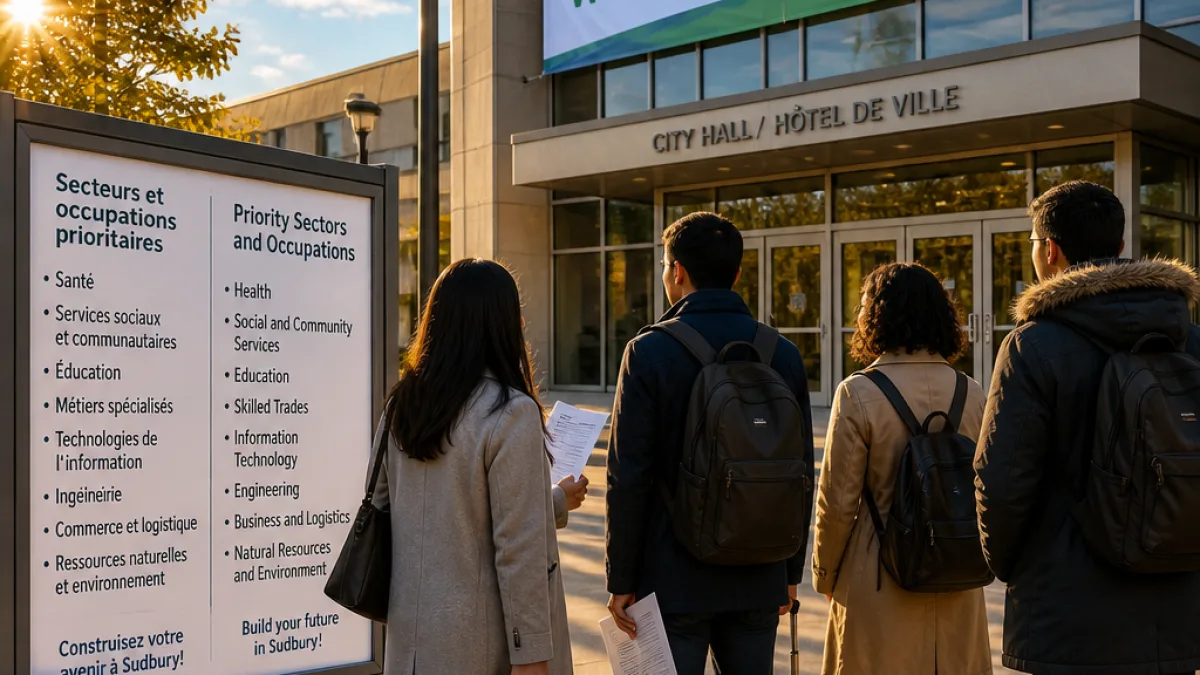
Greater Sudbury has set priorities for the 2026 intake to steer placements into areas with pressing needs. The community is prioritizing workers in six sectors:
- Arts, Culture, Recreation and Sport
- Business, Finance and Administration
- Education, Social, Community and Government Services
- Health
- Natural Resources and Agriculture
- Trades and Transport
Within those sectors, the municipality identified 25 priority occupations for the FCIP. The list includes a mix of skilled trades, health and administrative roles that reflect local employer demand:
| Selected occupations (examples) |
|---|
| Accounting and related clerks; Accounting technicians and bookkeepers; Administrative assistants; Administrative officers |
| Automotive service technicians, truck and bus mechanics and mechanical repairers; Banking, insurance and other financial clerks; Business development officers and market researchers and analysts |
| Carpenters; Cashiers; Construction millwrights and industrial mechanics; Construction trades helpers and labourers |
| Database analysts and data administrators; Dispatchers; Early childhood educators and assistants; Financial sales representatives |
| Home support workers, caregivers and related occupations |
The full priority list was published by Greater Sudbury Economic Development alongside the allocation announcement.
Local implications and next steps
For employers and service providers, the FCIP offers a pathway to recruit bilingual workers who already hold local job offers, which could reduce hiring lead times for critical positions. The availability of a temporary, two‑year work permit is intended to allow new arrivals to begin work immediately while their permanent‑residence files proceed through federal processing.
The program also aims to support growth of the Francophone community by favouring French‑speaking applicants and enabling their family members to work in the region through FCIP‑specific permits.
Greater Sudbury employers interested in participating must ensure an offer of employment aligns with both a priority sector and one of the endorsed priority occupations. Candidates recommended by the community will apply to Immigration, Refugees and Citizenship Canada for permanent residence under the FCIP, following local endorsement.
With just over half of the current allocations remaining, municipal officials and community partners will be monitoring employer demand and candidate flow as the region moves to bolster its bilingual workforce.