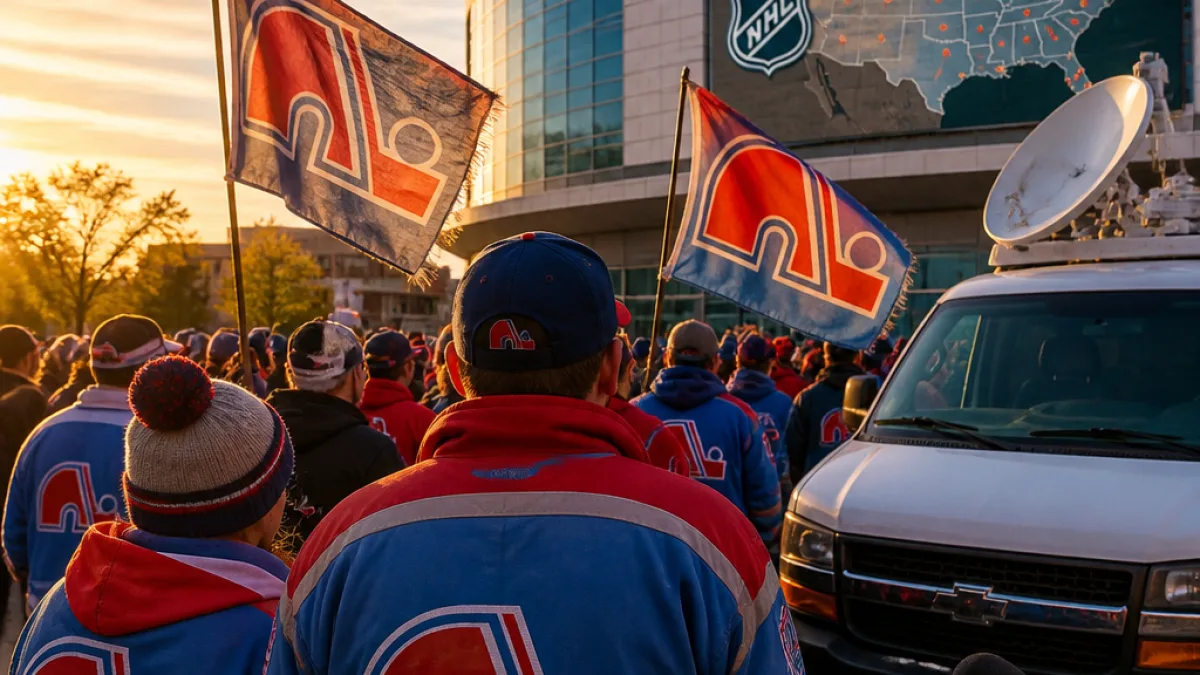
Quebec City’s dreams of an NHL return were dealt another dose of realism this week after commentator Grant McCagg argued the league’s next additions will likely be American teams — leaving the possibility of a revived Nordiques contingent on an eventual failure south of the border.
Expansion momentum aimed at Texas
On his HabsCast podcast and via social media, McCagg pointed to the recent history of National Hockey League growth: in the past three decades the league has opened new franchises exclusively in the United States. He identified Houston as the leading candidate for the 33rd team, with Austin also in contention, and said that pattern is unlikely to change.
“The NHL has only added U.S. expansion teams in the past 30 years, and that will be the case ONCE AGAIN when they add two more American teams.”
That assessment, if borne out, would prolong the wait for Quebec City residents who have long campaigned for the Nordiques’ return — a prospect that has both cultural and economic resonance in the provincial capital.
Relocation, not expansion, seen as Quebec City’s best chance
McCagg argued Quebec City’s more realistic route back to the NHL would come through relocation rather than fresh expansion. He singled out Atlanta as a market the league might try again should a future U.S. franchise fail, and also mentioned Arizona as another possibility where a collapse could ultimately free a team to move.
There is historical precedent for franchise moves from Atlanta to Canada. Two previous Atlanta-based clubs changed cities and ultimately left the U.S. market:
- Atlanta Flames: joined NHL in 1972, relocated to Calgary in 1980.
- Atlanta Thrashers: established in 1999, moved to Winnipeg in 2011.
| Original team | Joined | Moved to | Moved in |
|---|---|---|---|
| Atlanta Flames | 1972 | Calgary | 1980 |
| Atlanta Thrashers | 1999 | Winnipeg | 2011 |
For many Quebec City fans, that record provides a sliver of hope: if a U.S. expansion effort falters, relocation to a Canadian market could be reconsidered. But McCagg’s view is that such an outcome would require an American club to fail — an uncertain and unpalatable path for Nordiques supporters.
Local implications and long view
Quebec City residents have followed NHL rumour cycles for years, balancing civic pride with practical concerns about market size and arena readiness. While this commentary does not change the league’s formal processes, it does underscore how expansion decisions are shaped by broader strategic priorities that often favour U.S. growth.
For the provincial capital, the implication is twofold: immediate prospects for an expansion franchise look slim if the NHL continues to prioritise American cities; and any realistic return of an NHL club would likely depend on relocation dynamics beyond Quebec City’s control.
That reality leaves local stakeholders — from fans to municipal decision-makers — with decisions to make about how actively they should continue to court a revival of the Nordiques brand, and how to position the city should a relocation opportunity ever arise.
Until then, Quebec City will watch closely as Houston, Austin and other U.S. markets jockey for the next NHL slot, and hope history might one day swing in its favour.