
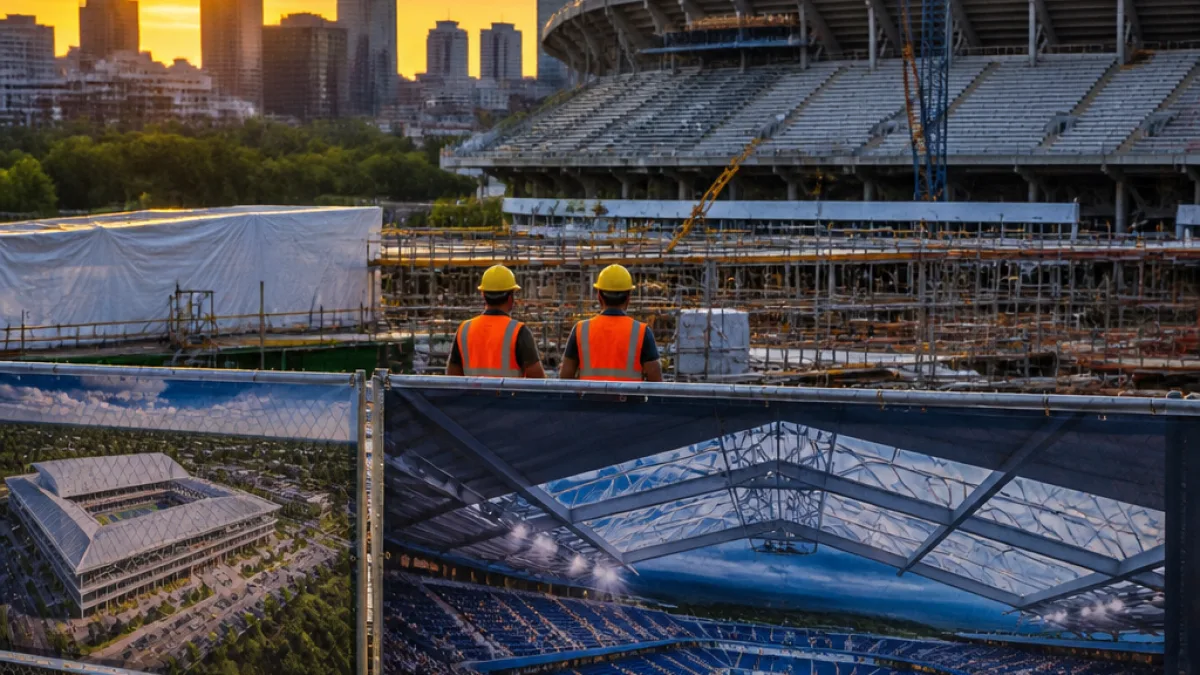
Modernization push aims to bring Montreal’s tennis site up to global standards
After roughly three decades since Jarry Park was transformed into a tennis complex, the venue that hosts the National Bank Open in Montreal is once again under pressure to modernize. The head of tennis’s men’s tour signalled support for proposed upgrades that would include a new 15,000-seat Centre Court with a retractable roof and additional courts, while warning that projects of this scale require time and investment.
Eno Polo, chief executive officer of the ATP, was in Montreal to observe the tournament and meet with players, organisers and fans. He praised aspects of the site such as the fan village, player lounge and the tournament’s proximity to players’ downtown hotel, but said the stadium’s age is becoming increasingly evident compared with other Masters 1000 events.
“It’s like owning a house. If you’ve lived in your house for 20 years without renovating it, then you visit your neighbour who has just spent half a million dollars renovating theirs, you naturally go home feeling your own house is a little outdated.”
Polo referenced the sizeable investment made in Cincinnati — a US$260-million redevelopment completed ahead of last year’s tournament — as an example of the type of renewal Montreal may need to keep pace with peer events. He said the ATP supports Tennis Canada’s vision for developing the IGA Stadium site and that, if realised, the upgrades would be “fantastic.”
What’s being proposed and why it matters locally
Tennis Canada has publicly explored plans that include:
- a new 15,000-seat Centre Court with a retractable roof;
- additional practice and match-ready courts to increase capacity and flexibility;
- improvements intended to enhance the fan and player experience.
Organizers and Polo point to clear benefits: increased seating could mean more ticket sales and revenue, part of which can be reinvested into Canadian tennis programs. For Montreal residents, a modernized facility could translate into stronger tourist draws during the tournament, more year-round events and potentially more local employment related to construction, operations and hospitality.
| Item | Figure |
|---|---|
| Proposed Centre Court capacity | 15,000 seats |
| Cincinnati redevelopment (comparable) | US$260 million |
| Time since Jarry Park conversion | ~30 years |
At the same time, Polo cautioned that such developments do not happen overnight. Large-scale projects require planning, financing, municipal approvals and construction timetables that can span multiple years. The ATP’s own calendar is also shifting: the tour will add a 10th Masters 1000 event in 2028 when Riyadh joins the schedule, underscoring the competition among host cities to offer world-class facilities.
Questions for residents and city planners
For Montrealers, the conversation raises questions that extend beyond the tennis court. Any redevelopment of the IGA Stadium site would touch on land use, neighbourhood traffic and transit capacity, noise and the balance of public versus private investment. It could also influence how often the site is used outside the two-week professional tournament window — a factor that helps determine long-term community benefit.
City and provincial authorities, along with Tennis Canada, will need to work through financing models and public consultations if the project moves forward. Meanwhile, Polo’s visit and public comments have put renewed attention on the status of the city’s marquee tennis venue, signalling that Montreal’s place on the international tennis map could depend on timely investment and thoughtful planning.
For now, organisers and the ATP appear aligned in principle: modernize the stadium to preserve and enhance Montreal’s role in hosting elite tennis. The pace and particulars of that modernization remain to be determined.