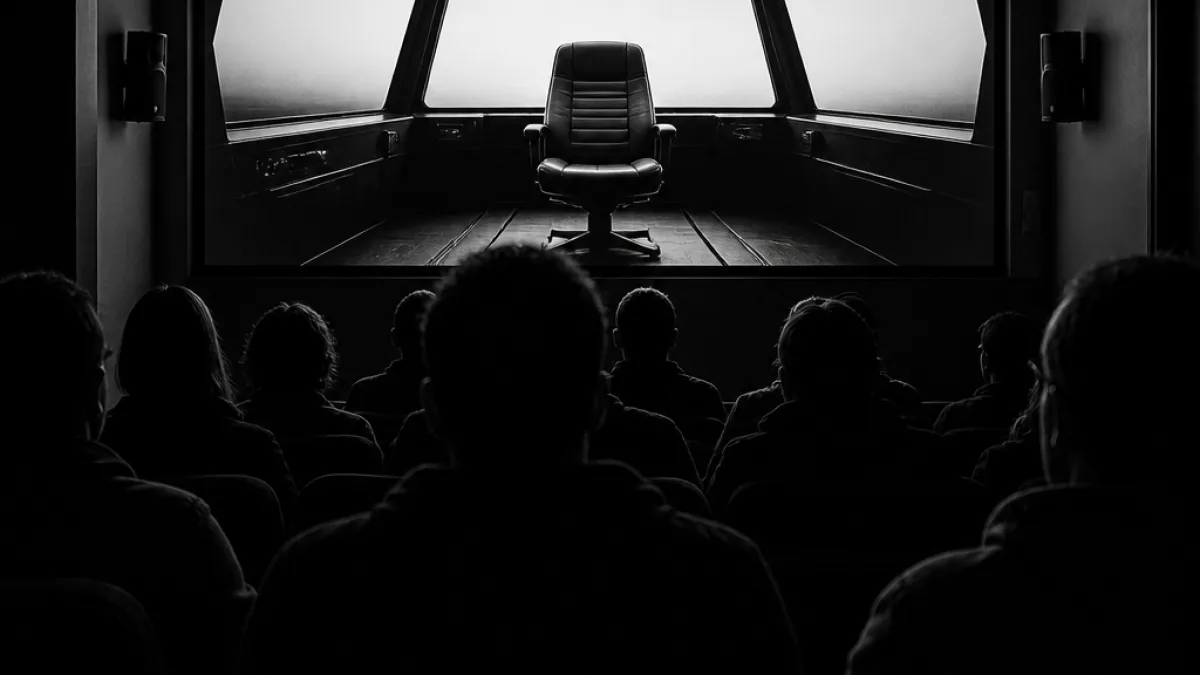
The short film Aurora, directed and written by Angad Aulakh, is a compact, visually austere entry in this month’s HollyShorts Film Festival that asks more questions than it answers. Screening during the festival run from Aug. 13 to 23, the black‑and‑white piece follows Freddie, the sole survivor of a flight mishap, and builds its tension around his guilt and the uncertain nature of his surroundings.
Minimalist visuals, maximal unease
Aulakh’s decision to shoot in monochrome sharpens contrast, both literal and psychological. The film’s sparse palette and unsettling visual touches create an atmosphere that consistently unsettles the viewer. The setting initially reads as ambiguous — whether the incident occurs in space or inside a simulator remains unclear on first viewing — and that uncertainty is a deliberate stylistic choice that drives the short’s mood.
- Director / writer: Angad Aulakh
- Lead performers: Guy Kent (Freddie), Jennalyn Ponraj (his partner)
- Format: Black and white short film
- Festival: HollyShorts Film Festival (Aug. 13–23)
Performance anchors the film’s emotional centre. Guy Kent’s portrayal of Freddie conveys the physical and emotional aftermath of surviving an accident: a mixture of survivor’s guilt, confusion and corporeal distress. Jennalyn Ponraj, as his partner, supplies a human warmth that counters the film’s more abstract, disorienting sequences. Those personal beats lend the story a recognisable core amid its more experimental impulses.
Influence and ambiguity
Viewers and critics may spot echoes of Stanley Kubrick’s 2001: A Space Odyssey in Aulakh’s approach — particularly in the film’s enigmatic ending and its use of imagery that resists straightforward explanation. Yet Aurora does not read as mere homage. The film shows its own stylistic ambition and energy, employing disconcerting imagery to create a visceral psychological horror rather than to replicate a canonical film.
“uneasy feeling throughout.”
That unease is also Aurora’s chief limitation. The short’s story is intentionally impenetrable at moments, embracing ambiguity in ways that leave some plot strands unresolved. The reviewer who covered the HollyShorts screening noted that a longer running time might have allowed deeper exploration of the film’s central questions. In its current form, Aurora trades narrative clarity for atmosphere.
What Aurora offers Aurora audiences
For residents of this city who follow independent film and festival programming, Aurora represents the kind of short form filmmaking that leans on mood and performance rather than exposition. It may frustrate viewers who prefer more concrete storytelling, but it will likely engage those who welcome visual experimentation and psychological intensity. The film’s strengths — visual design, committed acting and atmospheric control — make it a talking point for anyone interested in how contemporary short films negotiate science fiction themes on a tight running time.
| Aspect | Notes |
|---|---|
| Tone | Psychological, unsettling |
| Visuals | Black and white; stylised, ambiguous setting |
| Strengths | Performances, style, visceral impact |
| Weaknesses | Ambiguity in narrative; may benefit from longer runtime |
Short festival works such as Aurora are useful reminders that the short form remains a fertile ground for filmmakers testing ideas about memory, trauma and perception. For Aurora’s local filmgoers and cultural producers, the HollyShorts selection offers an example of how compact storytelling can be both restrained and provocative.
Those interested in catching Aurora at HollyShorts should consult the festival schedule for screening times and venues. The film’s mixture of psychological disquiet and formal polish makes it a noteworthy entry among the shorts programmed this season.