
Advanced Micro Devices and Marvell Technology each reported operating results that signal firm demand for chips and networking gear tied to data‑centre growth, while pursuing commercial deals and management moves to capitalise on that momentum.
Quarterly margins show stability amid dealmaking
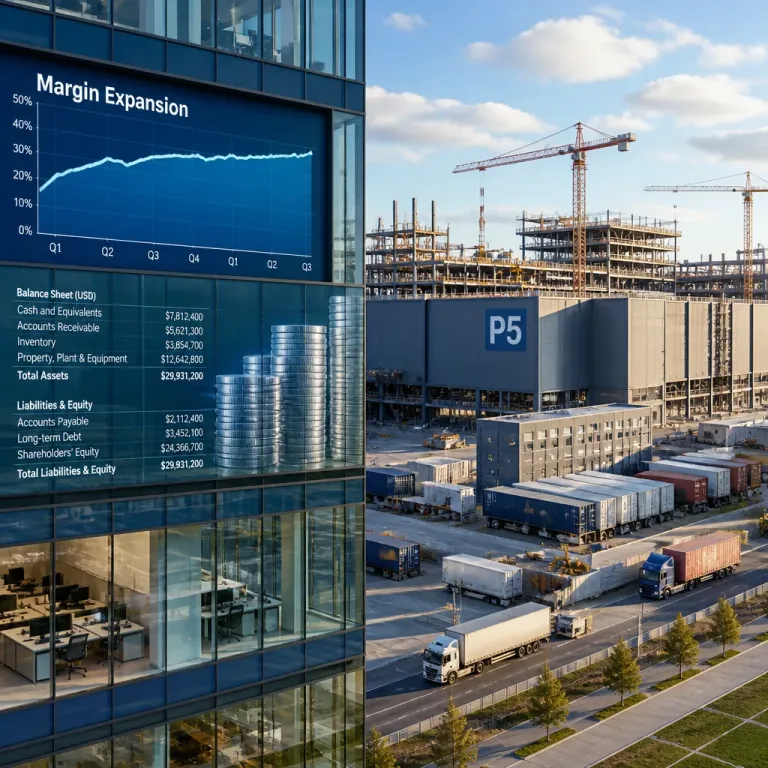
AMD said it recorded an operating margin of about 17 per cent for the quarter ended June 27, 2026, while Marvell reported a roughly 17 per cent operating margin for the quarter ended Aug. 1, 2026. The matching figures highlight a shared outcome for two companies that serve overlapping markets — high‑performance computing, cloud servers and specialised networking infrastructure.
AMD continues to sell central and graphics processors and system‑on‑chip products used in personal computing, corporate servers and commercial gaming consoles. The company also disclosed a new commercial infrastructure agreement described as a multi‑gigawatt deal with Core Scientific and noted an expansion of an existing corporate relationship with Microsoft.
Marvell, by contrast, generates most revenue from data infrastructure semiconductors, digital signal processing components and Ethernet adapters used by networking and storage customers worldwide. Marvell named Dan Durn as its new chief financial officer and introduced new memory infrastructure components as part of its product refresh.
Why revenue and margins matter now
Investors and customers watch revenue trends and margins to assess whether chipmakers are converting demand into profitable scale. Revenue is the standard income‑statement measure that shows how much money a business brings in before operating costs and taxes. Operating margin helps indicate how efficiently that revenue is being converted into operating profit.
For companies serving cloud and AI infrastructure, sustaining margins near the mid‑teens while expanding commercial footprints suggests pricing power and control over production costs — and can be a sign that customers continue to invest in capacity and new systems.
- AMD: Core businesses include high‑performance CPUs, GPUs and semi‑custom SoCs; reported ~17% operating margin for quarter ended June 27, 2026; announced a multi‑gigawatt infrastructure agreement with Core Scientific and expanded its Microsoft relationship.
- Marvell: Focused on data infrastructure semiconductors and Ethernet/storage adapters; reported ~17% operating margin for quarter ended Aug. 1, 2026; appointed Dan Durn as CFO and rolled out new memory infrastructure components.
What the figures tell us
The similar operating‑margin percentages mask different company profiles. AMD’s revenue mix is heavily influenced by processors and graphics products that feed consumer and enterprise demand, as well as custom chips for game consoles and other platforms. Marvell’s business is more specialised toward networking and storage components that large cloud and telco customers deploy.
Both strategies intersect in the data‑centre. AMD’s multi‑gigawatt deal and Microsoft partnership point to ongoing demand for compute capacity, while Marvell’s memory and networking advances target the plumbing that links and stores that compute work. Each company is therefore addressing separate but complementary pieces of the same market: compute and the infrastructure that supports it.
| Company | Primary focus | Quarter end | Operating margin |
|---|---|---|---|
| Advanced Micro Devices | High‑performance CPUs/GPUs, semi‑custom SoCs | June 27, 2026 | ~17% |
| Marvell Technology | Data infrastructure semiconductors, Ethernet/storage adapters | Aug. 1, 2026 | ~17% |
Outlook and implications
Neither company’s update in the source material included full revenue figures or forward guidance in detail, but the additional commercial arrangements and product introductions are notable. For Canadian and other international buyers of cloud services, those arrangements can translate into greater capacity and potentially lower latency or better feature sets as providers refresh fleets of servers and networking gear.
For investors, maintaining mid‑teens operating margins while expanding commercial relationships is a sign of operational steadiness — but it is not a guarantee of future growth. Market dynamics for semiconductors remain tied to broader cycles in enterprise spending, AI investment, and supply‑chain pressure.
As AMD and Marvell push into the same ecosystem from different angles — compute at one end, data‑path and storage at the other — the winners will be those that combine competitive products with scalable supply and constructive customer deals. Watch the next quarterly revenue lines and any additional commercial partnerships for clearer signals about how fast demand is expanding and how much margin improvement either company can sustain.