
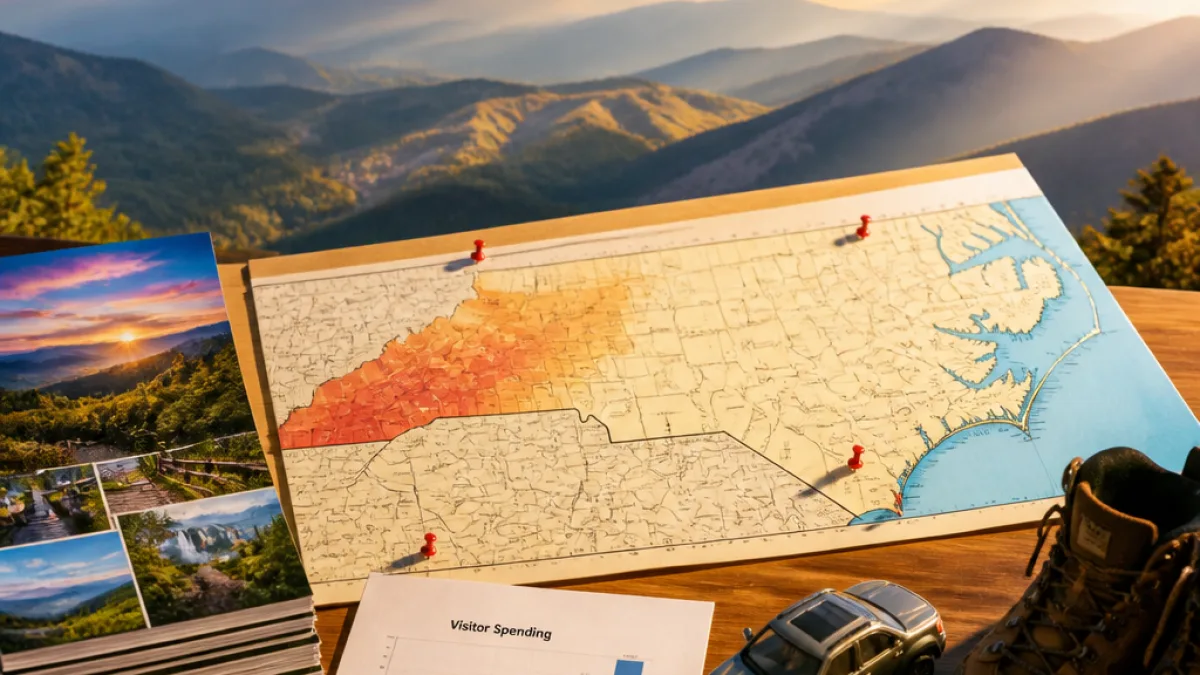
Raleigh — Preliminary figures released Wednesday by the N.C. Department of Commerce show visitor spending increased in 59 of North Carolina’s 100 counties in 2025, underscoring tourism’s continued role in local economic recovery and growth. The annual study, commissioned by Visit NC, also found that overall tourism supported robust statewide spending of $37.2 billion last year.
Regional picture: growth in 10 of 11 areas
The early estimates, developed by Tourism Economics for Visit NC and the Economic Development Partnership of North Carolina, indicate that 10 of the state’s 11 regions recorded gains in visitor spending. Mountain regions in particular showed signs of recovery after Hurricane Helene, with mixed results across subregions.
The Smoky Mountains & Cherokee region posted the largest regional increase at 4.3%, powered by sharp gains in smaller counties. Cherokee County registered a 14% rise in visitor spending while Macon County increased by 11%. The High Country region recorded a 2.5% increase overall, led by Yancey County’s 6% rise and Ashe County’s 4%.
“From the mountains to the coast, the findings underscore North Carolina’s enduring appeal to travelers,” said N.C. Commerce Secretary Lee Lilley.
Not all mountain areas fared equally. The Asheville & the Foothills region showed a modest decline of 0.7% in visitor spending overall, but pockets within the region recorded gains: Caldwell County rose 7%, Burke County 6% and Cleveland County 5%.
What the numbers mean locally
Officials said the data illustrate tourism’s role in job support, payroll income and tax revenue for local governments. The Commerce Department’s preliminary model draws on Visit NC datasets and federal and state sources to estimate not only expenditures but also employment and state and local tax receipts tied to visitor activity.
Those details feed into broader state economic strategies. The results align with goals in North Carolina’s First in Opportunity Strategic Economic Development Plan, which prioritizes investments in community quality of place as a driver of long-term competitiveness and prosperity.
- Counties with increased spending: 59 of 100
- Regions with growth: 10 of 11
- Statewide visitor spending: $37.2 billion (2025 preliminary)
Local leaders and tourism operators say rebounds at the county level can be uneven, reflecting differences in damage from Helene, local infrastructure and the pace of business recovery. For many smaller counties, percentage gains can reflect relatively modest dollar increases that nevertheless matter for local hotels, restaurants and attractions.
Regional changes at a glance
| Region | Reported change in visitor spending | Notable county contributors |
|---|---|---|
| Smoky Mountains & Cherokee | +4.3% | Cherokee (+14%), Macon (+11%) |
| High Country | +2.5% | Yancey (+6%), Ashe (+4%) |
| Asheville & the Foothills | -0.7% | Caldwell (+7%), Burke (+6%), Cleveland (+5%) |
The Commerce Department cautioned that these are preliminary estimates. The Tourism Economics model integrates both domestic and international traveler expenditures as well as government data to produce county- and region-level approximations. Finalized figures could shift slightly as additional data are incorporated.
For counties still rebuilding from Helene, tourism recovery is not merely a metric; it is a source of jobs and local revenue. State officials and economic developers plan to use the study to guide targeted investments in communities where tourism can accelerate broader recovery and growth.
Visit NC and the Economic Development Partnership commissioned the research to provide a detailed look at where visitor dollars are spent and how they ripple through local economies. While the headline numbers show broad resilience, community leaders say continued attention to infrastructure, marketing and visitor services will be necessary to sustain gains, especially in areas with lingering storm damage.
The Commerce Department’s release and the Tourism Economics report offer county-level data that local officials can use to prioritize recovery resources, plan marketing strategies and measure the impact of tourism-oriented projects over time.
















