TEMPE — The city of Tempe has stopped sharing data gathered by its Flock automated license plate reader cameras and rolled out a public transparency portal after residents raised privacy concerns and neighboring agencies reported misuse of the technology.
City restricts access, keeps cooperative stance
Tempe Police officials said the change, which took effect Monday, ends all external data sharing from the Flock system. The department emphasized it will remain cooperative with Arizona law enforcement, with other agencies able to request information through what Tempe called the “appropriate process.”
Tempe Police Chief Ken McCoy framed the move as an extra safeguard for residents’ information. He said Tempe had previously limited sharing to Arizona law enforcement agencies but that this additional step would give the city greater control over access.
“While we had previously restricted data sharing to Arizona law enforcement agencies only, this additional step will further safeguard Tempe’s data and ensure we maintain appropriate control over access,” Tempe Police Chief Ken McCoy said in a statement.
Audits, transparency and vendor plans
The department noted it conducts monthly audits of searches performed on the Flock system and requires officers to enter report numbers to access data. Officials said the most recent audit, completed Friday, found no evidence of misuse; they also indicated prior audits had not uncovered misuse.
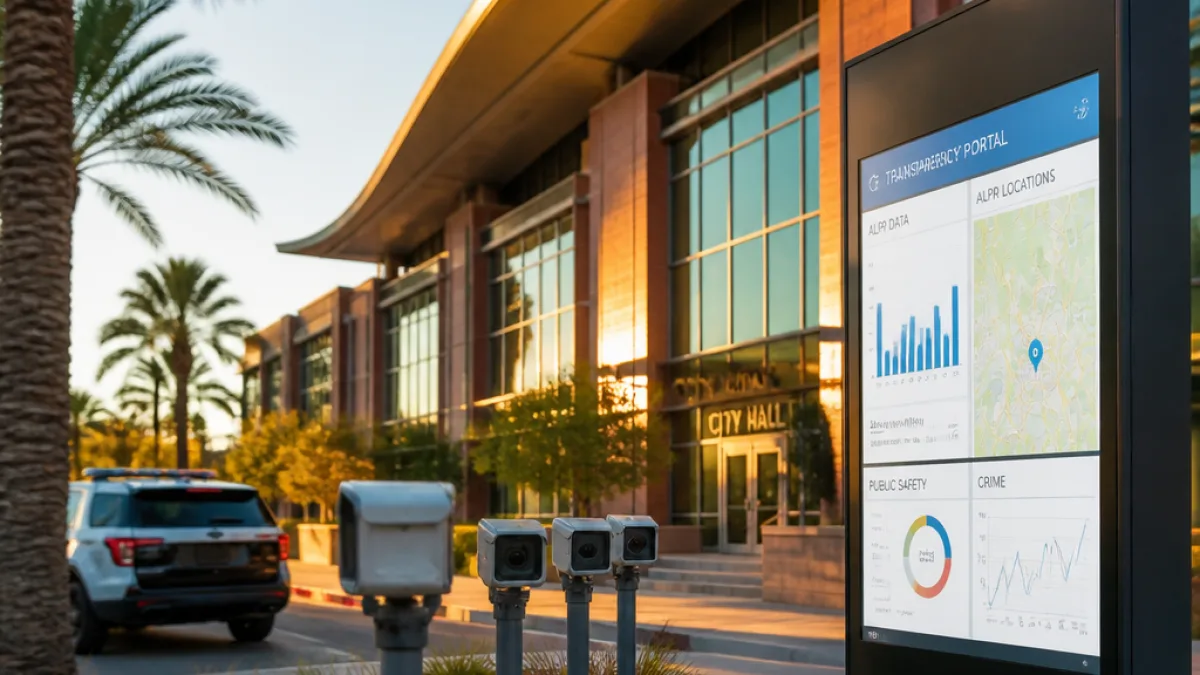
To increase public visibility into how the system is used, Tempe launched a transparency portal that displays usage metrics and governance details. The portal, city officials said, is intended to let residents see how often and for what purposes the system is queried.
Tempe also announced it will solicit bids for a new automated license plate reader vendor in the near future. The city said the forthcoming contract will include penalties for any vendor misuse of data.
Context: misuse reported in neighboring agencies
The decision follows reports of misuse involving Flock cameras in nearby jurisdictions. In Apache Junction, an internal investigation concluded that an officer had used the system to locate his wife, and that officer resigned. Chandler Police recently disclosed that someone within their organization may have misused the system, prompting Chandler to shut down its Flock cameras while it investigates.
Those incidents have prompted several Valley-area agencies to reassess or suspend their use of Flock cameras. At the same time, supporters of ALPR technology say it can help solve crimes and locate missing people. Tempe’s own audit logs, officials said, show a range of legitimate uses over the past month, including searches connected to homicide investigations, missing-person cases, a possible kidnapping and numerous stolen-vehicle and hit-and-run probes.
- Immediate change: Tempe stopped sharing Flock data externally as of Monday.
- Audits: Monthly audits are required; most recent audit found no misuse.
- Transparency: New public portal to display usage and governance metrics.
- Vendor action: City to go out for bids on a new ALPR vendor with penalties for misuse.
What Tempe residents should know
The move is designed to tighten control over access to license plate reader data while preserving the department’s ability to assist investigations. Tempe police said officers still use the system for investigations, and the department will continue to cooperate with state law enforcement through established request channels.
Flock Safety, the company whose cameras are in use, has said it assists with audit safeguards. In a separate comment reported by a local outlet, Trevor Chandler, Flock’s senior director of public affairs, acknowledged misuse is a concern and said auditing and training are part of the company’s approach.
| Action | Detail |
|---|---|
| Data sharing | Ended for all external parties as of Monday; requests handled through appropriate process |
| Audits | Monthly audits; most recent audit found no misuse |
| Transparency | New public portal displays usage metrics and governance information |
| Vendor procurement | City will solicit bids for a new ALPR vendor with penalties for misuse |
Tempe’s changes reflect growing scrutiny of automated license plate readers across the region and a push from privacy advocates for stronger safeguards around data collection and storage. For residents, the apparent priorities are clearer oversight, public visibility and contractual protections to limit potential misuse of sensitive location data.