
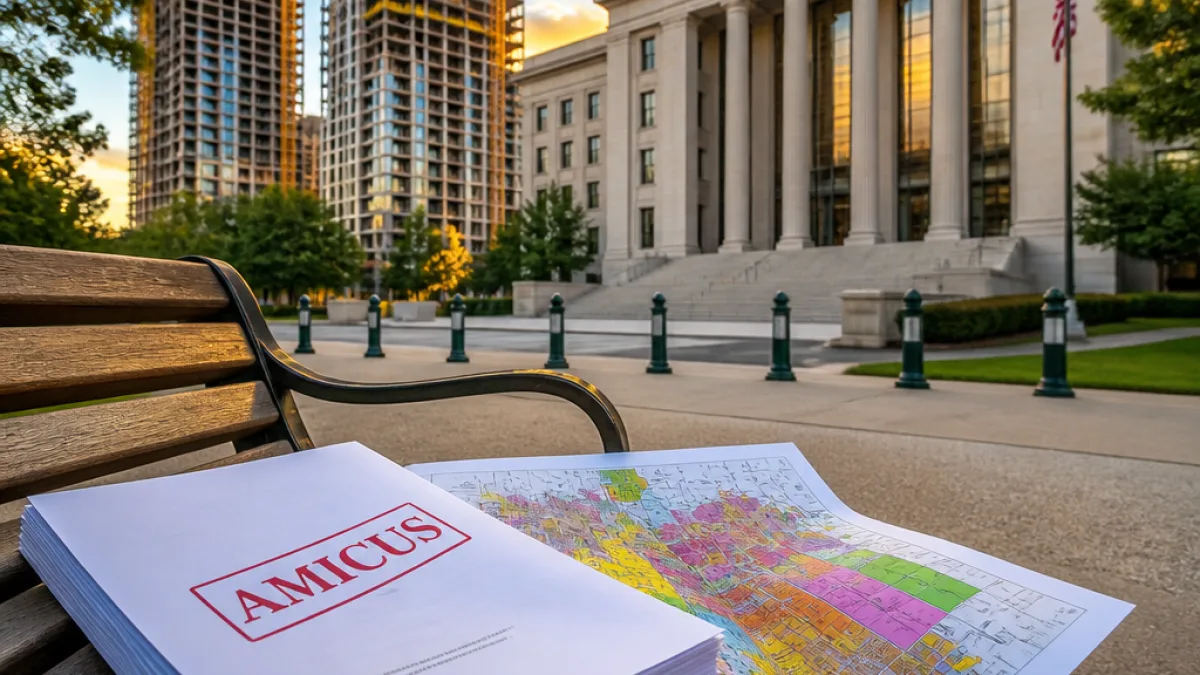
The city of Raleigh has asked the North Carolina Supreme Court to provide clearer guidance on who has the legal right to challenge zoning decisions, arguing the current patchwork of standing rules is making it harder for the city to manage rapid growth and streamline development processes.
City frames the issue as central to growth and housing policy
Raleigh filed a friend-of-the-court brief in a case originating in Rockingham County that concerns opponents of a proposed casino and their ability to challenge a 192-acre rezoning. While the city is not a party to that dispute, city lawyers say the court’s ruling could have broad implications for how Raleigh conducts and defends land-use decisions.
“Raleigh is one of the fastest growing cities in the United States,” the brief says, noting the city’s role among the nation’s leaders in new construction and job creation. The filing links that rapid expansion to an increased volume of zoning-related requests and litigation: thousands of administrative decisions each year, and a rise in both quasi-judicial appeals and civil lawsuits that contest approvals of projects and changes to the Unified Development Ordinance (UDO).
City attorneys say the uncertainty over who has standing to sue has made it harder both to defend past decisions and to adopt new legislative zoning amendments intended to ease pressure from population growth.
“The inconsistency in standing law has made defending, and even making, legislative decisions more difficult,” the brief states.
What Raleigh is asking the court to do
In the brief, Raleigh seeks two specific outcomes from the state Supreme Court’s review of the Rockingham County case:
- Adopt a consistent standing test that requires some identifiable injury to nearby property owners before allowing a plaintiff to file suit; and
- Clarify the legal standards that apply when voters and neighbors contest legislative zoning actions so that municipal governments can operate without the uncertainty that results from divergent lower-court rulings.
| Requested Result | Intended Effect |
|---|---|
| Consistent standing test | Limit suits to plaintiffs with an identifiable injury, reducing speculative litigation |
| Clearer standards for legislative zoning challenges | Give cities firmer footing to adopt and defend zoning changes |
Local consequences and context
Raleigh leaders framed the issue as more than a procedural argument. The brief ties standing law directly to the city’s capacity to respond to housing demand and keep development processes efficient. According to the filing, the council has adopted multiple amendments to the UDO "to help alleviate the pressure and accommodate new residents and businesses by streamlining development processes to ... keep housing and other costs more affordable."
City attorneys contend that because Raleigh is growing rapidly, disputes over land use have multiplied. Some residents and neighborhood groups have opposed zoning changes that allow increased density, different building types or new land uses, producing more litigation that can stall or reverse local planning decisions.
By urging the Supreme Court to provide a uniform test, Raleigh is seeking predictability that it says is essential to planning for infrastructure, affordable housing and job growth. A ruling that tightens who may challenge zoning decisions could make it harder for outside or broadly based opponents to pursue lawsuits, while a more permissive standard could preserve broader public access to court review of zoning actions.
The state Supreme Court will weigh the legal principles in the Rockingham County case, and its decision could reverberate across North Carolina municipalities confronting similar tensions between growth pressures and local land-use controversies. For Raleigh residents, the outcome could affect how quickly new housing and commercial projects move forward and how often local zoning decisions are tied up in court.
As the case proceeds, city officials and local stakeholders will be watching to see whether the high court adopts the consistent approach Raleigh has urged or leaves the existing, varied lower-court tests in place.
















