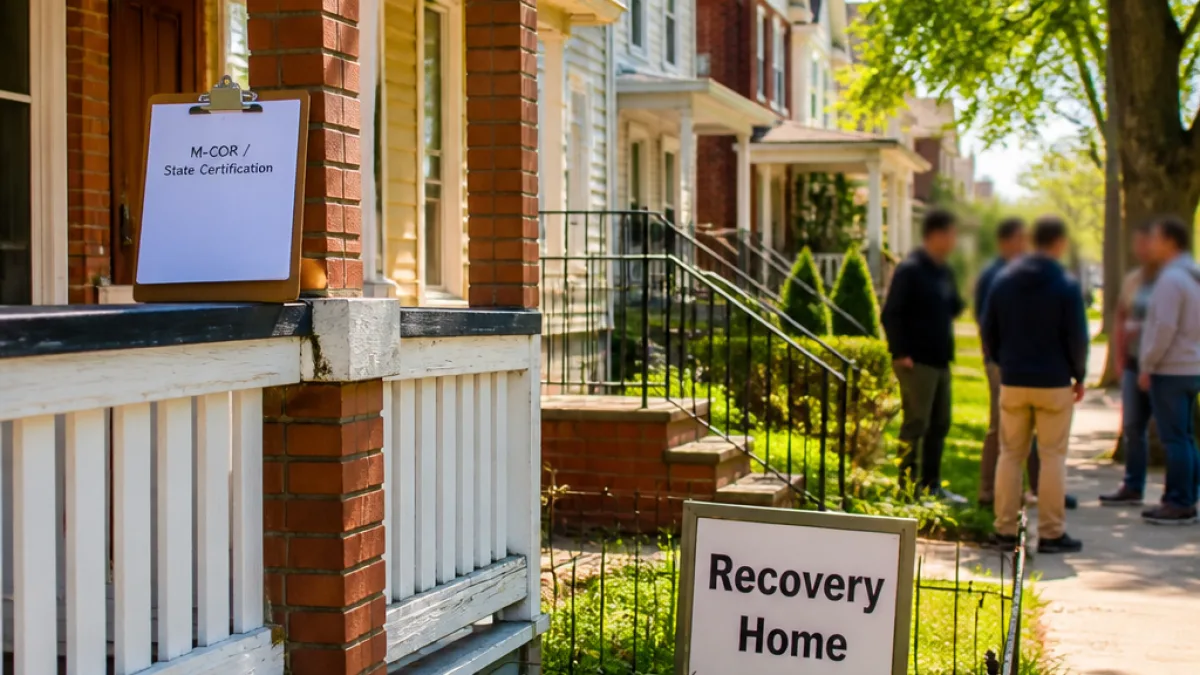
HAGERSTOWN — State Sen. Paul Corderman is pressing the Maryland Department of Health for formal assurances that recovery or “halfway” houses operating in Western Maryland comply with program rules, local zoning ordinances and safety requirements, officials said.
Corderman, a Republican representing Washington County, raised questions about whether facilities helping people transition after incarceration are being sited and run in ways that meet both state standards and county regulations. The request follows concerns voiced by residents about neighborhood impacts, including one worry cited about falling property values tied to an immigration detention facility in Williamsport.
Certification and oversight at issue
Those working with the state to run the recovery program say the houses adhere to strict standards and carry the state’s Maryland Certification on Recovery designation, known as M-COR. Kevin, a representative of Survival Recovery — a contractor involved in the program — told reporters that their residential sites are structured and monitored.
"All of our houses are very structured living environments. There are about 145 people in our program," Kevin said.
Corderman’s inquiry specifically asks the health department to verify that inspections, occupancy limits and other safety protocols are being followed, and to confirm that siting of the homes respects county zoning requirements such as separation from schools and other restricted uses.
Community concerns and program scale
While program operators emphasize certification and structure, neighbors have expressed unease about the presence and concentration of these facilities. The debate touches on public safety, neighborhood character, and questions about how state-level recovery programs interact with local land-use rules.
Survival Recovery reported roughly 145 residents across its program, signaling a notable presence in the community. Corderman’s request seeks clarity about whether the health department’s oversight is robust enough to ensure consistent implementation of the certification’s standards.
What officials are being asked to confirm
- That each facility holds the required M-COR designation and meets the program’s criteria.
- That health department inspections are conducted on schedule and address occupancy and safety limits.
- That siting of homes conforms to local zoning ordinances, including required distances from schools and other sensitive sites.
At the heart of Corderman’s request is a call for transparency and accountability from state regulators tasked with licensing and monitoring recovery services. The senator is seeking formal verification that state standards coincide with county land-use rules, rather than operating in tension with them.
Broader policy and local impact
The issue underscores a wider policy question: how to balance the need for reentry supports for people leaving incarceration with the concerns of neighborhoods that host those services. Supporters of recovery housing emphasize its role in helping residents find employment and stability, while critics worry about concentration, oversight and effects on property values.
So far, program operators say they comply with state certification requirements and maintain structured living environments. Corderman’s correspondence with the health department asks officials to provide reassurances in writing that inspections and occupancy limits are being enforced throughout Washington County.
As the state agency reviews the request, residents, local officials and program operators will be watching for any additional guidance or corrective action. For now, the debate remains focused on ensuring that state-certified recovery houses meet both the program’s intent and the expectations of the communities where they operate.
| Item | Detail |
|---|---|
| Legislator | Sen. Paul Corderman (R-Washington County) |
| Program certification | M-COR (Maryland Certification on Recovery) |
| Operator mentioned | Survival Recovery |
| Program population | About 145 people |
| Location | Hagerstown/Washington County |
Residents and elected officials who want further information should monitor communications from the Maryland Department of Health and Washington County zoning authorities as the review progresses. Any formal findings or directives from the health department could clarify how recovery housing will be administered and sited going forward.