
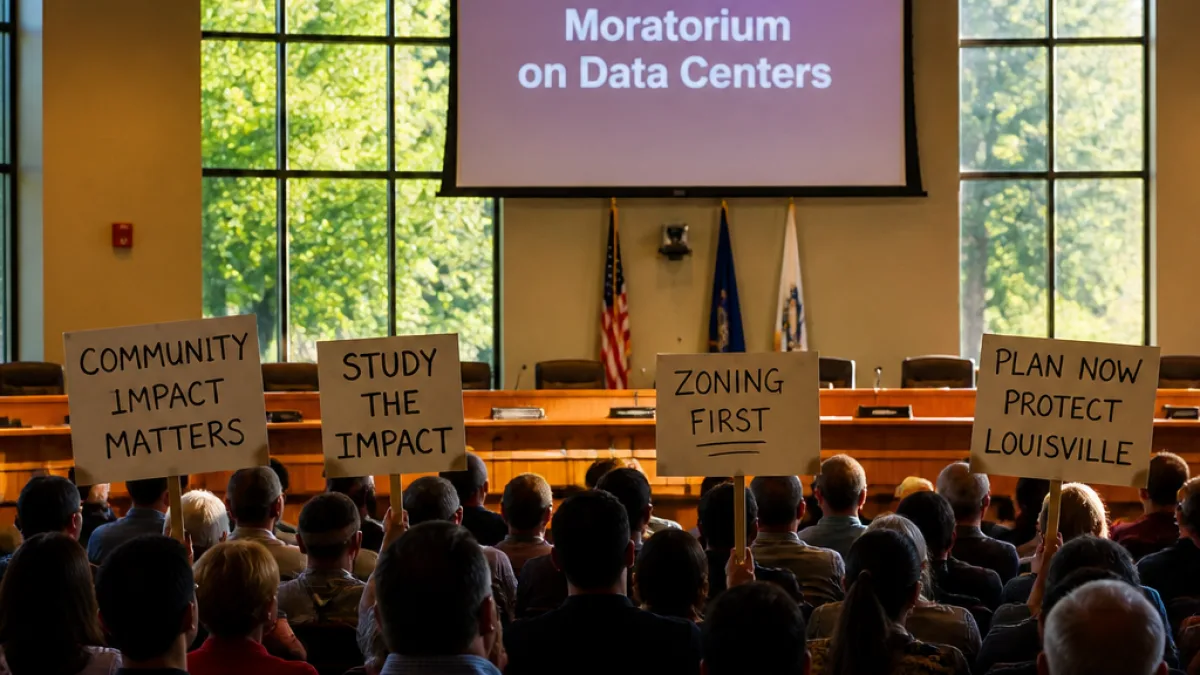
LOUISVILLE — The Metro Council on Thursday night approved a six-month moratorium on data centers, freezing new development plans, rezoning requests and conditional-use permits for projects identified as data centers or telecommunications hotels.
Council action and scope
The moratorium is intended to give the council and residents time to study the benefits, risks and local impacts of large-scale data-center projects. During debate, council members noted concerns about transparency, community input and the potential consequences for neighborhoods and infrastructure.
- What is paused: new data center development plans, rezoning petitions and conditional-use permit applications.
- Expanded coverage: language was added to include applications that would repurpose existing structures after an application this week used a loophole.
- Duration: six months; a proposed amendment to extend the pause to one year failed.
Public reaction and council debate
The meeting drew a vocal gallery and extended public commentary. Opponents of data centers in Louisville expressed frustration with the development process and what they described as deals made without adequate public input.
“But we are so very tired of the lies and deception, the shady partnerships and deals we have no say in,”
Sauda Brown, a resident who opposes data centers, told the council those concerns during public comment. At times the chamber was noisy; attendees chanted slogans and there were outbursts from the gallery that underscored the strong emotions on both sides of the issue.
Councilwoman Donna Purvis, who represents District 5, said both elected officials and the public need more information before permitting large-scale facilities. “Council Members and the broader community need a fuller understanding of the benefits, the potential consequences of data centers,” she said. “And we need to understand the impact.”
Councilman Anthony Piagentini of District 19 cautioned against shutting the door on potential investment. He pushed back on what he described as absolutist opposition from some residents. “What I’m not going to do is negotiate with a Marxist mob,” he said, arguing that the council should seek balance between progress and community concerns.
The moratorium passed with near-unanimous support; Councilman Stuart Benson, District 20, was the only member to vote against it. Benson also cast the lone dissenting vote when the measure advanced out of committee.
Another council member framed the vote as the beginning of a longer effort to limit what are often described as hyperscale data centers. “This is a start in a long process of fights against hyperscale data centers and exposing our community to those hyperscale data centers,” the council member said, adding that residents clearly supported that stance.
Next steps and implications for Louisville
The pause gives the Metro Council time to evaluate zoning rules, community protections, and how new or repurposed buildings might be used for telecommunications or data-storage purposes. Developers seeking to build or convert properties for such uses must now wait while the council studies the issue.
Supporters of greater scrutiny say the moratorium will create space for public hearings, impact studies and possible new ordinances to guide future proposals. Opponents worry the pause could deter investment and complicate negotiations with companies considering the city for digital infrastructure projects.
| Measure | Outcome |
|---|---|
| Six-month moratorium on data centers | Passed (only Councilman Stuart Benson voted no) |
| Amendment to extend moratorium to one year | Failed |
The council also added language to close a loophole after a recent application sought to repurpose an existing structure. That change broadens the moratorium’s reach to prevent applicants from circumventing the pause by converting buildings for data center use.
How long the pause will shape development in Louisville depends on the council’s follow-up work. The moratorium sets a timetable for studies and hearings that will determine whether the city adopts new zoning rules, restrictions or guidance for data-center proposals.
For now, developers and community groups alike must wait as council members gather information and hear from residents on an issue that has become a flashpoint in neighborhoods across Louisville.

















