
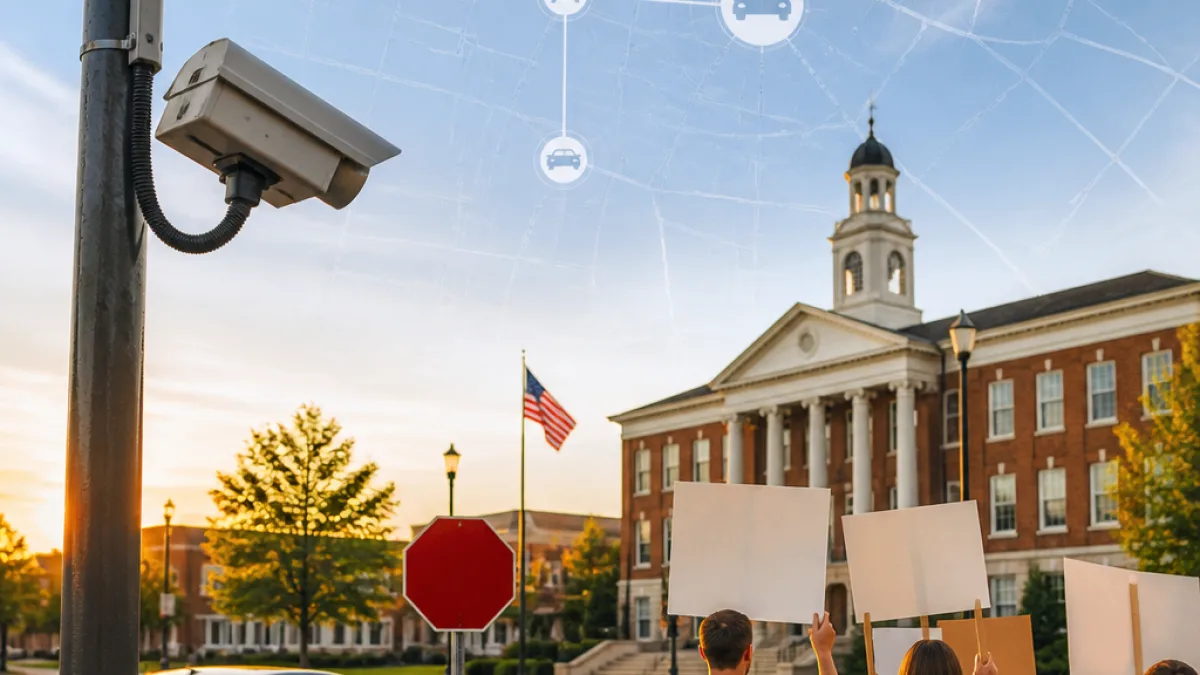
Fort Mitchell and other Northern Kentucky communities have become focal points in a growing conversation about automated license-plate readers and the broader surveillance systems that support them. The controversy has moved beyond local council chambers to Congress, where Rep. Thomas Massie introduced legislation aimed at limiting federal support for these technologies.
Local backlash, nationwide debate
The immediate concern for residents centers on roadside cameras that can record license plates and generate time-stamped observations of vehicle movements. While a single reader documents a single pass, privacy advocates and some local officials argue the true risk arises when those observations are stored, networked and made searchable across time and place.
“This debate is more than one company.”
That idea has been echoed by lawmakers and local leaders as communities deliberate whether to allow companies such as Flock Safety to operate their systems. Fort Mitchell has already blocked the cameras from capturing images, and other towns have followed suit. At the same time, police departments in other jurisdictions continue to defend the tools as useful for solving crimes and tracking stolen vehicles.
Legislation targets federal funding
Rep. Massie’s proposed measure, dubbed the “Flock-Off Act”, would prohibit federal funds from being used for automated license-plate readers and biometric surveillance cameras. Although the bill’s name singles out one vendor, its language recognizes a wider phenomenon — the proliferation of automated surveillance networks that extend far beyond a single manufacturer.
Supporters of restrictions argue that public money should not underwrite equipment and services that can create long-term, searchable records of individuals’ movements. Opponents contend that limiting access could hamper law enforcement’s ability to investigate crimes efficiently.
Company changes and lingering concerns
Flock Safety has announced changes to its practices that aim to address some privacy concerns. The company moved from a default image retention period of 30 days to recommending a default of seven days, and said it would require enhanced misuse detection and case-code requirements for law-enforcement customers by the end of the year.
| Policy | Previous | New/recommended |
|---|---|---|
| Default image retention | 30 days | 7 days |
| Law-enforcement safeguards | Not required | Enhanced misuse detection; case codes by year-end |
Those adjustments are substantial, company officials say, but privacy advocates counter that a shorter retention window and additional safeguards do not eliminate the core issue: a network of readers, backed by stored data, can reconstruct a vehicle’s movements and create a persistent record.
Court precedent and legal questions
Courts have already begun to address privacy questions raised by location-based surveillance technologies. Legal debate exists over how long-term, time-stamped location data should be treated under existing Fourth Amendment jurisprudence. That judicial context has helped fuel legislative and local government consideration of whether stricter rules or bans are appropriate.
What this means locally
For Northern Kentucky residents, the dispute has practical consequences:
- Communities considering whether to permit automated license-plate readers must weigh public-safety benefits against privacy and civil-liberties risks.
- Changes announced by vendors may influence local policy deliberations but do not resolve questions about data retention, access and networked analysis.
- Federal action, such as funding restrictions, could limit the deployment of these systems or shift costs to local budgets.
Local officials in Fort Mitchell and neighboring towns have signaled caution, while law enforcement leaders in other jurisdictions argue the technology is a useful investigative tool. The balance between those views will determine how widespread these systems become in Kentucky and beyond.
As debates continue at city council meetings, statehouses and in Congress, communities will be asked to confront not just the cameras on the roadside, but the larger databases, sharing practices and legal frameworks that give those cameras their power.
— Marcus Ellison, State Correspondent

















