
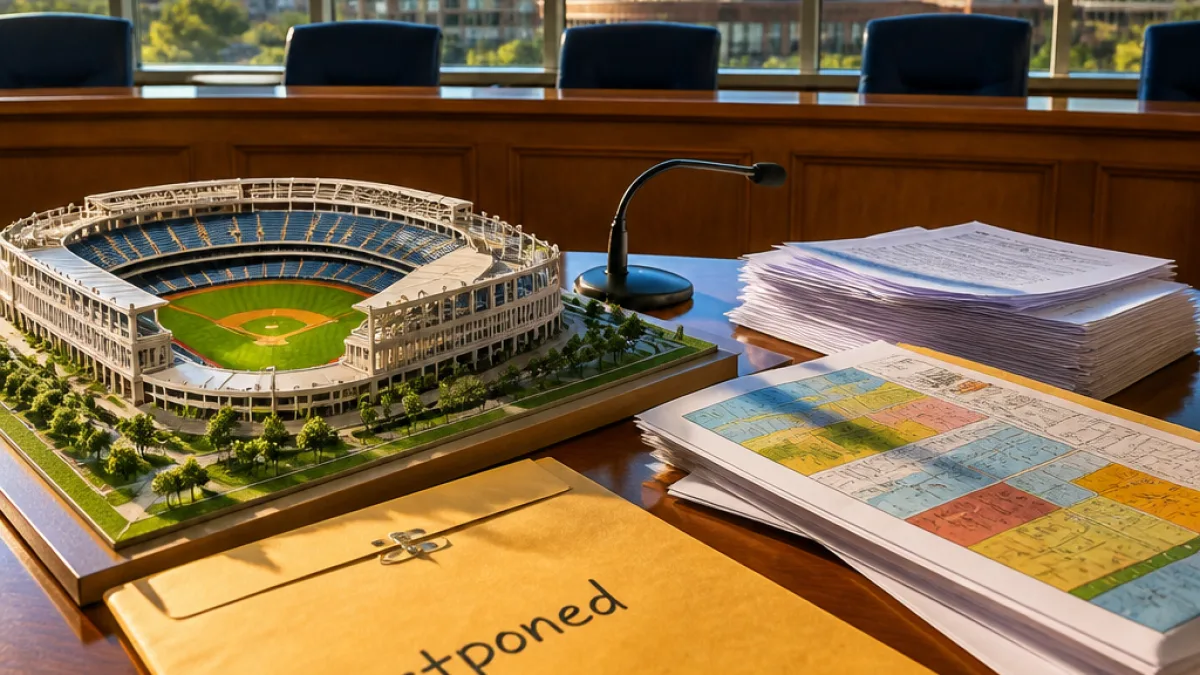
Kansas City officials paused action this week on ordinances intended to begin the city’s role in building a downtown Royals ballpark, saying more time is needed to review complicated agreements — a delay that opponents say still leaves too many unanswered questions about financing and public incentives.
Committee postpones vote, citing need for more review
A city council committee had been scheduled to consider ordinances that would authorize initial city participation in the project, including a $20 million city contribution and direction to the city manager to finalize lease and bond agreements with the Royals, developers and incentive agencies. Instead, the committee postponed the items Tuesday, with Mayor Quinton Lucas telling reporters the documents were not ready for formal consideration.
"I believe that even in representative democracy, i.e. going through city council meetings, you have a fair opportunity not just for our review, but for the public's review on that, which we're working on," Lucas said about the agreements with the Royals. "I don't think that was possible today."
City officials continue to describe the project as a fast-moving effort to deliver an estimated $1.9 billion downtown stadium. The planning process has already produced a unanimous vote last week by the City Plan Commission to rezone the Crown Center area for a ballpark district — a move that came two weeks ahead of the commission’s original schedule.
Opponents say pace appears intended to sidestep a public vote
That accelerated timetable has fueled concern among neighborhood residents, workers, and at least one council member who argue the process is being rushed and that public input is not being taken seriously. Organizers with Missouri Workers Power and Stand Up KC submitted thousands of signatures in June to force a public referendum on any local incentives tied to the ballpark.
"The whole point of rushing these agreements is to ensure these agreements are finalized and signed prior to a vote of the people to circumvent the will of the people," Council Member Johnathan Duncan said, according to reporters. "I don't understand what the mayor is afraid of. I don't understand what the city manager is afraid of."
Under the local petition process, the council must take action on the referendum petition by the end of August. Supporters of the petition have said the city’s efforts to finalize deals quickly could negate the public’s opportunity to vote on incentives tied to the project.
What remains unresolved
Details about how bonds and lease agreements would be structured were not released at Tuesday’s meeting, and critics continue to request more information about the financing plan and any long-term obligations for the city. Officials have indicated the city manager will be directed to finalize agreements, but actual contract language and funding mechanisms have not been presented in full to the public.
- City contribution: $20 million earmarked toward the ballpark.
- Estimated project cost: $1.9 billion for the downtown stadium.
- Rezoning action: City Plan Commission approved rezoning for a Crown Center ballpark district.
- Petition status: Thousands of signatures submitted in June to require a public vote on local incentives; council must act by end of August.
Neighbors near Crown Center have publicly raised concerns about the rezoning and how the development could affect traffic, parking and neighborhood character. Workers and other residents have criticized what they describe as a lack of meaningful outreach and transparency.
| Item | Detail |
|---|---|
| City contribution | $20 million |
| Estimated total cost | $1.9 billion |
| Rezoning approval | Unanimous vote by City Plan Commission |
| Referendum petition | Thousands of signatures submitted; council action required by end of August |
Mayor Lucas said the delay was motivated by a desire to allow both the council and the public adequate time to review the agreements, rather than to halt the project. He also said the city intends to continue making quick progress on the stadium despite the procedural pause.
With the petition deadline looming, the council faces competing pressures: move rapidly to finalize agreements that proponents say will lock in financing and timelines, or slow the process to accommodate additional public review and potentially a referendum on incentives.
The postponement leaves several practical questions unsettled: when precise bond and lease terms will be released to the public, what conditions would be attached to the city’s $20 million, and how any tax or incentive commitments would be structured over time. City residents and downtown stakeholders will be watching the council’s next steps closely as the August deadline approaches.
This story will be updated as more documentation becomes available and as the council schedules follow-up action on the ordinances.
















