
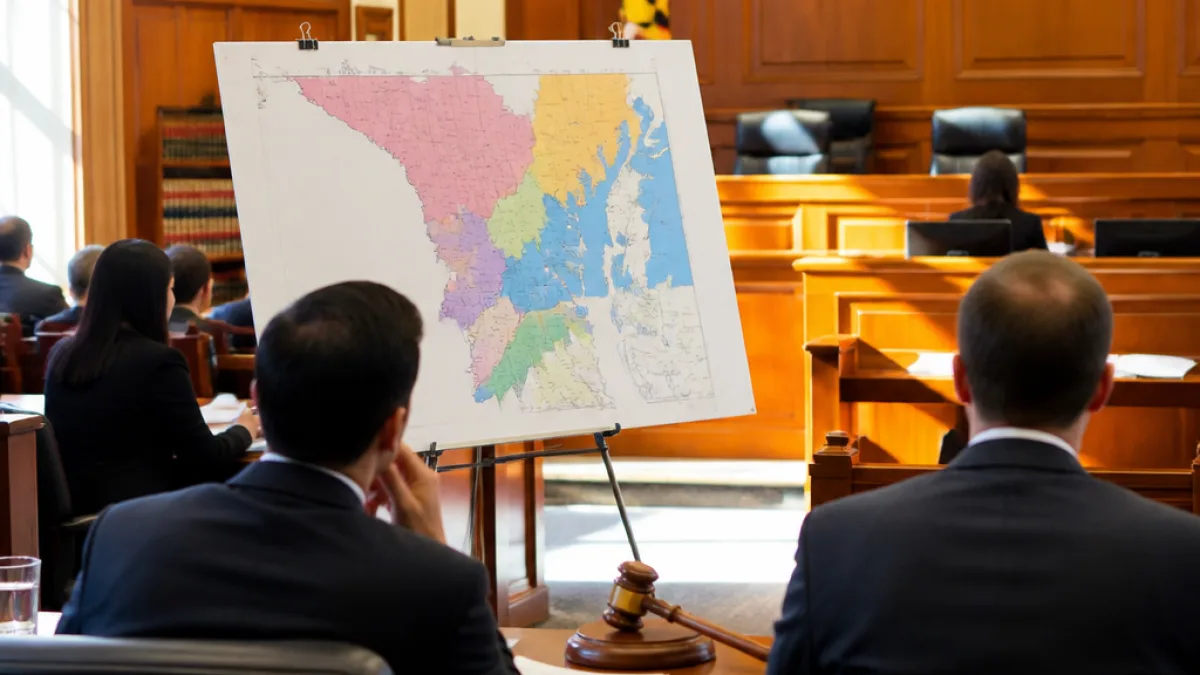
Lawyers said Tuesday that a hearing in a Republican challenge to Maryland’s congressional redistricting plan will begin on Aug. 25. The case, brought by GOP-aligned plaintiffs, seeks judicial review of maps drawn after the most recent redistricting cycle and has the potential to affect how Maryland voters are represented in Congress.
What’s at stake
Redistricting litigation can change where voters live in relation to congressional boundaries, altering the makeup of districts and the competitiveness of races. If a court finds fault with the current map, it could order changes that are implemented before upcoming election cycles, or it could leave the map in place while an appeal proceeds.
Legal challenges of this kind are often moved through state courts and can advance to federal courts depending on the constitutional questions raised. Outcomes can include upholding the map, ordering revisions, or sending the matter back to the state legislature to draw a new plan.
Timeline and process
According to attorneys involved in the case, the hearing will commence on Aug. 25. From there, the court could rule quickly or take time to review briefs and evidence. Any decision could prompt immediate appeals, extending the timeline and potentially carrying the issue into appellate courts.
- Hearing date: Aug. 25
- Parties: Republican-aligned plaintiffs challenging the map
- Possible outcomes: court upholds the map, orders revisions, or remands to the legislature
Local impact and voter consideration
For Maryland voters, the dispute could alter which communities are grouped together in congressional districts, potentially changing which incumbent represents them and how competitive future elections are. Changes to district lines can also affect campaign strategy, resource allocation, and voter outreach in the months leading up to primary and general elections.
Election officials typically prepare ballots and precinct plans months in advance of elections. If a court orders changes late in the process, election administrators may face compressed timetables to implement new boundaries, reassign voters to districts, and ensure ballots reflect updated contests.
Why these challenges arise
Redistricting challenges stem from disputes over fair representation, legal compliance, and the process used to draw maps. Plaintiffs may argue that a plan dilutes the voting strength of particular communities, violates state constitutional provisions or statutory requirements, or was produced through unfair procedures. Defenders of enacted maps often argue that they comply with law and reflect legitimate criteria such as compactness, contiguity and preservation of political subdivisions.
Past context and broader implications
Maryland has been the subject of redistricting disputes before, as courts and voters have at times contested how district lines are drawn. While this case’s particulars will determine immediate consequences, any court ruling here could contribute to the body of state case law that shapes future redistricting cycles.
Because redistricting affects federal representation, decisions in state court can have ripple effects on the composition of Maryland’s congressional delegation and, indirectly, on broader federal policy debates by altering the partisan balance of seats.
| Item | Detail |
|---|---|
| Hearing start | Aug. 25 |
| Plaintiffs | Republican-aligned challengers |
| Potential next steps | Ruling, revisions, or appeals |
What to watch for
Observers should look for the court’s reasoning if a ruling is issued, whether the judge orders remedial maps, and how quickly any party files an appeal. The precise relief sought by the plaintiffs and the legal grounds invoked will be central to the court’s analysis and to any appellate review.
As the hearing date approaches, attorneys for both sides are likely to file additional briefs and evidence. Voters, candidates and local election officials will be monitoring developments to determine how the case might reshape the political landscape ahead of the next rounds of federal elections.
Coverage of the hearing and any decisions will continue as legal filings and court actions become public.