
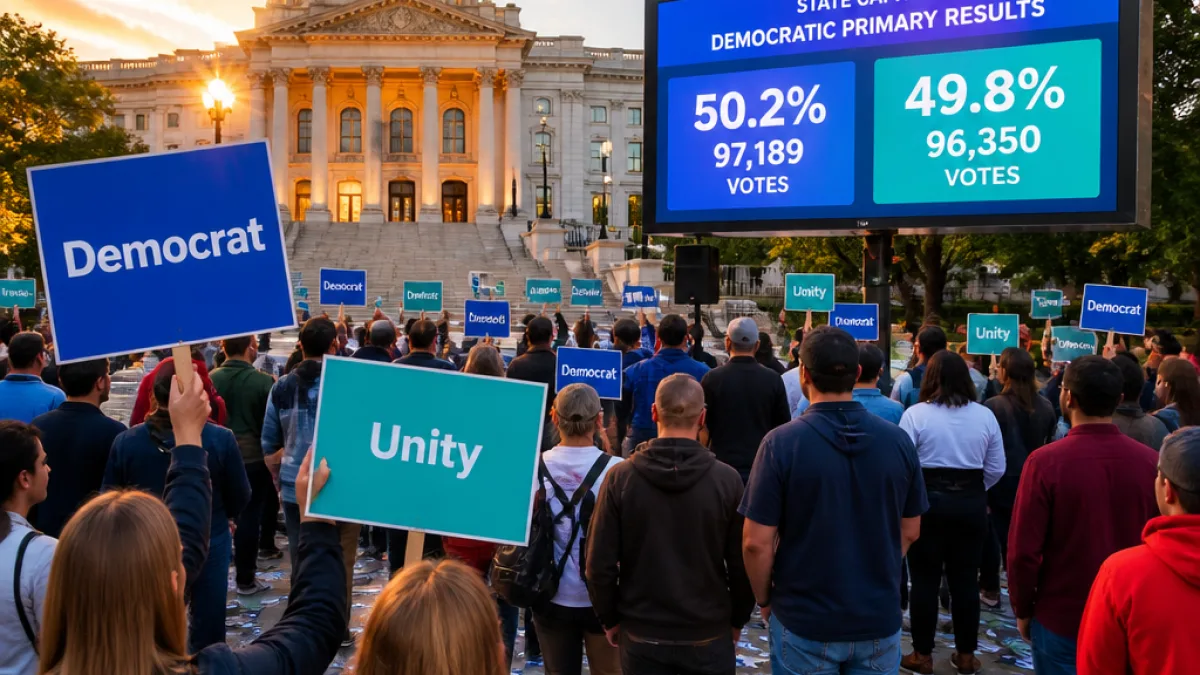
MADISON, Wis. — David Crowley, the Milwaukee County executive, claimed the Democratic nomination for Wisconsin governor in a razor-thin primary that highlighted deep divisions within the state party over electability and ideology.
What happened Tuesday
Crowley, a moderate Democrat vying to become Wisconsin’s first Black governor, defeated progressive challenger Francesca Hong, a democratic socialist who ran on a platform aimed at expanding the party’s left flank in a battleground state. The outcome was decided in a close count late Aug. 11, and while Crowley did not speak to supporters that night, his campaign indicated he would appear at a unity event the following day.
Crowley’s campaign manager, Garren Randolph, framed the result as a mandate to broaden the coalition. "Now, David is focused on bringing people together, earning the support of Democrats, Republicans, Independents, and anyone who believes Wisconsin is at its best when we work together and deliver results," Randolph said in a statement.
Progressive movement’s near-miss
Hong’s close showing — coming after a wave of recent wins by progressive candidates elsewhere — energized activists who view her performance as proof of growing appetite for bold policies among Democratic voters. Even in defeat, her campaign argued the insurgent effort had lasting impact on the state’s political conversation.
"We have built something that will change politics forever," Hong told supporters as returns were still coming in. "The work we have done will be remembered forever. I know we don’t have the final results right now, but what I do know is we are ready to keep fighting."
Her campaign manager, Becky Cooper, said after Hong conceded that she was "proud of" the team’s effort, underscoring the determination among progressives to remain active in Wisconsin politics despite the loss.
What this means for November
Crowley now prepares to face Republican U.S. Rep. Tom Tiffany in the general election. Tiffany is backed by former President Donald Trump, giving the GOP nominee a high-profile endorsement as the fall campaign gets under way. The general election will test whether Wisconsin voters prefer Crowley’s message of pragmatic coalition-building or Tiffany’s conservative platform, amplified by Trump's support.
For Democrats nationally and in Wisconsin, the contest illustrated an ongoing debate: whether to prioritize nominees viewed as most competitive in the general election or to embrace candidates who push for structural policy changes. Party leaders had expressed concerns that self-identified democratic socialists, particularly those who have taken controversial stances in the past, could be vulnerable in competitive statewide races.
Local context and implications
Wisconsin remains one of the nation's most closely watched battlegrounds. The governor’s race is likely to shape state policy for years and could influence down-ballot contests. Crowley’s historic candidacy — if successful in November — would mark the first Black governor in Wisconsin’s history, a point his campaign emphasized without overstating the election’s uncertainty.
Hong’s performance signals a persistent base of progressive activists who may press the Crowley campaign on policy priorities and turnout work as the fall campaign proceeds. That dynamic could affect what issues rise to the forefront and how the Democratic nominee allocates resources across the state.
- Winner: David Crowley, Milwaukee County executive.
- Runner-up: Francesca Hong, democratic socialist and state-level candidate.
- Next matchup: General election vs. Republican Rep. Tom Tiffany in November.
| Candidate | Profile | Primary result |
|---|---|---|
| David Crowley | Moderate Democrat; Milwaukee County executive | Nominee (narrow victory) |
| Francesca Hong | Democratic socialist; progressive challenger | Close second |
The narrow margin and competitive nature of the primary suggest Wisconsin’s partisan landscape remains fluid. Both campaigns will need to mobilize supporters and persuade undecided voters as the calendar moves toward November.
As Crowley moves into the general election, his immediate tasks will include consolidating Democratic support, courting independents and disaffected Republicans, and preparing for an expected, high-profile Republican attack campaign. For progressives, the emphasis will likely shift to whether they can influence the party’s platform and turnout operations, even without the nominee they preferred.
Voters and observers will be watching in the weeks ahead to see how quickly the Democratic factions unite, how the Crowley campaign frames the general-election contrast with Tiffany, and whether the issues emphasized during the primary — including criminal justice, economic policy and public services — remain central in the statewide debate.
Reporting for this story included material from The Associated Press.

















