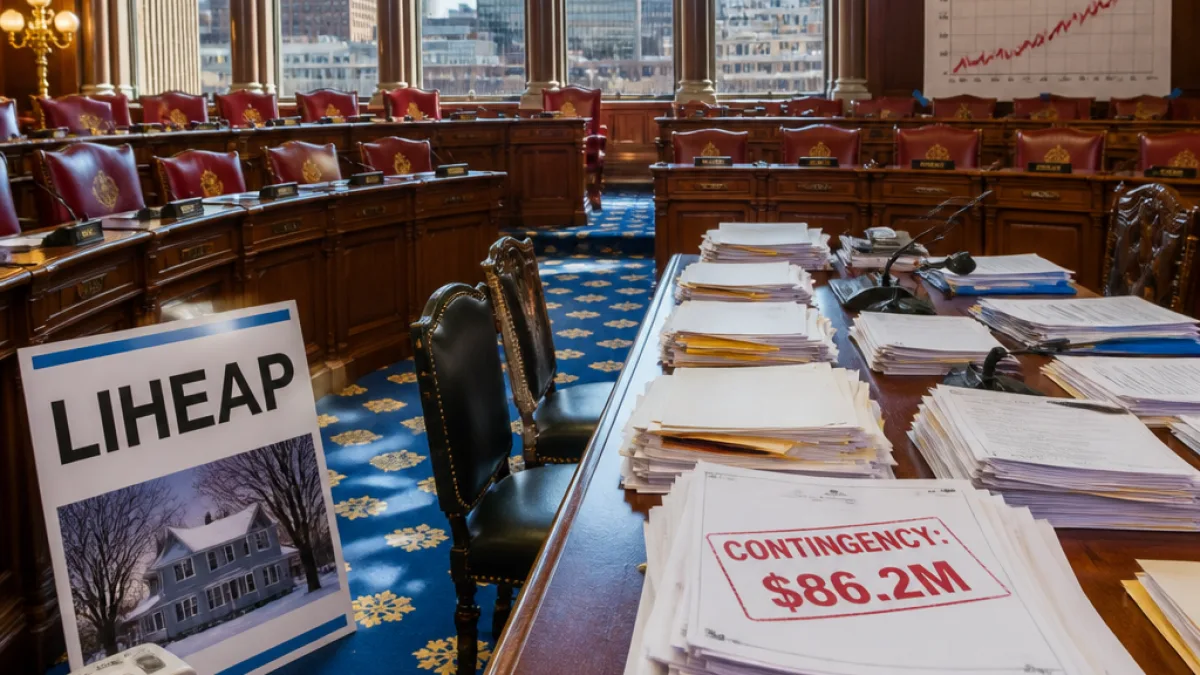
HARTFORD — State lawmakers on Wednesday approved an $86.2 million contingency plan to assist low-income Connecticut families with energy costs this winter, but the money will not reach households unless Congress restores federal funding for the Low-Income Home Energy Assistance Program (LIHEAP).
State action tied to federal decision
State Senator Julie Kushner, D-Danbury, voted in favor of the package, which is designed to be deployed if lawmakers receive federal LIHEAP funds this fall. The program is typically federally funded and administered at the state level by local community action agencies that advertise the benefit and process applications.
“Connecticut has done its part. Now I’m hopeful that President Trump and Congress will get their act together this fall and approve federal funding for LIHEAP, as they have done on a last-minute basis in previous years. There are too many people across America who rely on this program to stay warm every winter,” Sen. Kushner said.
Federal LIHEAP dollars were eliminated from the 2025 federal budget, and the state plan depends on Congress reversing that action or otherwise approving funds for the program ahead of the heating season.
Who would benefit
Connecticut officials estimate LIHEAP helps about 94,300 households annually. The program serves significant numbers of vulnerable residents, including:
- 31,000 households with elderly members
- 13,000 households with people with disabilities
- 9,000 households with children under age 6
Under the state plan, qualified households would receive between $355 and $705 toward home heating oil, natural gas or electricity costs, with the exact amount determined by family size and income.
| Measure | Figure |
|---|---|
| Estimated households served | 94,300 |
| Elderly households | 31,000 |
| Households with disabilities | 13,000 |
| Households with children under 6 | 9,000 |
| Payment range per household | $355–$705 |
Costs and context
State officials pointed to rising heating costs as a driver for the urgency. The announcement cited a 52% increase in home heating oil prices in Connecticut over the past year, from $3.17 per gallon in August 2025 to $4.83 today.
LIHEAP has historically been a state-administered but federally funded program. Local community action agencies typically handle outreach and application processing; without federal dollars, the state’s ability to provide full benefits is limited.
What comes next
The state appropriation is conditioned on federal action. Connecticut lawmakers have signaled they will hold funds in reserve or stand ready to administer the aid if Congress restores LIHEAP funding. Lawmakers and advocates say past federal lapses were sometimes resolved by last-minute congressional action, and they are pressing for the same outcome this fall.
Officials have not released a detailed timeline for payments, citing dependence on federal approvals and guidance. Community action agencies will be the point of contact for applications and distribution once any funds are secured.
Practical information for residents
Residents who think they may be eligible for LIHEAP should prepare documentation typically required for such assistance — proof of income, household size and residence — and monitor announcements from their local community action agency and the Connecticut Department of Social Services for application dates and eligibility rules.
Advocates and some lawmakers urged Washington to act quickly, saying the combination of higher energy prices and the pending heating season leaves many households at risk if federal support does not arrive.
State Senator Kushner framed the vote as a necessary step to ensure Connecticut is ready to deliver aid if and when federal funds are restored.
Reporting from the state Capitol, this account reflects information provided by the Connecticut Senate Democrats’ office and state program estimates.