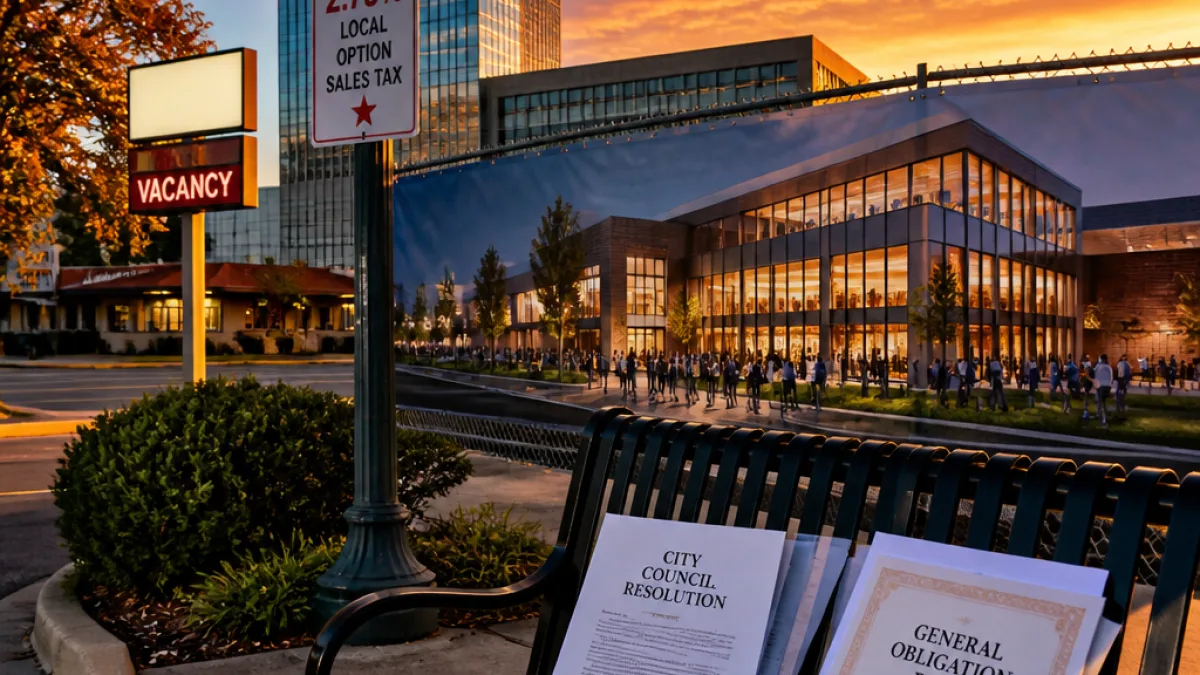
City-backed authority outlines funding model for new Performing Arts Center
The Clarksville Arts, Culture and Tourism (ACT) Authority — created by City Council resolution in 2024 — has released new details about how it intends to fund a proposed Clarksville Performing Arts Center, an initiative that ties municipal support to a newly established hotel and motel occupancy tax and a city backstop for construction financing.
The ACT Authority, established as an instrumentality of the City of Clarksville but structured to operate as an independent nonprofit, will receive revenue from a 2.75% Hotel/Motel Occupancy Tax dedicated to supporting arts organizations and part of the annual payments toward the center's construction debt. The authority will also rely on earned and contributed revenue generated through the venue’s operations to cover the remainder of debt service and ongoing operating costs.
| Funding source | Role |
|---|---|
| 2.75% Hotel/Motel Occupancy Tax | Support two resident companies and a portion of construction debt payments |
| Earned and contributed revenue | Cover remainder of debt service and operating costs through the venue’s operations |
| City backstop for bonds | Resolution established agreement to backstop the bond measure needed for funding |
Those resident companies are identified as the Clarksville Arts & Heritage Council and the Roxy Regional Theatre. The ACT Authority’s board of directors is appointed by the City Council, reflecting the partnership between city government and the nonprofit authority.
ACT Authority Executive Director Cameron O’Hanlon framed the arrangement as a "private/public partnership," saying it gives the project "the best opportunity to succeed." He told officials the structure allows the organization to "leverage the confidence that comes with an association with the City Government with the entrepreneurial opportunities that come with being a non-profit organization."
"This private/public partnership gives us the best opportunity to succeed," said ACT Authority Executive Director Cameron O’Hanlon.
O’Hanlon stressed that while the occupancy tax provides an "important foundation" for the authority’s revenue, officials expect the center to pursue other revenue streams. "We’re not going to be complacent and let that be all of our revenue," he said. "We have a business model that is going to set us up not only for short-term success, but long-term sustainability."
Local implications and next steps
The financing plan sets a predictable revenue stream tied to visitors staying in local lodging, which could shift some of the financial burden for construction to tourism-related activity rather than general city revenues. At the same time, the city’s decision to backstop the bond measure creates an explicit municipal link to the project’s financial structure.
Key immediate implications for Clarksville residents include:
- Tourism-driven funding: Portion of the occupancy tax is earmarked for arts organizations and performing center debt service.
- City responsibility: The City Council’s resolution established a backstop for the bond issue, tying municipal credit to construction financing.
- Sustainability plan: Officials intend to rely on earned and contributed revenue from the venue to manage operating expenses and remaining debt service.
The ACT Authority’s plan also names specific beneficiaries of the occupancy tax revenues — the Clarksville Arts & Heritage Council and the Roxy Regional Theatre — which positions those groups as integral partners in programming and community outreach once the center opens.
Officials have not released a detailed timeline for design, bond sales or construction in the documents shared with the public, nor were cost totals or the full structure of the bond measure included in the material released so far. Instead, the authority is emphasizing its dual role as a city-affiliated instrumentality and an entrepreneurial nonprofit seeking earned income to support operations over the long term.
As the project advances, Clarksville residents and business owners can expect future public meetings and council actions related to bond authorization, occupancy tax collection and oversight of the authority’s board appointments. Those steps will determine the pace at which the project moves from planning into construction and eventual operation.
The ACT Authority’s approach attempts to balance public support and accountability with the flexibility of a nonprofit operating model. Whether that balance will deliver the long-term financial sustainability officials describe remains dependent on visitor patterns, earned-revenue performance and the terms of the bond financing that the City Council has agreed to backstop.