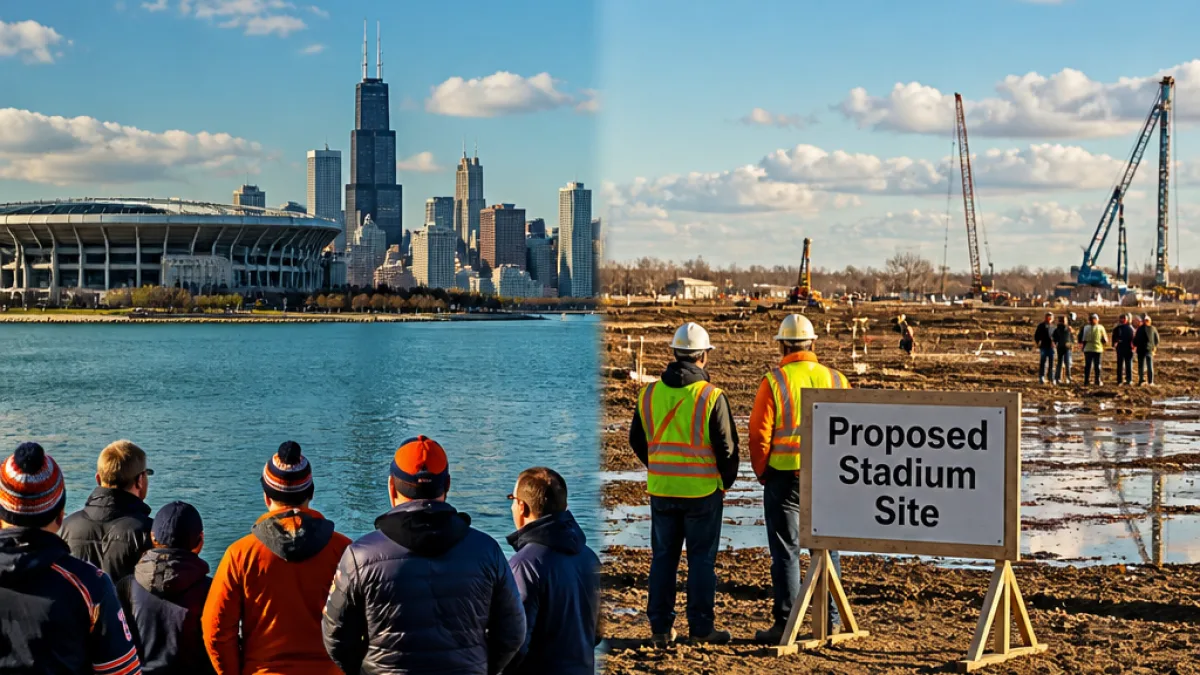
The Chicago Bears told reporters Thursday that their “sole focus” in the stadium search is on Hammond, Indiana, a development that if completed would move the franchise across the state line and reshape long-term plans for the team and the city of Chicago.
Team president Kevin Warren confirmed that due diligence at the Lost Marsh site in Hammond has been completed and deemed viable for a stadium project. Warren also said the organization identified a second location, the Wolf Lake site, which is undergoing its own due diligence.
“The due diligence has been completed at the Lost Marsh site in Hammond and is viable for a stadium,” Warren said, adding that representatives from Indiana, including the governor, have been “stellar to work with” and “phenomenal partners.”
What officials say and what remains undecided
Warren emphasized the lengthy horizon of the decision, calling it a “40-to-50 year” commitment and stressing the need to align legislative and construction elements before breaking ground. He also noted rising construction costs as a factor the franchise is weighing while negotiating terms.
Although he would not categorically rule out a return to Illinois, Warren said the Bears have not received an offer from the state and reiterated the team’s current focus on Indiana. The club previously signaled interest in a cross-border project that its leadership said would connect Northwest Indiana with Chicago neighborhoods and suburbs.
Local implications for Chicago residents
A stadium located in Hammond would affect many practical and economic aspects for Chicago-area residents, including:
- Commuting and transportation: Game-day transit patterns would shift, potentially increasing cross-state travel by car, commuter rail or shuttle services.
- Economic activity: Chicago’s South Side businesses that benefit from Bears home games may see fewer visitors, while Northwest Indiana could gain new development and jobs.
- Tax and legislative negotiations: Any public incentives or infrastructure commitments would involve state and local government bargaining across Illinois and Indiana.
City leaders, hospitality businesses and neighborhood organizations will be watching closely as the process unfolds. A move could change long-standing relationships between the franchise and Chicago’s neighborhoods, particularly the South Side where Soldier Field is located.
Sites under consideration and status
The team has publicly identified at least two sites in the Hammond area under review. Below is a brief summary based on the team’s statement and Warren’s update.
| Site | Current status |
|---|---|
| Lost Marsh (Hammond) | Due diligence completed; deemed viable for a stadium |
| Wolf Lake (Hammond) | Undergoing due diligence |
Questions ahead
Key decisions remain on funding, transportation planning and environmental review. Warren said he is eager to close the legislative side of the deal to proceed to construction, but provided no firm timeline for a vote or groundbreaking.
For Chicago residents, the prospect raises immediate questions: What will become of Soldier Field’s role in the city’s cultural and sporting landscape? How will game-day revenues and foot traffic shift? And how will cross-border cooperation on infrastructure and public safety be coordinated?
The Bears’ leadership framed a Hammond stadium as a regional project that could “transform the region” and “bring Chicagoland together,” language echoed in a June statement from the team. Whether that promise translates into benefits for Chicago neighborhoods will depend on negotiations that involve multiple governments and many stakeholders.
As the Bears continue due diligence in Northwest Indiana, Chicago officials and residents will be looking for more detailed proposals and firm commitments on funding, transit access and community impact — all factors that will ultimately determine how the team’s future location affects the city.