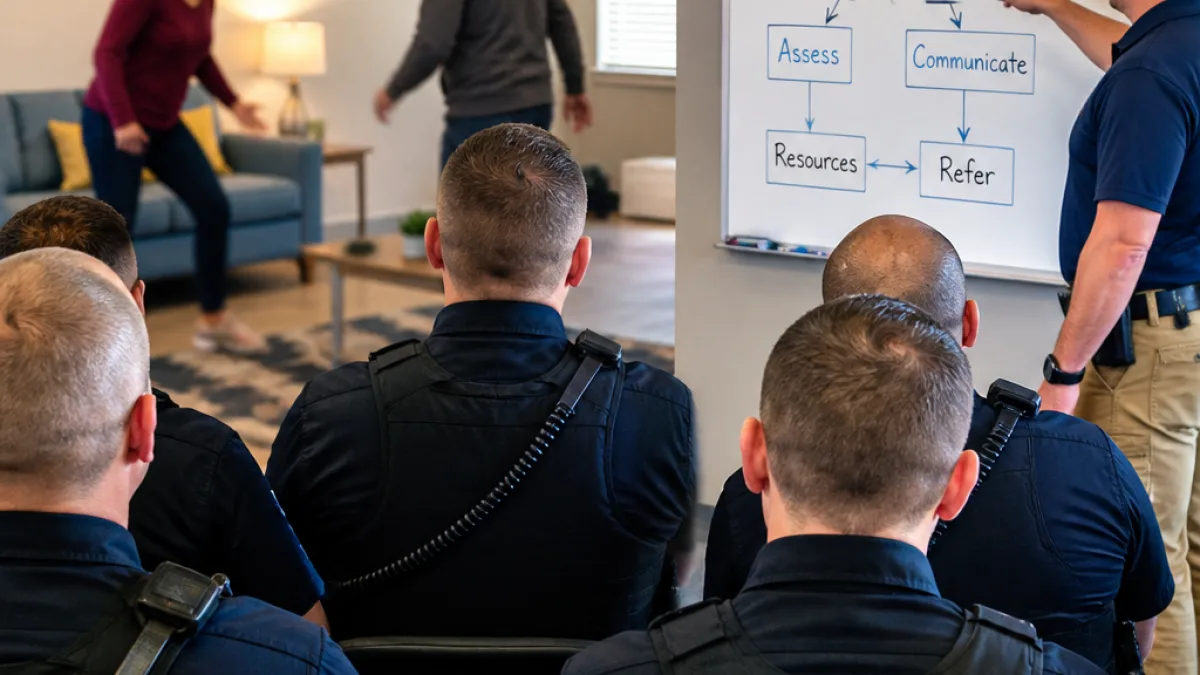
The Chandler Police Department has responded to more than 1,300 behavioral health calls so far in 2026, and the department is emphasizing scenario-based crisis-intervention training to better prepare officers for those complex encounters.
Training focuses on de-escalation and connection to care
At the department’s Public Safety Training Center, members of the Behavioral Health Unit walked through one of the many real-world scenarios officers practice to sharpen skills for responding to people in crisis. The training is built around three core goals: teaching officers how to de-escalate, to recognize mental health concerns, and to connect people in crisis with the right resources.
Officials say the hands-on exercises are designed to simulate the unpredictable conditions officers face on the street, encouraging techniques that reduce force and increase opportunities to route individuals to appropriate behavioral-health services rather than into the criminal justice system.
“The Chandler Police Department has responded to more than 1,300 behavioral health calls in 2026 so far.”
What officers practice
- De-escalation strategies: Verbal communication, time and space management, and tactically pausing to reduce tension.
- Recognition of mental health indicators: Identifying signs of psychosis, severe anxiety, substance-related crises and other conditions that may affect behavior.
- Resource navigation: Coordinating with behavioral health partners, making referrals, and arranging transport to treatment when appropriate.
The department recorded more than 1,300 behavioral health responses in 2026, a figure that underscores the frequency with which officers encounter individuals whose needs extend beyond traditional law enforcement interventions. The training center walkthrough provides a closer look at how policy and practice intersect when officers must make rapid decisions about safety, care and custody.
Local implications
For Chandler residents, the increase in behavioral health calls raises several community concerns: whether officers have sufficient training, whether mental health services are available and accessible, and how responses can balance public safety with compassionate care. By spotlighting scenario-based training, the police department aims to demonstrate preparedness and to show how officers are being equipped to reduce harm.
Community advocates and service providers often emphasize the importance of alternatives to arrest for people experiencing mental-health crises, including mobile crisis teams, crisis stabilization units and linkage to outpatient services. While the department’s training emphasizes connecting people to resources, the availability and capacity of those resources are separate challenges that affect outcomes after a contact with law enforcement.
| Training element | Primary aim |
|---|---|
| De-escalation | Reduce immediate risk and avoid use of force |
| Mental health recognition | Identify when medical or behavioral-health interventions are needed |
| Resource connection | Link individuals to treatment and community supports |
The department also produced a video showing the training exercises, offering residents an inside look at how officers learn and apply these techniques. The presentation is intended to increase transparency about officer preparedness when responding to behavioral health incidents.
As Chandler continues to see high volumes of behavioral health calls, the department’s training is likely to remain a focal point for conversations about public safety, mental health services and the role of police in responding to crises. For residents and policymakers, the questions now include how to expand alternatives, how to ensure sustained training and how to measure outcomes that prioritize both safety and care.