A recent investigation by the Baltimore City Office of the Inspector General found that several city-run and contracted homeless shelters suffer from persistent maintenance problems, including mold, pest infestations, plumbing failures and poor ventilation. The report also identified shortcomings in how the city monitors shelter conditions and manages maintenance contracts, raising concerns about health risks for residents and the effectiveness of oversight.
Conditions documented in shelters
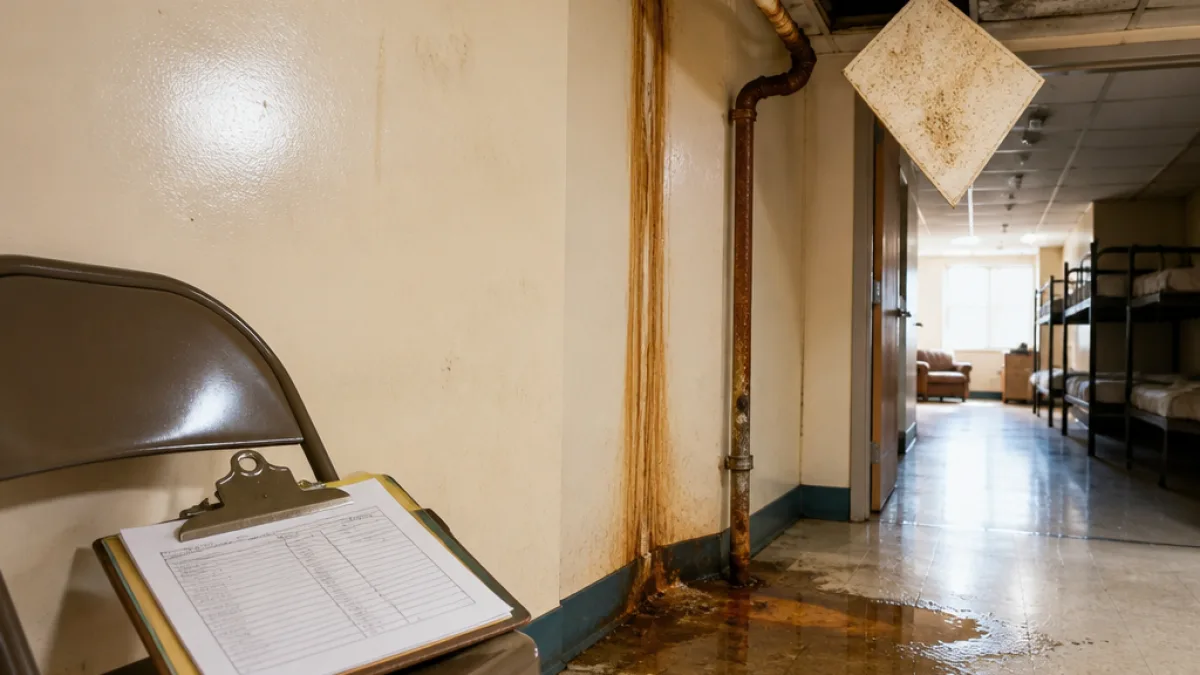
The inspector general’s review cataloged a range of physical problems inside shelters that can affect occupants’ health and safety. Investigators recorded issues that included visible mold growth and evidence of rodent or insect presence, as well as recurring plumbing problems and inadequate ventilation systems. The city’s homelessness agency, according to the report,
"acknowledged the seriousness of problems"highlighted by the investigation.
The report emphasized that these are not isolated or purely cosmetic concerns: environmental conditions such as mold and poor ventilation can aggravate respiratory illnesses, while chronic plumbing failures and pest infestations undermine the habitability of sleeping and common areas for people experiencing homelessness.
Oversight and contract management gaps
Beyond documenting physical defects, the inspector general’s probe concluded that the city’s systems for monitoring shelter conditions and administering maintenance contracts are insufficient. Investigators found weaknesses in routine inspections, recordkeeping and follow-through on repairs, as well as gaps in contract oversight that allowed problems to persist.
- Inadequate frequency or thoroughness of shelter inspections.
- Incomplete documentation of maintenance requests and repairs.
- Contract management issues that delayed or limited corrective work.
Those shortcomings, the report said, contributed to a pattern in which recurring problems were not resolved in a timely way and corrective measures were not consistently tracked to completion.
Local implications and unanswered questions
The findings carry direct consequences for Baltimore residents, particularly those who rely on emergency shelters for safety and basic needs. City officials and nonprofit partners that operate shelters must address immediate health and safety hazards while also overhauling the systems that allowed the conditions to persist.
The inspector general’s report stops short of prescribing specific remedies but signals the need for a coordinated response involving the city’s homelessness agency, property managers and contract administrators. Residents and advocacy groups will likely press for a timeline and transparent reporting on repairs, inspection schedules and contract reforms.
| Problem | Examples cited |
|---|---|
| Mold | Visible growth in living areas |
| Pest infestations | Rodent or insect evidence |
| Plumbing failures | Recurring leaks and fixture malfunctions |
| Poor ventilation | Inadequate airflow, potential respiratory risk |
City council members, city agency officials and community advocates will be watching closely for concrete steps to correct the problems and to strengthen oversight. For shelter residents, the immediate priority will be rapid remediation of hazardous conditions; for the city, the priority will be creating durable systems to prevent recurrence.
The inspector general’s report adds to long-standing debates in Baltimore about how best to deliver shelter services, maintain public buildings and hold contractors accountable for performance. Accountability advocates say the report should spur the city to release a plan with deadlines, staffing commitments and public updates so that residents and service providers can track progress.
As Baltimore officials consider next steps, the questions remain: how quickly will visible hazards be remedied, who will be responsible for ongoing inspections, and what changes will be made to maintenance contracts to ensure timely repairs? The report underscores that addressing physical conditions in shelters is not just a facilities issue but a public health and human services priority.