Arizona officials and water managers are warning residents that reductions to Colorado River deliveries will increase the cost of water even as taps continue to run.
Why rates will climb
Federal moves to reduce Colorado River allocations are prompting municipal utilities to pursue alternative supplies and expand treatment capacity — projects that require substantial capital and operational spending. Local leaders say those investments are necessary to maintain service, but they will carry a price that will ultimately be passed to consumers.
In Apache Junction, where the city relies entirely on the Colorado River for its water supply, utility staff are developing a suite of responses that include using stored groundwater credits, expanding a treatment plant and piloting advanced purified water technologies.
"Residents should not be concerned about tap water shortages," said Kathryn Sorensen of the Kyle Center for Water Policy at Arizona State University. "But yes, their price of water is going to go up."
City officials say they can draw on groundwater and long-term storage credits to offset some cuts in the near term. But those are finite buffers. Infrastructure investments — particularly in treatment and purification — are viewed as longer-term solutions to reduce dependence on Colorado River supplies.
Local projects and costs
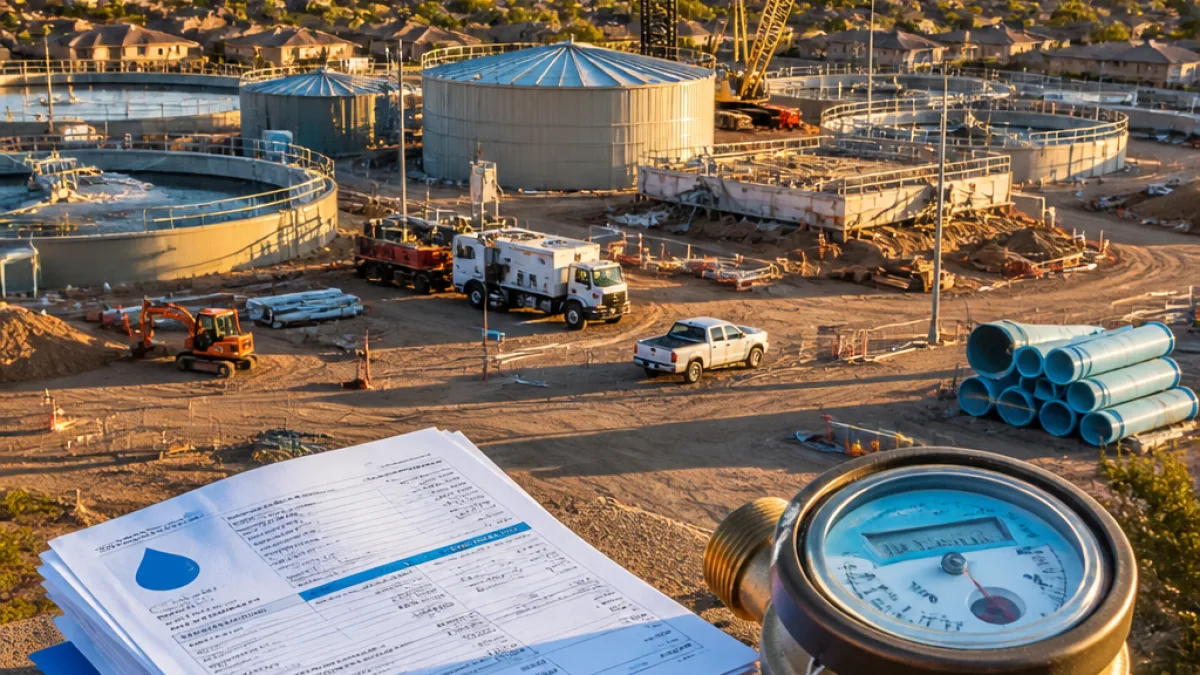
Apache Junction is expanding one of its treatment facilities to increase capacity from 4 million gallons per day to 10 million gallons per day. Officials also plan to pilot advanced wastewater purification that could convert treated wastewater into potable water if permitted by the state Department of Environmental Quality.
| Project | Current capacity | Planned capacity |
|---|---|---|
| Treatment plant expansion (Apache Junction) | 4 million gallons/day | 10 million gallons/day |
Apache Junction Deputy Water Director Brian Draper said the city has options to mitigate immediate supply impacts and continued planning to bolster supplies.
"We can absorb some of that," Draper said, noting access to groundwater supplies and credits stored underground that the city can recover.
What this means for residents
Water experts emphasize that the immediate risk is not a widespread shortage at the tap; rather, the effect will be economic. Cities dependent on Colorado River deliveries will face the combined burdens of reduced allocations and the cost to build or expand infrastructure to diversify supplies.
That combination translates into rate increases or new assessments to finance construction, operations and regulatory compliance. Municipalities must balance affordability concerns with the necessity of maintaining reliable service and meeting regulatory standards.
- Short-term relief may come from groundwater and stored credits.
- Long-term solutions require major investments in treatment and purification.
- Costs of infrastructure will drive higher water bills for consumers.
Statewide implications
While the example in Apache Junction illustrates the local response, many Arizona communities — particularly in Maricopa County and other areas dependent on river water — face similar choices. Officials across the state are weighing investments in new facilities, reuse and conservation programs to reduce vulnerability to Colorado River cutbacks.
Policy observers say public education and rate-setting that reflects the true cost of supply reliability will be central to managing the transition. Utilities also must navigate permitting and regulatory processes for advanced treatment technologies, which can affect timelines and costs.
Next steps for utilities and residents
Local leaders say planning and early investments will determine how smoothly communities weather reductions in river supplies. For residents, the near-term takeaway is clear: water at the tap is likely to remain available, but the bills that pay for delivery and treatment are expected to rise as cities adapt.
As municipalities identify projects and funding strategies, ratepayers can expect public meetings and notices about proposed changes. Utilities typically provide information on conservation programs, assistance for low-income customers and the phased timelines for capital projects.
Arizona’s water future is shifting from a focus on supply availability to one of cost and resilience. The question for cities now is how quickly they can adapt while keeping services affordable.
Gabriela Montoya
State Correspondent, WE NEWS