Mayor’s report recommends a flat £1 levy to fund tourism and local services
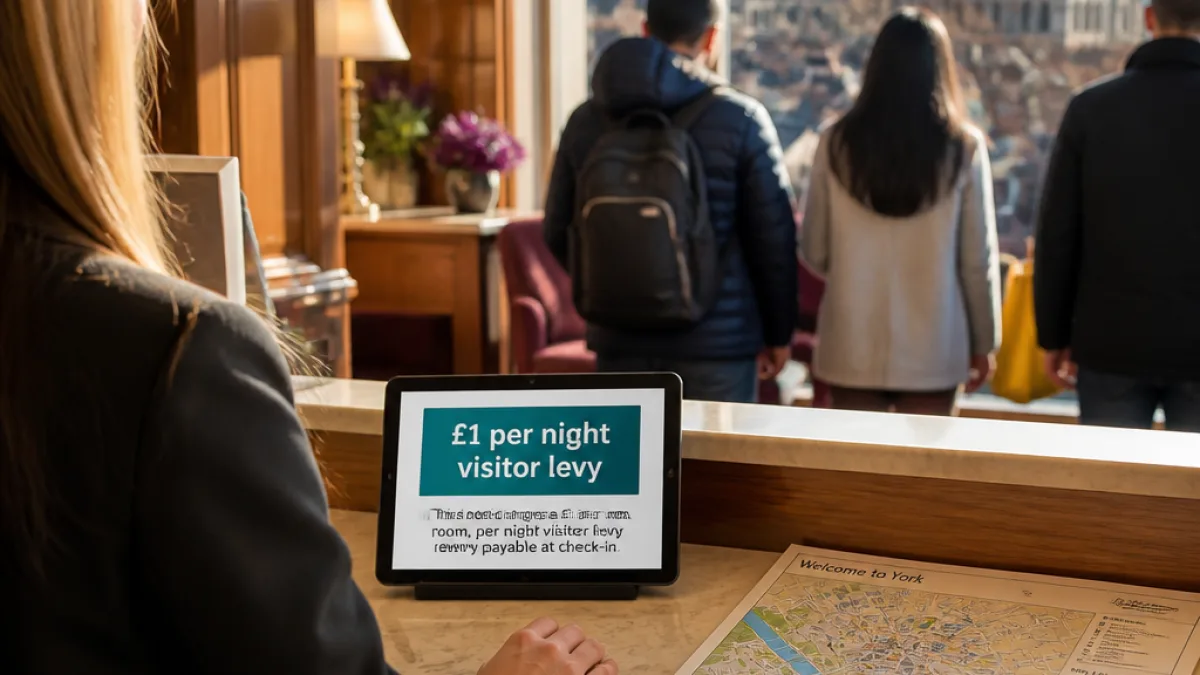
A report commissioned by the Mayor of York and North Yorkshire has recommended introducing a flat £1 per night visitor levy across the area, saying a modest charge could generate significant income to invest back into hospitality, infrastructure and communities.
The analysis, published by the region’s Policy Lab, examines the visitor economy and the practical implications of various levy models. It sets out a range of options — including both flat and percentage rates — and singles out a simple, low-cost digital collection system paired with a flat fee as the preferred approach.
- Proposed charge: £1 per night
- Estimated revenue: up to £26 million for the region
- Collection model: low-cost digital platform with potential exemptions for low-cost stays
Supporters of the levy argue that modest charges have not deterred visitors in other popular destinations. The report points to the experience of cities such as Edinburgh, Manchester, Paris and Barcelona, where visitor numbers stayed broadly steady after levies were introduced.
“York and North Yorkshire has something for everyone. Millions visit every year, and that’s why a visitor levy could be a total game changer for us,” said Mayor David Skaith.
The Mayor told reporters the scheme is intended to help manage pressures on infrastructure and services that residents rely upon while providing resources to support hospitality and tourism businesses. He said he would continue discussions with the sector as policy details are developed.
Academic lead stresses evidence-based approach
Professor Brendan Paddison, academic lead for the Policy Lab and Dean of York Business School at York St John University, said the report aims to provide an evidence base for informed debate rather than to make a definitive case for or against a levy.
“Good policy starts with good evidence… This report is not about making the case for or against a visitor levy, it is about giving the Mayor, businesses and communities the evidence they need to have an informed conversation,” Professor Paddison said.
The report recommends designing the scheme to limit the administrative burden on small operators and campsites, including possible exemptions or reliefs for low-cost stays. It argues a straightforward flat charge, collected through an accessible digital platform, would be easier and cheaper to operate than more complex percentage-based models.
Local consequences and next steps
For York, where tourism is a central part of the economy, the proposed levy raises practical and political questions. Hoteliers, guesthouses, short-stay rentals and campsites would need clarity on how the charge is collected and whether it would be absorbed by accommodation providers or passed to guests.
Residents may see benefits if revenue is targeted at maintaining public spaces, transport links, visitor attractions and other services strained by high visitor numbers. However, the detail of exemptions, governance of funds and distribution between city and wider North Yorkshire authorities will be pivotal in determining local support.
The Mayor’s commission does not yet propose full implementation: instead, it presents options and evidence to guide further discussions between elected leaders, businesses and communities. Any decision to introduce a levy would require detailed policy design and political agreement across the region.
| Model element | Report detail |
|---|---|
| Charge level | Flat £1 per night (recommended) |
| Projected income | Up to £26 million |
| Collection method | Low-cost digital platform; potential exemptions for low-cost stays |
The Policy Lab’s findings will now feed into ongoing conversations about how best to balance the needs of a thriving visitor economy with the everyday priorities of York’s residents. Local businesses and community groups are expected to be consulted as the discussion moves from evidence to detailed proposals.