
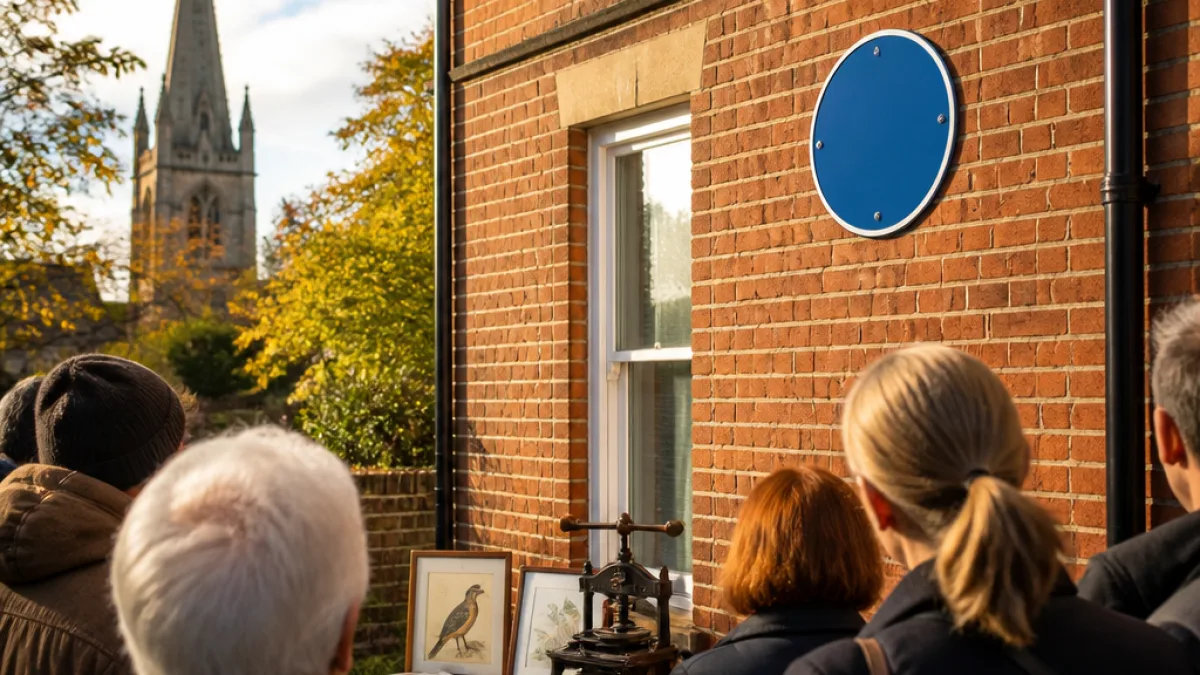
Local recognition for an artist who took Wakefield across the world
Wakefield will mark the life and work of Barbara Briggs (1887–1976) this September with a blue plaque acknowledging her achievements as a wildlife artist, printer and illustrator, and her later campaigning for working women’s rights in post-war Canada. The commemoration will place Briggs alongside other notable local figures whose stories help frame Wakefield’s cultural and social history.
Born and raised in Wakefield during an era of rapid social change, Briggs emerged from a family connected to engineering and civic endeavour. Her grandfather, Isaac Briggs, was described in family accounts as a pioneering engineer involved in rail and canal projects across England. That background sits alongside Briggs’s own artistic education and a life that took her well beyond Yorkshire.
Early promise and a lifetime of art
Her aptitude for observational drawing and detailed study was recognised early. At the city’s Technical and Art School she achieved a 2nd class in anatomy in 1906, a qualification that supported her development as a watercolourist noted for landscapes and a reportedly humorous touch in some of her works. She exhibited with the Yorkshire Union of Artists in the years before the First World War, building a regional reputation that later reached national and international audiences.
Even while contributing to the war effort, she continued her practice. During the First World War Briggs served with a Voluntary Aid Detachment, working in a canteen attached to Wentworth House when it was functioning as a military hospital. Her work continued to be shown publicly; for example, her painting Still Life featured in the Royal Scottish Academy exhibition in 1919.
"Barbara Briggs became an internationally respected wildlife artist, printer, illustrator and traveller before devoting herself to campaigning for working women’s rights in post-war Canada."
From Wakefield to the wider world — and back
Briggs’s career extended beyond the UK. She travelled and worked internationally, becoming known for her wildlife art and printing. Later in life she turned her attention to social causes, campaigning on behalf of working women in Canada after the Second World War. The plaque in Wakefield will acknowledge both strands of her life: artistic endeavour and social activism.
- Birth–death: 1887–1976
- Early education: Wakefield Technical and Art School; Wakefield Girls’ High School influence
- Artistic recognition: Exhibited with the Yorkshire Union of Artists; shown at the Royal Scottish Academy (1919)
- Later activism: Campaigning for working women’s rights in post-war Canada
Context and significance for Wakefield
The decision to install a blue plaque in September 2026 forms part of a broader effort to bring local history into the public realm and to celebrate individuals who contributed significantly to culture and civic life. Briggs’s story intersects with other Wakefield narratives — education for women, artistic endeavour in the early 20th century, and international connections forged by local people.
Her formation at Wakefield Girls’ High School and her links with local activists and educators illustrate how the city’s institutions supported women whose ambitions reached beyond conventional expectations of the period. The plaque will also sit alongside commemorations for other members of the Briggs family, including her cousin Gertrude McPherson, whose life has already been publicly recognised.
| Year | Event |
|---|---|
| 1887 | Barbara Briggs born |
| 1906 | Awarded 2nd class in anatomy at Wakefield Technical and Art School |
| 1919 | Painting shown at Royal Scottish Academy exhibition |
| 1976 | Barbara Briggs died |
| September 2026 | Blue plaque to be unveiled in Wakefield |
For Wakefield residents, the plaque is a reminder of local lives that resonated beyond the city and of the civic duty to preserve and present those stories. It will offer an opportunity for residents and visitors to reflect on the contributions of a Wakefield artist who combined technical skill with international reach and later redirected her energies into social campaigning.
Details of the unveiling ceremony and the plaque’s exact location have not been published in full in the source material, but the announcement itself is a clear signal that Wakefield’s commemorative landscape continues to expand to include women whose careers bridged art and activism.















