Hamilton likely to start from back of the grid at a different race to Leclerc
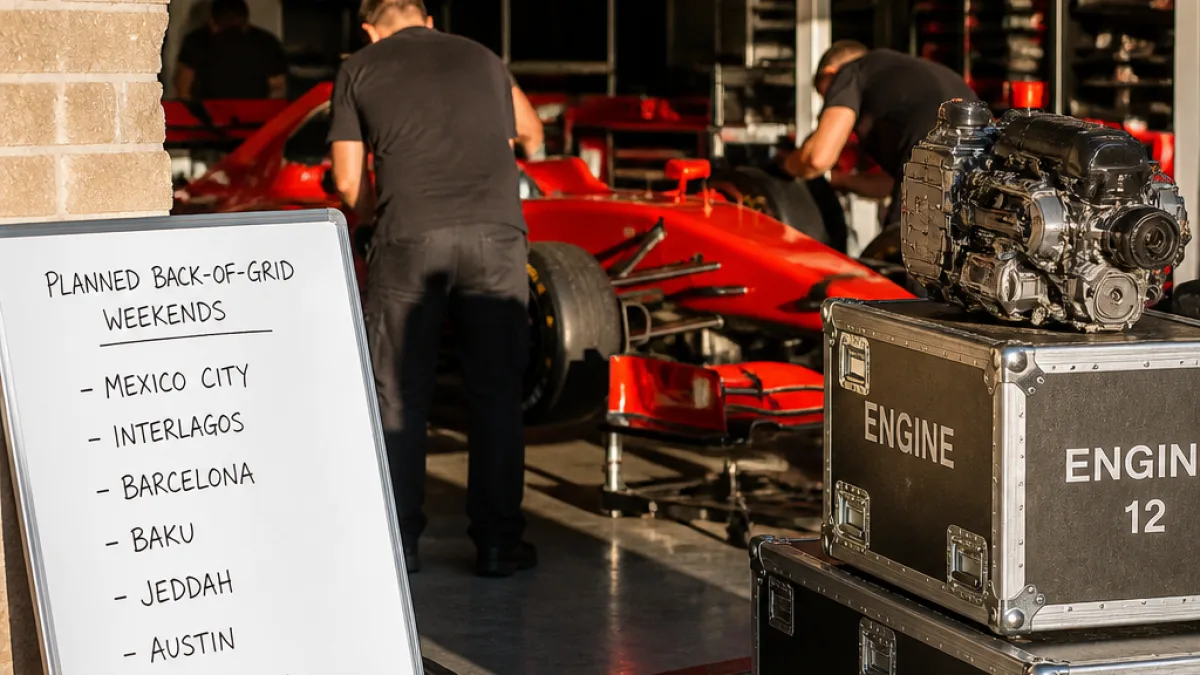
Lewis Hamilton is expected to take a separate engine penalty from team-mate Charles Leclerc, with Mexico City and Interlagos identified as the most likely venues for the seven-time world champion’s power-unit sanction. The development was disclosed as Formula 1 continues to adjust to what appears to be a turbulent build-up to the 2026 season.
The information, revealed in a collection of motorsport stories on Monday, indicates Ferrari is planning to manage punishments for both drivers by scheduling "back-of-grid" weekends at different races. That approach would aim to limit damage to the team’s championship prospects by avoiding both cars starting from the rear at the same event.
- Hamilton is expected to take his penalty at a different race from Leclerc.
- Mexico City and Interlagos are named as the likeliest venues for Hamilton’s power-unit change.
- Ferrari plans back-of-grid weekends for both drivers to spread the impact.
For local fans who follow Formula 1, the separate-penalty strategy is significant: it preserves Ferrari’s chance to score strongly at events where both cars are competitive, while accepting a clearly weaker result at a pre-selected round. The move also reflects the increasingly strategic use of power-unit components under the sport’s regulations.
Wider season uncertainty as calendar changes emerge
The story of penalties comes against a backdrop of broader calendar disruption. Reports suggest another major event in the United Arab Emirates has been moved out of the Gulf state, with the Michelin Dubai 24H Endurance Race shifted — underlining a pattern of change to motorsport’s Middle Eastern footprint.
Moreover, sources indicate that the final two races of the season, in Abu Dhabi and Qatar, "won’t go ahead as planned", a development that further points to possible cancellations or rescheduling. While precise alternatives or replacement venues have not been confirmed, the apparent upheaval will be watched closely by teams, drivers and supporters alike.
| Item | Detail |
|---|---|
| Hamilton penalty | Expected at a different race to Leclerc; Mexico City or Interlagos likely |
| Ferrari strategy | Planning back-of-grid weekends for both drivers to spread impact |
| Calendar changes | Michelin Dubai 24H moved out of UAE; Abu Dhabi and Qatar races reported not to go ahead as planned |
Drivers, teams and technical debate
The same compilation of reports also highlighted other points of interest across the paddock. Williams team principal James Vowles conceded that the team’s remaining upgrades for 2026 will be insufficient to mount a consistent challenge for points, attributing the shortfall to mistakes in winter development that will remain with the car through the season.
Red Bull, meanwhile, faces selection choices at the Azerbaijan Grand Prix, with a late call expected on whether Isack Hadjar will be placed on the grid for that weekend.
There are also technical conversations emerging about the 2026 cars. Oscar Piastri expressed concerns that the increased role of AI-driven energy systems in the new regulations can leave drivers feeling detached from some on-track decisions. As he put it:
"AI leaves F1 drivers 'like passengers'"
That remark encapsulates a growing unease among some drivers about how much authority remains with the human behind the wheel as new technology is introduced.
For supporters in Hamilton and across Scotland who follow the championship, the combination of strategic power-unit management, calendar uncertainty and evolving car technology makes the next months crucial. Teams will be balancing short-term race tactics with longer-term development choices, while organisers work to finalise a calendar that has seen fresh disruption in recent weeks.
With race-by-race penalties likely and key events under threat, the 2026 season is already shaping up to be one of high strategic complexity — a situation that will test teams’ adaptability and give fans much to debate.