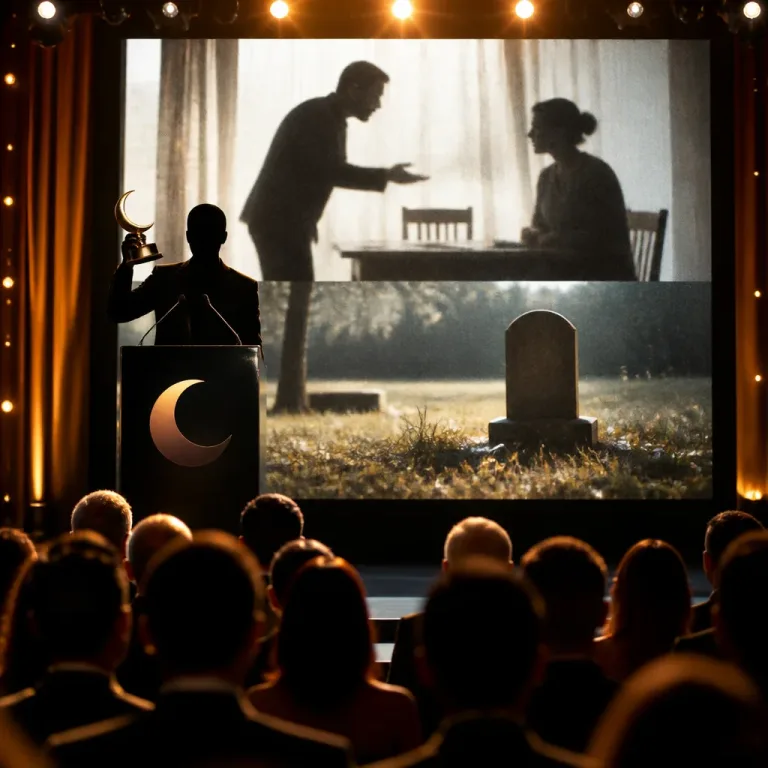
Grid Iron have long been a headline presence at Edinburgh’s festivals and their latest production, Mayflies, staged at Brown’s of Leith, is a reminder of why the company’s site‑specific approach remains one of the Fringe’s distinct draws. Adapted by director Ben Harrison from Andrew O’Hagan’s 2020 novel, the piece marks Grid Iron’s 30th anniversary and places the audience inside a former engineering works by the shore, where the action unfolds around seated spectators.
Space and performance combine — with limits
The production makes ambitious use of the industrial setting. Actors move through the old warehouse while projections and video weave between scenes, producing moments that feel cinematic as much as theatrical. The staging’s immediacy is one of the show’s strengths: it is possible to be caught up in the momentum of the first half, which traces the adolescent lives of Tully and Noodles as they negotiate late‑1980s youth culture.
That opening act centres on a formative trip to Manchester and the music scene that shapes the friends’ identities. The performances from the actors playing the younger versions of the protagonists are persuasive: Jude Bain as young Tully and Kieran Devine as young Noodles breathe life into the exhilaration of friendship and discovery. The energy of those scenes — the sense of place, sound and shared cultural touchstones — is a clear highlight.
"boomy warehouse acoustic"
However, the show encounters practical and structural obstacles. The venue’s acoustics at times swallow lines, making some dialogue hard to discern. Critics and audiences alike will note the gulf between the production’s visual inventiveness and its spoken clarity: when language is lost in the space, narrative momentum can slacken.
A jarring shift in tone
More consequentially, the piece reads as two distinct plays under one title. After the youthful, kinetic first half, the narrative jumps forward decades to a much darker present in which Tully receives a terminal diagnosis. The change is abrupt and, for some viewers, feels like a cold shower following the initial celebration of potential. The transition alters the work’s emotional register and leaves unresolved questions about how the two parts should cohere on stage.
Those two halves demand different theatrical languages: the earlier scenes thrive on immediacy and space; the latter relies on emotional restraint and introspection. The script’s decision to telescope time can be affecting, but in this staging the contrast is occasionally wrenching rather than organically cumulative.
- Strengths: inventive use of an atmospheric, site‑specific venue; compelling performances from the younger Tully and Noodles; striking projection and video design.
- Weaknesses: problems with audibility in the warehouse space; a structural lurch between two very different halves that may leave some audience members unsettled.
- Context: the production celebrates Grid Iron’s 30th anniversary and continues the company’s tradition of tailoring work to unconventional locations around Edinburgh.
| Production | Details |
|---|---|
| Title | Mayflies |
| Company | Grid Iron |
| Adaptor / Director | Ben Harrison |
| Source | Novel by Andrew O’Hagan (2020) |
| Venue | Brown’s of Leith (former engineering works) |
This production will matter most to those who favour immersive theatre and the particular rewards that come from seeing plays embedded in real, often industrial, settings. For audiences attracted to the first half’s brio, the second act’s emotional realism may offer a sobering counterpoint, but it will not resolve every narrative question raised earlier.
Grid Iron’s Mayflies is therefore emblematic of the Fringe’s ongoing tension between spectacle and intimacy. The company’s ability to transform place into storytelling remains formidable, even where practicalities such as acoustics and dramaturgy complicate the audience’s experience. For Edinburgh festivalgoers looking for a production that uses the city’s spaces inventively, Mayflies is worth seeing — and discussing — even if it does not entirely cohere as a single theatrical arc.