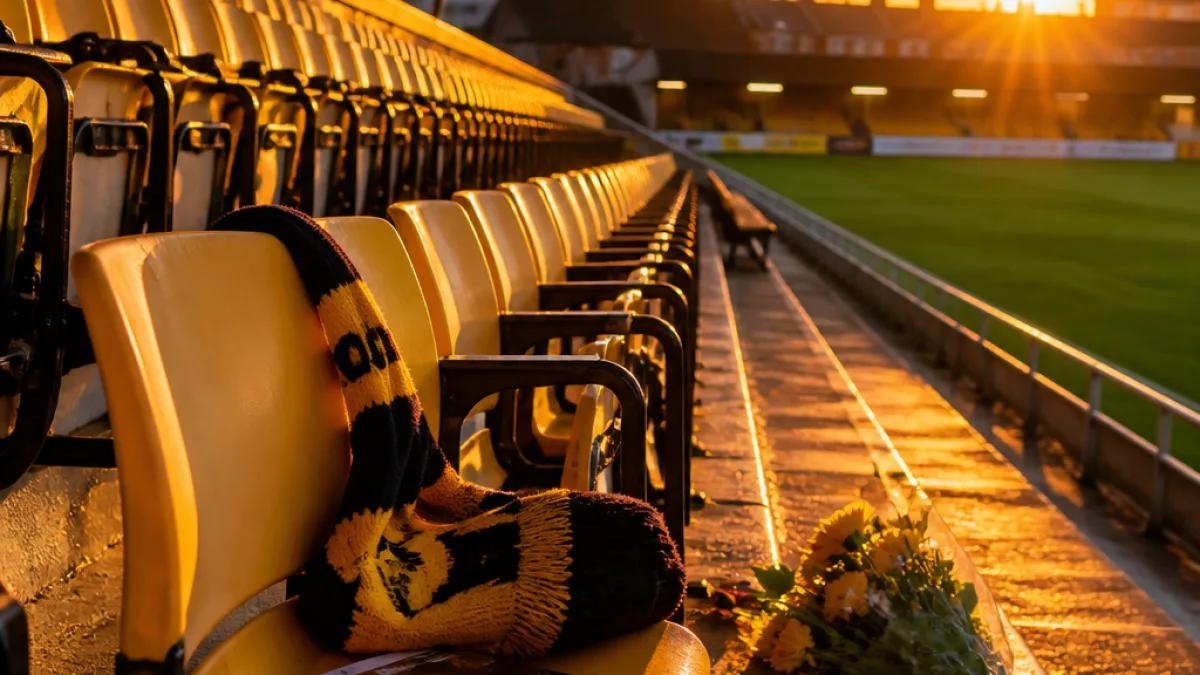
Former owner who promised a new stadium leaves mixed legacy at Plainmoor
Clarke Osborne, the businessman whose seven-year stewardship of Torquay United brought both a near-return to the Football League and later financial turmoil, has died at the age of 74. His tenure — which began with the purchase of the club in December 2016 — will be remembered in Torquay for its ambition, controversy and a rollercoaster of results on the pitch.
Osborne bought the club from a supporter-led board. From the outset his time in charge combined a focus on first-team success with a wider plan to replace Plainmoor with a new stadium complex incorporating housing, a hotel and retail outlets. He sought support from Torbay Council, the landlords of Plainmoor, to realise the development, and for a time the council and Osborne attempted to work together to progress the scheme.
But the redevelopment concept proved hard to sell to large sections of the Gulls’ fanbase, who were wary of losing the club’s traditional home and sceptical about the benefits of Osborne’s commercial proposals. Relations between the board and supporters were strained, and the tension deepened when on-field fortunes dipped after promising years under experienced management.
- December 2016: club purchased from supporter-board by Osborne’s company, Gaming International.
- 2018–2019: appointment of Gary Johnson and a strong National League South campaign culminated in a memorable play-off final.
- Later years: relegation, financial struggles and an eventual descent into administration marked the closing phase of Osborne’s ownership.
Osborne initially retained Kevin Nicholson, the manager he inherited, and later appointed Gary Owers when results were poor. It was the later recruitment of Gary Johnson in the autumn of 2018, together with fuller financial backing, that saw United mount their most sustained challenge under Osborne. Johnson’s side won the National League South title in 2019, followed by a season curtailed by Covid which produced a mid-table finish in 2020 and then a determined push to regain Football League status the following year.
The effort to return to League football reached its emotionally charged climax at Ashton Gate, Bristol, on 20 June, in one of the most dramatic National League play-off finals in memory, a match decided on penalties. That defeat was cited as a turning point; the club never quite recovered the momentum of that period.
“within a penalty of returning to the Football League”
For many supporters the sense of loss from that near miss was compounded by Osborne’s limited presence at matches. During his seven years in charge he attended only a handful of games, an absence that left some fans feeling disconnected from the man making decisions at the club’s helm. As results faltered, the already strained relationship between the board and the supporter base deteriorated.
In the seasons after the play-off defeat the club’s fortunes waned. Relegation back to the National League South followed, and the wider picture deteriorated as losses mounted. The source material notes the club reached the “ignominy of administration” during Osborne’s tenure — a low point for a club that for many in the town is central to local identity and weekend life.
| Year / Season | Notable event |
|---|---|
| December 2016 | Osborne buys Torquay United via Gaming International |
| 2019 | National League South title under Gary Johnson |
| 20 June | Dramatic National League play-off final at Ashton Gate (decided on penalties) |
Local reaction to Osborne’s death is likely to be mixed. For some, his willingness to fund the team and back a proven manager produced a memorable period of attacking football and raised hopes of a return to the Football League. For others, the stadium project, perceived distance from matchday life and the club’s slide into financial distress left lasting grievances.
Torquay United remains central to the town’s sporting life. The coming days will see supporters, former players and local figures reflect on a turbulent chapter in the club’s history and what lessons might be drawn as the club looks to rebuild and stabilise for the future.
This report is based on contemporary accounts of Osborne’s ownership and the public record of the club’s on-field campaigns and development proposals during his seven years as owner.