Noida cybercrime police are investigating three separate complaints in which residents alleged they lost a combined ₹24 lakh after downloading malicious APK files sent by people posing as bank employees and government officials, authorities said on Saturday.
How the frauds unfolded
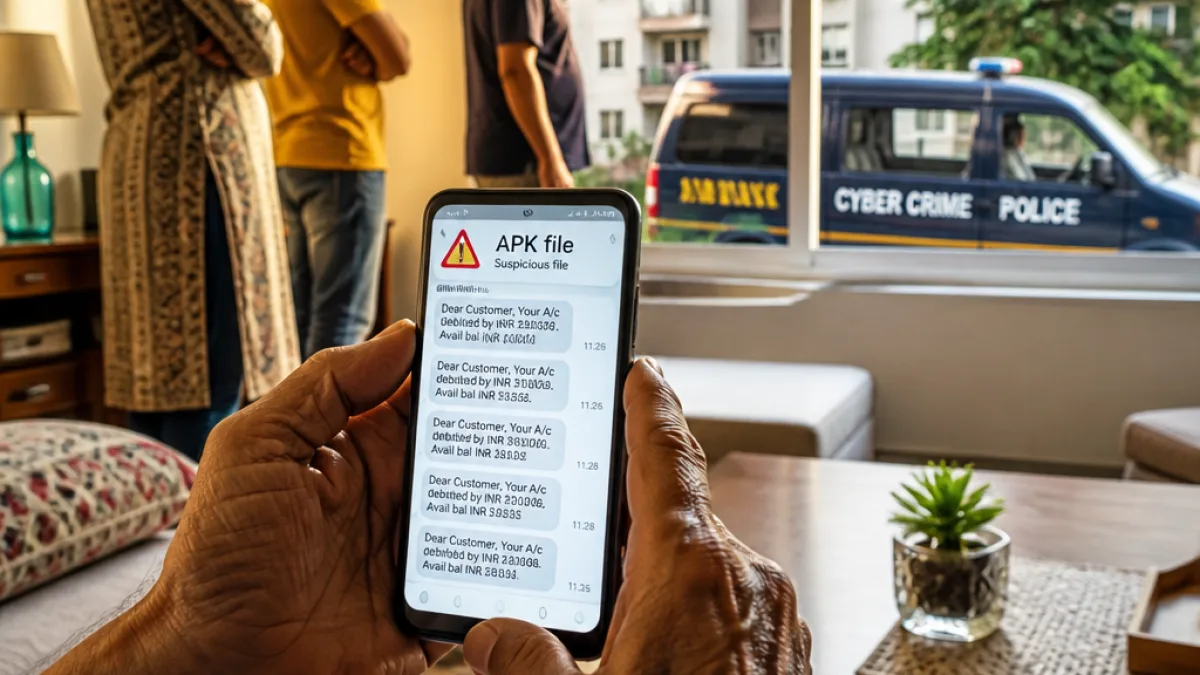
According to police records and the complaints filed, the three incidents followed a broadly similar pattern. Victims received phone calls from persons claiming to represent a bank, the Income Tax department or an electricity authority. The callers instructed the victims to download an APK (Android application package) file onto their mobile phones — after which unauthorised withdrawals were made from their bank accounts.
- In the first case, a 69-year-old man identified in the complaint as Rajesh Kapoor received a call from someone claiming to be a bank employee and was asked to download an APK file; subsequently, ₹8 lakh was allegedly withdrawn from his account, police said.
- In the second matter, a 61-year-old retired railway employee, named Hemant in the complaint, was contacted over an alleged Form 16 issue; after installing the file sent by the caller, he reported a loss of ₹9 lakh.
- In the third incident, a 67-year-old resident identified as Rajendra said a person claiming to be an Income Tax official told him his electricity bill was pending and sent an APK; after following the caller's instructions, ₹7 lakh was transferred out of his account, the complaint states.
All three victims lodged complaints with the Noida cybercrime police station, and investigations are under way, officials said. The total amount alleged to have been fraudulently taken across the cases stands at ₹24 lakh.
Police action and investigation
Cybercrime authorities have recorded the FIRs and are tracing digital footprints, the police said. Investigative steps typically include seeking call and transaction logs from telecom and financial service providers, analysing the APK files where available, and identifying the origin of the calls and the infrastructure used for the unauthorised transfers. The complaints allege that once the APK files were installed, fraudsters obtained information that allowed them to access victims' bank accounts.
| Victim (age) | Pretext used by caller | Alleged loss |
|---|---|---|
| Rajesh Kapoor (69) | Bank employee — credit card closure | ₹8 lakh |
| Hemant (61) | Form 16 / income tax | ₹9 lakh |
| Rajendra (67) | Income Tax official — fake electricity bill | ₹7 lakh |
The use of APK files — installation packages for Android apps — is a recurring modus operandi in such frauds, police noted in the case papers. Once installed, malicious APKs can capture banking credentials or install malware that enables remote access to a phone, facilitating unauthorised transactions, according to the complaints.
"Complaints have been registered with the cybercrime police and investigations are underway," the case records state.
Cybercrime investigators in Noida said they are coordinating with banks and service providers to trace the flow of funds and identify the accounts where money was moved. The cases form part of a larger pattern of social-engineering frauds that target residents by impersonation and by inducing victims to install software that compromises their devices.
The incidents underscore the vulnerability of mobile banking users to sophisticated telephone-based social engineering, especially when callers pose as bank or government officials. Police appealed to citizens to be cautious about unsolicited calls and files, and to verify communication directly with official numbers given by banks or government departments before acting on instructions.
Investigations are continuing and further details are expected as authorities obtain electronic records and progress in tracing the perpetrators and the destination of the funds.