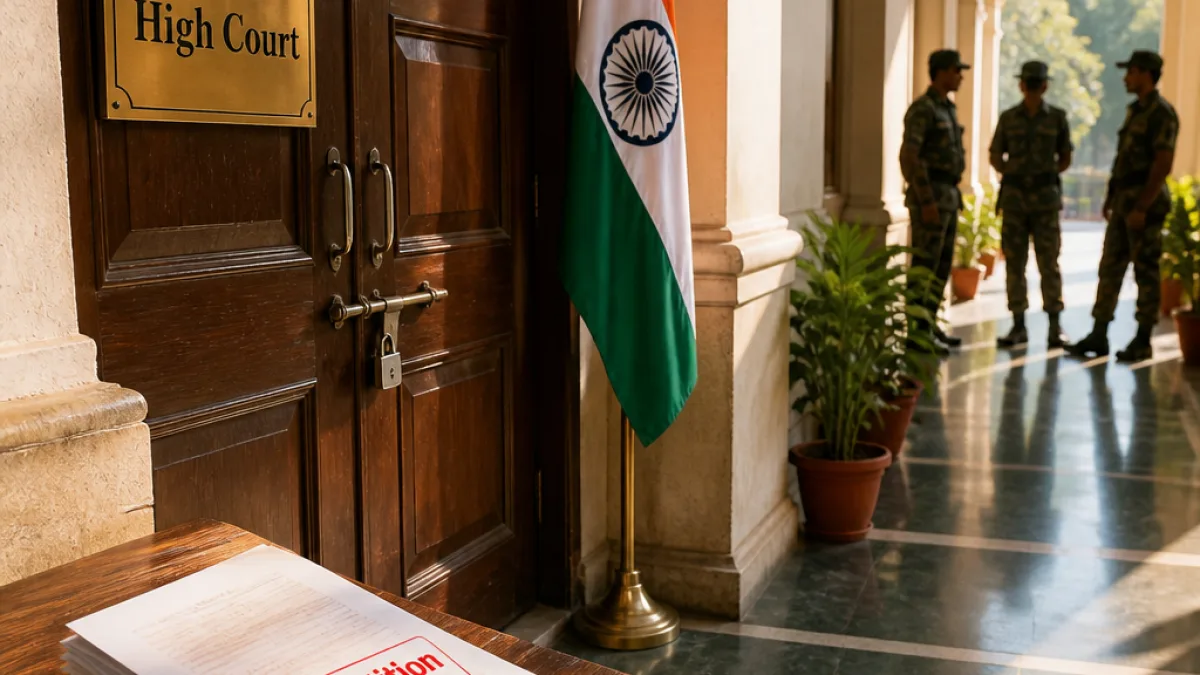
Prayagraj/Bareilly: The Allahabad High Court on Monday rejected the bail application of Ittehad-e-Millat Council founder Maulana Tauqeer Raza, who has been in judicial custody in connection with the September 2025 violence in Bareilly.
Court flags slogan as challenge to state authority
Delivering the order, Justice Ashutosh Srivastava observed that a slogan allegedly raised during and after the incident was not comparable to conventional religious slogans and amounted to a challenge to the authority of law and to the sovereignty and integrity of India. On that basis, the court held bail could not be granted at this stage.
The order notes that, although the charge-sheet was filed on 21 December 2025, formal framing of charges against Raza has not yet taken place. The judge said the stage of the proceedings militated against granting bail in the facts and circumstances of the case.
Background of the Bareilly unrest
Raza has been in custody since 13 October 2025 in relation to clashes that erupted after a call for assembly following Friday prayers on 26 September 2025. According to the police complaint and prosecution material referred to in the order, the call was for members of the Muslim community to assemble at the Islamia Inter College grounds to protest the denial of permission for a rally linked to the ‘I Love Mohammed’ campaign.
- The administration had imposed prohibitory orders under Section 163, Bharatiya Nagrik Suraksha Sanhita (BNSS), banning assembly of five or more persons in a public place.
- Despite the prohibition, the prosecution says around 200–250 people marched from Maulana Azad Inter College towards Shyamganj Chauraha, carrying placards and raising slogans.
- Police allege that when personnel tried to stop the procession, the crowd turned violent — pelting stones, setting off petrol bombs and opening fire on the police party, causing injuries and damage to public property.
The state has described Raza as the alleged kingpin and mastermind of the violence. The court record cited that Raza had used the occasion of Friday namaz to mobilise the community and to press demands including submitting a memorandum to the President of India through the District Magistrate, Bareilly.
“The call for such a large assembly was made without seeking permission from the local administration,” the order said.
Defence position and court reasoning
Raza’s counsel told the court that the call to assemble had been cancelled after permission was denied and Section 163 was imposed. The defence argued the organiser had not persisted with the rally. The court, however, recorded that the records showed the gathering nonetheless proceeded towards the Islamia grounds and that the crowd, when confronted by police, engaged in rioting and destruction.
Justice Srivastava distinguished between ordinary religious slogans and what the court described as the slogan “Sar Tan Se Juda”, which the bench said could not be equated with invocations such as “Allahu Akbar” or other traditional religious chants. The judge characterised the allegedly raised slogan as incitement to armed rebellion and contending with state authority, which carries serious criminal consequences under the law.
Procedural status and local implications
With the bail plea dismissed and charges yet to be framed despite the charge-sheet, the matter will proceed through trial-stage proceedings in a court of competent jurisdiction. For Bareilly, the outcome keeps under focus the events of September 2025, the prosecution’s account of an organised march in breach of prohibitory orders, and the broader questions of public order management during religiously sensitive mobilisations.
| Key dates | Event |
|---|---|
| 26 Sep 2025 | Assembly called after Friday prayers; clashes reported |
| 27 Sep 2025 / 13 Oct 2025 | Police registration of FIR; Raza taken into custody (custody dates reported) |
| 21 Dec 2025 | Charge-sheet filed |
| 7–8 Sep 2026 | Allahabad High Court rejects bail application |
The case remains sensitive for administrators and law enforcement in Bareilly, where authorities must balance the right to protest with maintenance of public order. The prosecution’s allegations, the court’s characterisation of the slogans and the pending framing of charges will shape the next legal steps in the matter.