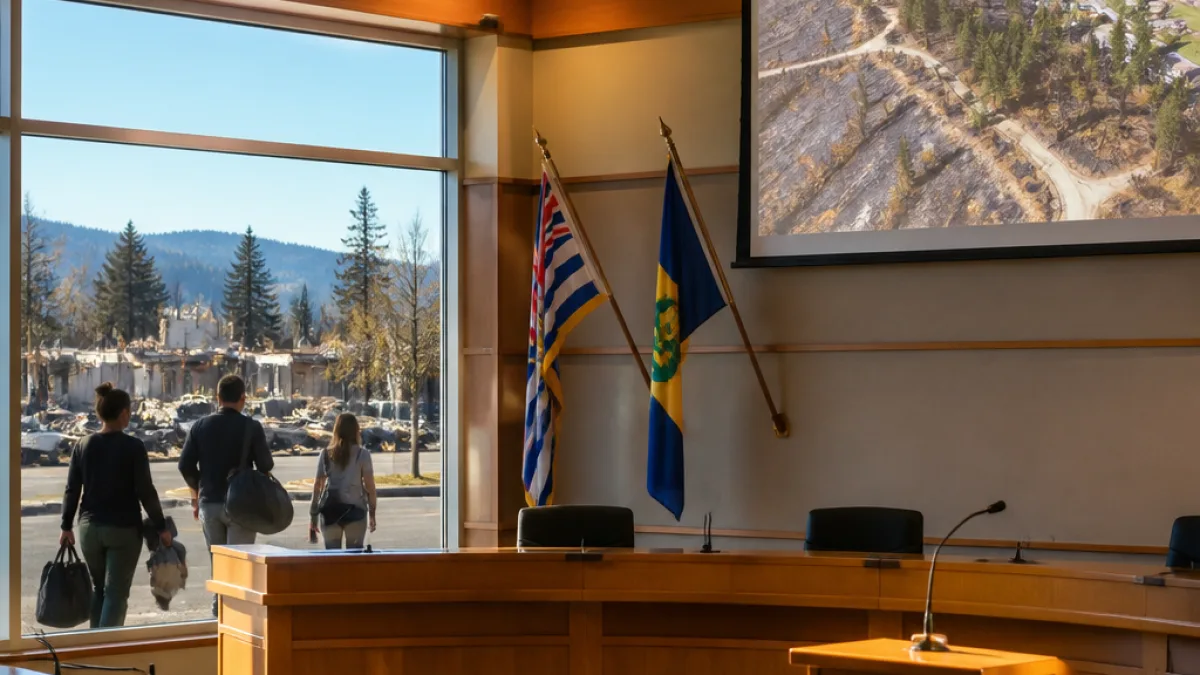
Mayor acknowledges losses, praises community and emergency crews
At Vernon city council’s first meeting following the Bradley Creek wildfire, Mayor Victor Cumming delivered a solemn message about the toll the fire has taken on families and livelihoods across the region.
“Thousands of people were evacuated from the fire zone and had to seek temporary accommodation, leaving them to worry about what they’ve left behind,” Cumming said during the Sept. 8 meeting. As evacuation orders were lifted, he added, people have been returning to scenes of loss: destroyed homes, damaged structures and impacts to animals and livelihoods.
“I can only imagine how difficult this must be.”
The mayor used his remarks to extend the city’s compassion to everyone affected. He also publicly thanked the many groups that responded to the emergency — from local paid-on-call firefighters to provincial crews and Indigenous emergency personnel — for their efforts during a “traumatic and dangerous situation.”
Community response and municipal focus
Cumming applauded the people of Vernon for mobilizing quickly to provide relief through donations of food, clothing and funds. He singled out city staff and a broad array of partner agencies for their professionalism and dedication in the immediate response and recovery phases.
- Emergency services thanked: paid-on-call firefighters, BC Wildfire Service personnel, local professional firefighters
- Support organisations acknowledged: Emergency Operations Centre staff, Emergency Support Services volunteers and staff
- Community partners noted: other local communities and Okanagan Indian Band emergency personnel
The mayor also framed the disaster in the context of broader municipal planning. He said mayor and council will continue to prioritise response and resilience measures related to drought, wildfires and other extreme events — an ongoing concern for Vernon and the wider Okanagan as climate-driven risks intensify.
What residents returning from evacuation face
Officials noted that, as evacuation orders are rescinded, residents are encountering the immediate consequences of the fire: property damage, lost personal belongings and disruption to daily life. The mayor’s remarks conveyed the human dimension of recovery even as practical supports continue to be mobilised.
The city has been working alongside provincial agencies and local organisations to co-ordinate relief and information for those impacted. While council did not announce new funding or specific recovery programs at the meeting, Cumming’s address made clear that council intends to keep resilience and recovery planning on its agenda.
| Item | Mentioned by mayor |
|---|---|
| Evacuated residents | Thousands |
| Responding agencies | Local and provincial firefighting, EOC, ESS, Okanagan Indian Band |
Outlook and community needs
Recovering from a wildfire is a multi-stage process: immediate shelter and basic needs, assessment of damage, insurance and rebuilding, and longer-term supports for mental health and economic recovery. The mayor’s remarks reflect an awareness that those stages are underway for many, and that municipal, provincial and Indigenous partners will need to remain engaged.
Residents seeking information on assistance, recovery resources or how to contribute to relief efforts should consult official city and provincial channels for verified updates. The mayor expressed ongoing sympathy for those who lost homes and livelihoods and indicated council will continue to monitor response and resilience work as the community moves into recovery.
This moment of loss has been met with visible community generosity, the mayor noted, and the city’s focus now is on turning that goodwill into coordinated supports while strengthening preparedness for future extreme events.