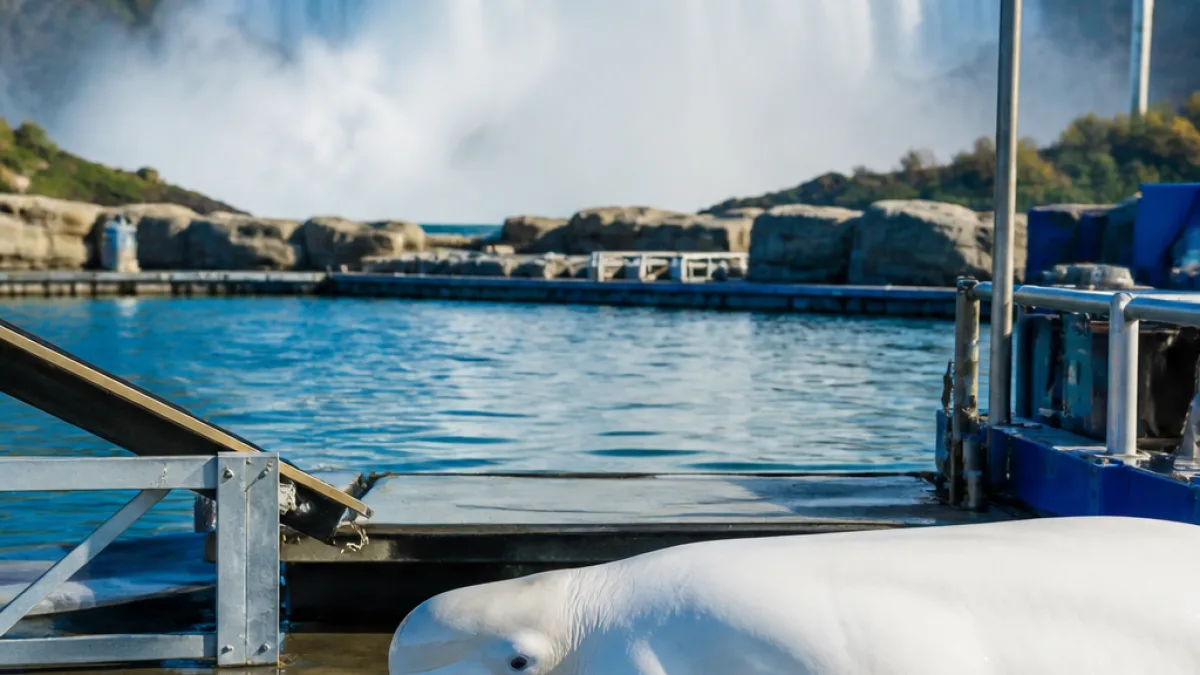
Beluga relocated from Niagara Falls facility found dead in California
A nine-year-old beluga that had been rescued from Marineland in Niagara Falls and relocated to SeaWorld San Diego has died, the U.S. aquarium announced, adding to recent animal deaths tied to the mass transfer of marine mammals after the Canadian park’s closure.
SeaWorld San Diego said the beluga, identified as Cyprus, arrived at the park on Aug. 22. The facility reported that Cyprus stopped eating on Friday and that an ultrasound indicated the animal’s intestinal tract did not appear to be functioning normally.
The park noted that Cyprus had been interacting with trainers and the animal care team and had been eating consistently after arrival. SeaWorld San Diego said a full necropsy will be conducted, and the results will be shared with the U.S. National Oceanic and Atmospheric Administration after completion.
“As we have indicated, this process will take a considerable amount of time. Our commitment to the health, well-being and care of these belugas, like every animal we rescue, continues,”
The statement from SeaWorld underscores the difficulties that can accompany such transfers, including the reality that belugas can mask signs of discomfort or underlying problems that are not immediately visible.
Context of the relocations
Marineland in Niagara Falls had warned it was running out of funds and could no longer care for its remaining captive whales and dolphins. In response, the facility arranged a transfer this summer that saw 30 belugas and four dolphins moved to other institutions across North America.
Less than two weeks before Cyprus’s death was announced, Shedd Aquarium in Chicago reported the death of Caspian, a 27-year-old female beluga that had been relocated from Marineland.
SeaWorld said the other belugas in its care are stable and under close monitoring as they continue to adjust to their new surroundings.
What officials will examine
The necropsy is intended to determine the proximate cause of death and to identify any underlying medical issues that may not have been apparent during routine observations. Results shared with the National Oceanic and Atmospheric Administration will inform any further public reporting.
Animal care teams often face challenges when transferring large marine mammals, including stress during transit and the difficulty of detecting subtle signs of illness in species known to hide pain. SeaWorld’s update reiterated the long-term nature of rehabilitating and integrating rescued animals into new facilities.
- Animal: Cyprus — beluga, 9 years old, SeaWorld San Diego — deceased; necropsy pending.
- Animal: Caspian — beluga, 27 years old, Shedd Aquarium — recently deceased.
- Transfer totals: 30 belugas and 4 dolphins moved from Marineland this summer.
| Animal | Age | Origin | Receiving facility | Status |
|---|---|---|---|---|
| Cyprus | 9 | Marineland (Niagara Falls, Ont.) | SeaWorld San Diego | Deceased; necropsy pending |
| Caspian | 27 | Marineland (Niagara Falls, Ont.) | Shedd Aquarium (Chicago) | Deceased |
The sequence of relocations and subsequent deaths will likely prompt further questions about the long-term welfare of animals moved from Marineland, the oversight and protocols applied during transfer, and how receiving institutions monitor and treat animals in the immediate weeks and months after arrival.
In Niagara Falls and surrounding Ontario communities, Marineland’s shutdown and the relocation of its animals drew considerable attention and debate over captive marine mammal care. The deaths of relocated belugas in U.S. facilities add a new chapter to that discussion, raising concerns among animal welfare advocates and the public about outcomes for animals removed from the Canadian park.
SeaWorld’s announcement did not specify a timeline for completing the necropsy or when the findings would be released beyond noting they would be shared with the National Oceanic and Atmospheric Administration. For now, care teams say remaining animals are being closely monitored as they adapt to their new environments.
Local officials in Niagara Falls have previously said they were cooperating with transfers and regulatory authorities as Marineland’s situation evolved, but the recent deaths shift scrutiny to the post-transfer period and receiving institutions’ approaches to monitoring the rescued animals.
As investigators and veterinarians work to establish the medical cause of Cyprus’s death, the incident will be watched closely in Ontario and across North America by those following the broader implications of Marineland’s closure and the fate of the animals that were relocated.