
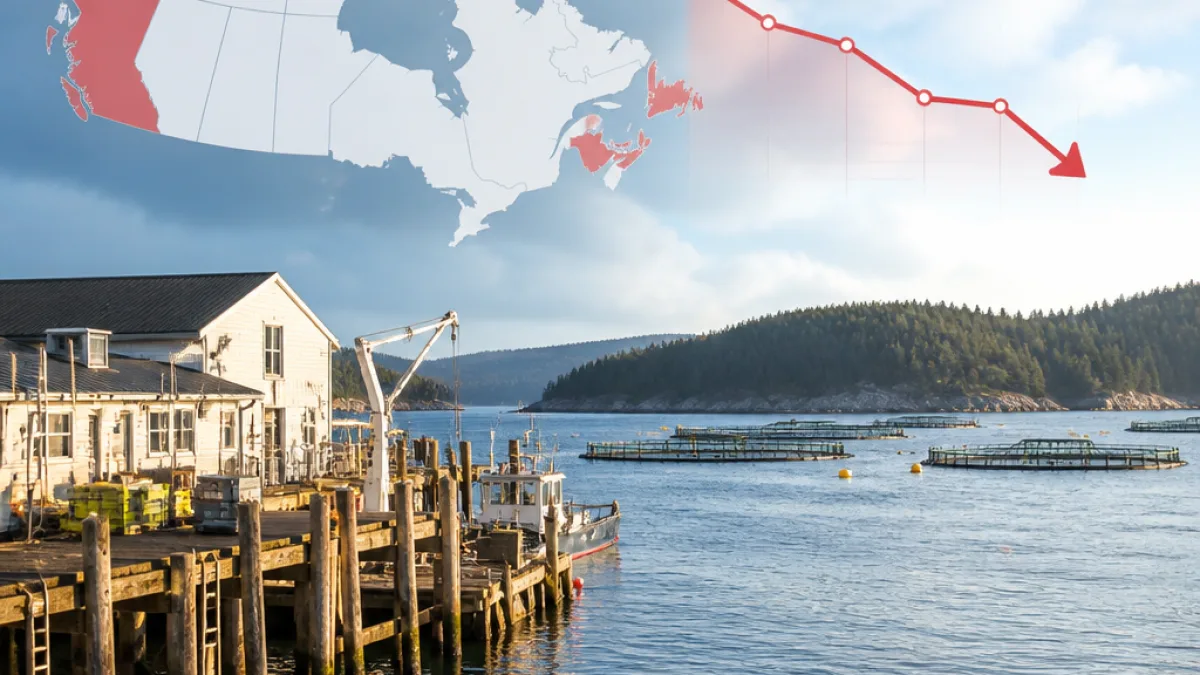
Victoria — Federal briefing documents reveal that Atlantic provinces have told Ottawa that decisions on salmon farming in British Columbia are already harming investor confidence on the other side of the country.
Concern travels coast to coast
The warning appears in Fisheries and Oceans Canada (DFO) ministerial briefing material prepared to examine the impact of the British Columbia Salmon Aquaculture Transition Plan on aquaculture growth in Atlantic Canada. The material, first released in February and reiterated in documents published in July 2026, records sustained complaints from eastern provincial governments.
According to the briefing, Atlantic provinces asked the federal government to publicly reaffirm their jurisdiction over aquaculture and to deliver a “clear, consistent message” in support of the industry's sustainable development. More consequentially, provincial officials told Ottawa they believe policy choices in British Columbia have already affected investment decisions in the east.
“Atlantic provinces have reiterated their concerns that federal decisions in British Columbia have negatively impacted investor confidence in Eastern Canada and created mixed messages for Canadians.”
Two coasts, different rules
The briefing underscores a structural reality: aquaculture regulation differs substantially between Canada’s two coasts. In British Columbia, DFO is the principal regulator for marine finfish aquaculture. By contrast, most day‑to‑day aquaculture regulation in Atlantic Canada rests primarily with provincial governments. The briefing stresses the proposed B.C. transition applies only to British Columbia and affirms respect for provincial authority in the east.
| Region | Primary aquaculture regulator |
|---|---|
| British Columbia | Fisheries and Oceans Canada (DFO) |
| Atlantic Canada | Provincial governments (day‑to‑day regulation) |
Why the briefing matters locally
The disclosure matters in B.C. for several reasons. First, it makes explicit that policy choices here carry reputational weight nationally — a risk for governments weighing environmental and economic trade‑offs. Second, it highlights the political tension between a provincial initiative, the B.C. transition plan, and federal responsibilities. Finally, it puts industry confidence and future capital flows on the table as considerations beyond local environmental debates.
The briefing's repeated inclusion of the Atlantic provinces' warning across multiple DFO documents suggests the concern was not a one‑off comment. The federal government has been carrying the message for months, indicating eastern officials pressed the point during intergovernmental exchanges.
Atlantic provinces want a federal champion
Atlantic officials have also told Ottawa that the aquaculture sector needs a federal “champion” to advocate domestically and internationally for industry development. That demand signals anxiety that shifting policy signals — whether driven by environmental precaution, Indigenous rights questions or political calculation — could deter investors who consider national policy coherence when allocating capital.
- Message clarity: Atlantic provinces want Ottawa to publicly affirm provincial authority and provide consistent support for sustainable aquaculture.
- Investor impact: Officials reported that decisions in B.C. are already creating mixed signals that dampen investor appetite in the east.
- Regulatory difference: The two coasts operate under distinct regulatory arrangements, complicating perceptions of national policy.
What’s next
The briefing does not prescribe federal action; rather, it records the views and concerns relayed by Atlantic governments. It restates Ottawa's position that the proposed B.C. transition applies only within British Columbia and that the federal government respects provincial jurisdiction in Atlantic Canada. How, or whether, Ottawa will respond publicly to calls for a more assertive national pro‑industry message has not been disclosed in the briefing material.
For British Columbia, the revelation adds a national economic dimension to local discussions about the salmon aquaculture transition. Policymakers in the province now face not only environmental and community considerations but also the prospect that provincial decisions may have unintended ripple effects for Canada's broader aquaculture sector.
As conversations continue between provincial governments and DFO, industry groups and investors will be watching for signs of coordination or further fragmentation in policy. The stakes include jobs, regional economic development and the flow of capital into an industry that spans more than one coast and multiple jurisdictions.
— Reporting from Victoria.