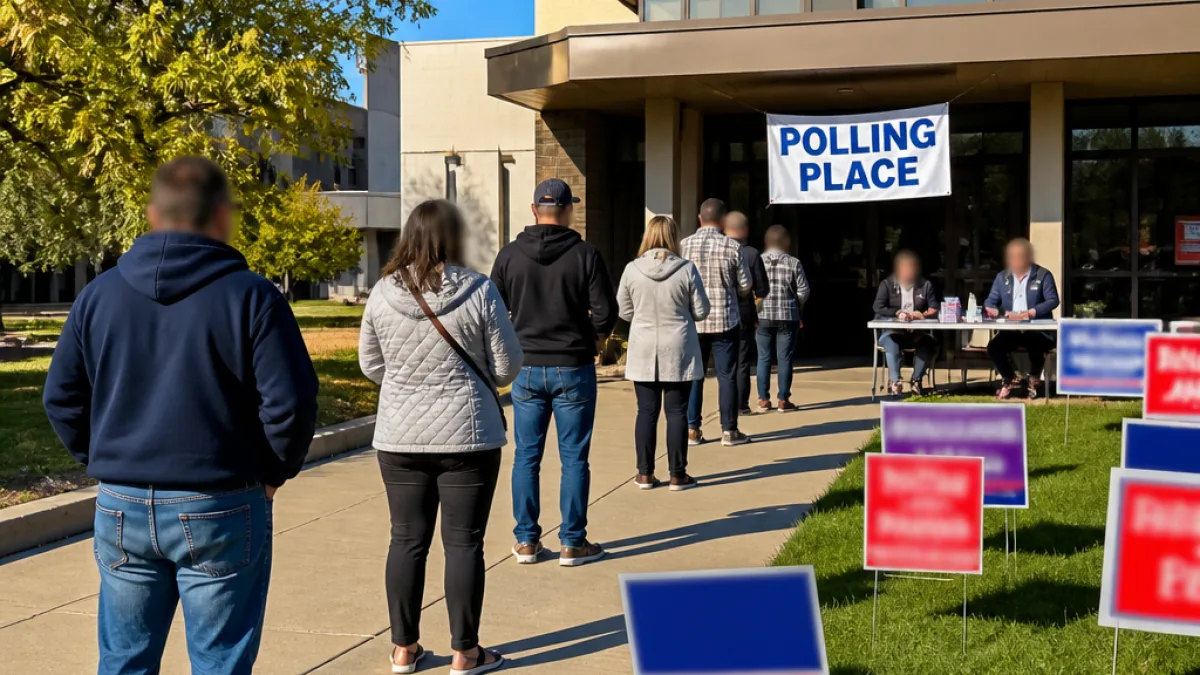
Wisconsin voters will decide three constitutional amendments on Nov. 3 that touch on the governor’s veto authority, the treatment of places of worship in state law and how public-sector discrimination claims are handled. The questions were placed on the ballot after the Republican-controlled Legislature approved each amendment in two consecutive sessions, mostly along party lines.
What’s on the ballot
The measures are presented as separate constitutional amendments. In broad terms they address:
- Partial veto authority of the governor — whether the governor may use the partial-veto power in a way that creates or increases any tax or fee.
- Protections for places of worship — an amendment relating to the role and protection of religious institutions under state law.
- Public-sector discrimination — provisions affecting how discrimination claims may apply to public employees or public employers.
Election materials and campaigns provide more detailed language for each amendment. Voters should read the exact ballot wording before casting a vote.
The partial-veto fight: Amendment No. 1
The most contentious of the three measures is Amendment No. 1, which would prohibit the governor from using the partial veto to create or increase any tax or fee. The partial veto allows the governor to strike words, phrases or numbers from legislation before signing it into law.
Supporters of the amendment say the measure would prevent governors from altering the fiscal effect of laws in ways the Legislature did not intend. Opponents say it would restrict a long-standing executive tool that governors of both parties have used and could hinder the governor’s ability to curb spending items the Legislature included.
The dispute intensified after a 2023 budget maneuver by Gov. Tony Evers. In that budget, Evers removed characters from a provision concerning a per-pupil revenue increase for school districts. By striking a two-digit mark and a hyphen, the language was altered in a way that extended the revenue increase on paper for many years. Legal challenges followed, and the Wisconsin Supreme Court ultimately upheld Evers’ use of the partial veto in April 2025, concluding the move was within the governor’s constitutional authority because the Legislature lacked the votes to override the veto.
“Vote no,” Democrats say, arguing the amendment would weaken the governor’s ability to step in when the state struggles to fund services like public schools.
Republicans, who have pushed the amendment through the Legislature, argue the governor’s action went beyond the intended use of the partial veto and created a law that looked substantially different from the one approved by both chambers.
How the parties line up
Party leaders have made clear recommendations, but several lawmakers have broken with their party, and voters will encounter competing messages in campaign materials.
- Republicans: Largely backing the amendments and urging voters to approve them, arguing they restore legislative intent and safeguard religious liberty and clear rules for public employment.
- Democrats: Urging rejection of at least the partial-veto amendment on the grounds it would limit executive checks on the Legislature and could harm public services. They express concerns about other measures that they say could roll back protections for workers or entangle government with religious institutions.
What voters should know
Because these are constitutional amendments, a majority vote is required for adoption. The Legislature placed the questions on the ballot after the required two-session approval process. If passed, the changes would become part of the Wisconsin Constitution and could only be undone by another constitutional amendment.
Voters should consult official voter guides and the exact ballot wording to understand the legal text and its implications. County clerks and the Wisconsin Elections Commission also provide resources explaining how to vote on constitutional amendments.
| Amendment | Main effect (summary) |
|---|---|
| Partial veto | Prohibits governor from using partial veto to create or increase any tax or fee |
| Places of worship | Addresses legal protections and treatment of religious institutions (ballot language provides specifics) |
| Public-sector discrimination | Alters how discrimination rules apply in the public sector (see ballot wording for details) |
Broader implications
Beyond the immediate legal effects, the amendments have become proxy battles over institutional power in Wisconsin. The fight over the partial veto highlights tensions between the executive and legislative branches and raises questions about how far governors may go in reshaping legislation. Measures touching religious protections and public-sector discrimination will influence how courts and state agencies interpret conflicts between religious freedom, anti-discrimination norms and employment rules.
Voters across the state will decide these constitutional questions on Nov. 3, alongside other races and ballot measures. Those who want to research the measures in advance should review the official ballot text and nonpartisan analyses offered by state and local election officials.
Peter Vandenberg, State Correspondent