
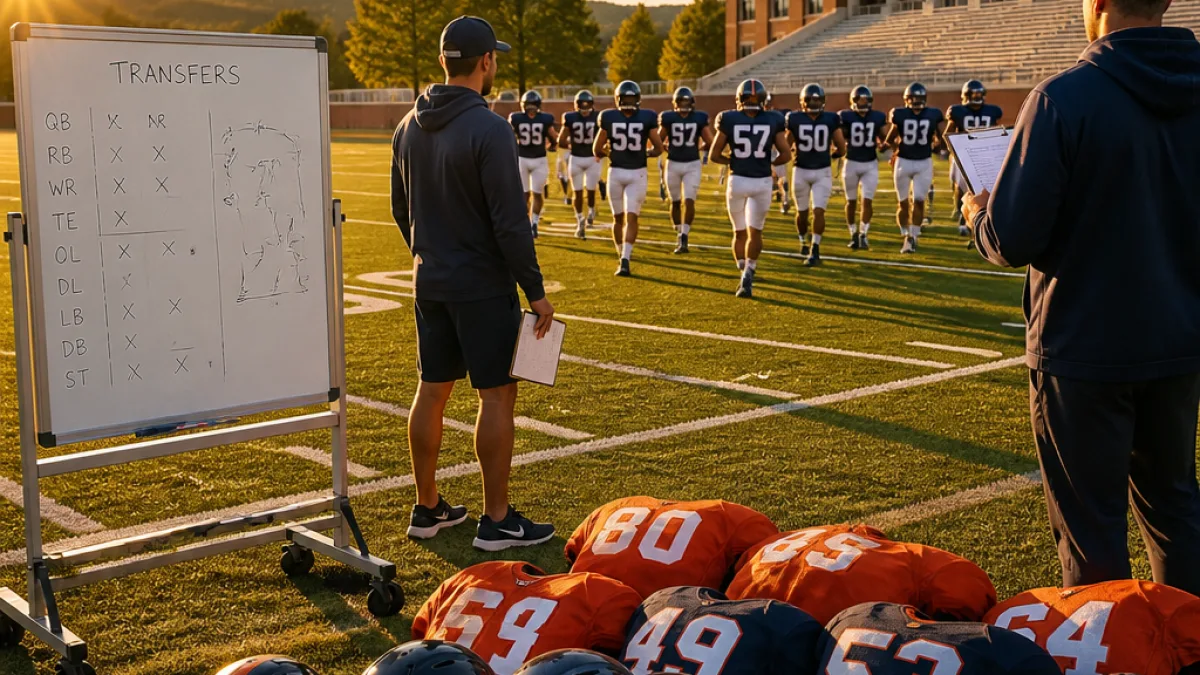
University of Virginia coach Tony Elliott brought in a sizeable group of experienced players last winter — a 31-man transfer class intended to accelerate the Cavaliers’ return to contention — and those newcomers are now staking claims in training camp as the team enters its second full week of practices.
Early returns: leadership at quarterback, physicality in the secondary
Two of Virginia’s highest-profile additions, quarterback Beau Pribula (Missouri) and safety Brandyn Hillman (Michigan), have generated encouraging reports from coaches and teammates. Both play positions that frequently shape a team’s identity, and each has drawn praise not only for on-field skills but also for intangible qualities.
Pribula, who won the starting role over fellow transfer Eli Holstein (Pittsburgh) during spring practice, has been commended for his arm strength, mobility and leadership as he takes charge of the offense in what will be his third and final college stop. Hillman, a reserve on Michigan’s 2024 national title team, has been notable for his speed and physical play in the defensive backfield.
"I mean, he's one of those safeties that those receivers and tight ends are like, 'All right, where is he?' They want to know because he's going to come down and he's going to make sure he puts his face mask on you, square and legally."
The comment above came from Virginia defensive coordinator John Rudzinski, reflecting the coaching staff’s impression of Hillman’s presence and impact in drills.
Pleasant surprises and emerging position battles
Beyond the headline names, several transfers have earned specific praise from coaches for how quickly they have adapted to the program and positioned themselves to contribute.
- Jekail Middlebrook (Middle Tennessee) has shown versatility and shiftiness, appearing to hold an early edge in the competition for the No. 1 running back job.
- Jacquon Gibson (UMass) has integrated into the slot receiver role and impressed in early work.
- Nnanna Anyanwu (UTSA) has stood out at defensive end.
- Veteran defensive tackle Darrion Henry-Young and cornerback Omillio Agard (Wisconsin) have both drawn positive attention from staff.
Those performances are notable because the Cavaliers’ roster will not allow all 31 transfers to be primary contributors. With only 11 players on the field at a time, rotations and situational usage will determine how many newcomers see significant snaps. Still, Virginia’s chance to meet preseason expectations hinges on production from a meaningful portion of the transfer class.
What to watch as camp progresses
Training camp will continue to sort the roster through full practices, position meetings and preseason evaluations. Key items for observers:
| Position group | Transfer(s) to monitor |
|---|---|
| Quarterback | Beau Pribula, Eli Holstein |
| Running back | Jekail Middlebrook, Peyton Lewis |
| Secondary | Brandyn Hillman, Omillio Agard |
| Defensive line | Nnanna Anyanwu, Darrion Henry-Young |
Coaches will be looking for consistency in practice performance, situational awareness in scrimmage work and the ability to execute in team periods — all factors that will determine depth charts and early-season rotations.
Balancing expectations with roster reality
Virginia’s staff has been deliberate in recruiting experienced transfers to speed the team’s development, but integrating a large influx of players presents logistical challenges in playing time, scheme fit and chemistry. Returning players remain important — many position battles involve transfers competing against established Cavaliers rather than merely against each other.
How the staff allocates snaps will affect game planning and special teams, areas where many transfers can earn roles even if they are not immediate starters. Fans should expect gradual clarity as preseason scrimmages and the first game approach.
For now, the early signs are promising in key areas. If the mix of veteran transfers can translate individual flashes into consistent group performance, Virginia will be better positioned to meet the season goals set by the program. The coming weeks of camp and the early nonconference slate will offer a clearer read on how many of those 31 newcomers will play pivotal roles.

















