DOTHAN, Ala. — Republicans will select a nominee Tuesday to take on U.S. Rep. Shomari Figures in Alabama’s 2nd Congressional District after a GOP-led redrawing of the district following a recent U.S. Supreme Court ruling. Figures, a Democrat seeking a second term, is running unopposed in the primary and faces a GOP field seeking to reclaim territory reshaped this year.
Redraw follows high court decision
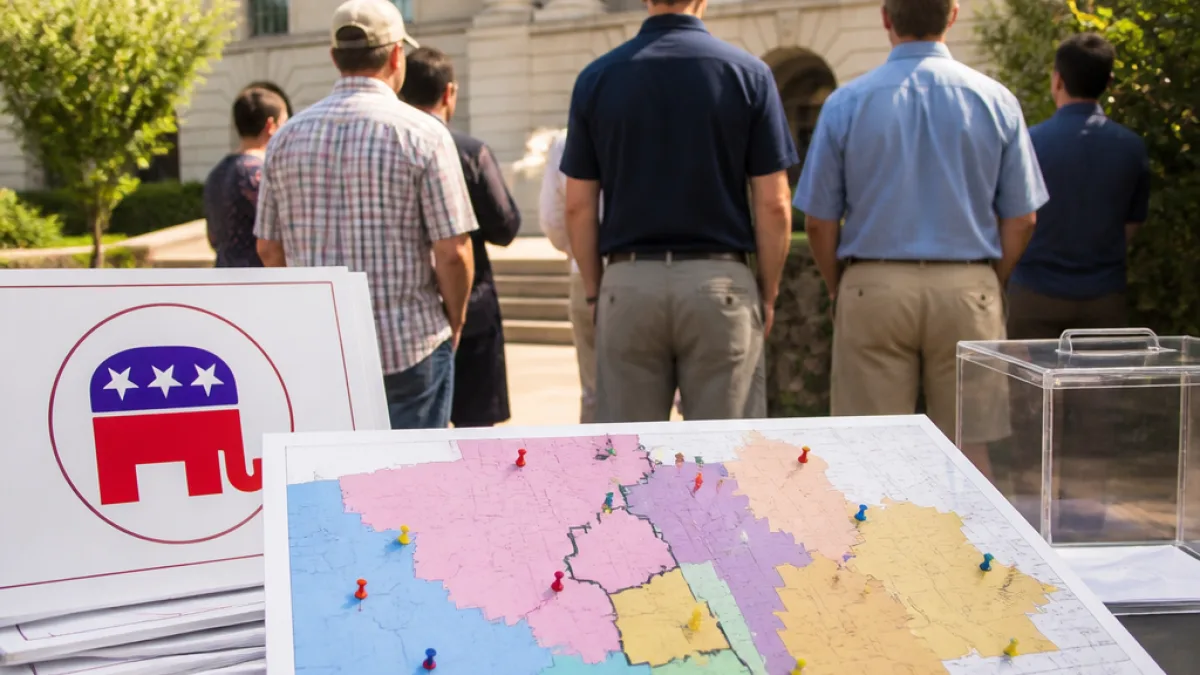
The contest in the southeast Alabama district is one of several closely watched races across the South where state Republican lawmakers moved quickly to reconfigure districts after the Supreme Court last spring issued a decision that critics said significantly weakened the Voting Rights Act. Lawmakers in Alabama sought to implement a new map that they say reflects the court’s guidance.
That move comes after a federal court in recent years ordered a remedial map that produced a second district where Black voters were a majority or near-majority, a change that resulted in Figures’ historic 2024 victory. Figures’ 2024 win gave Alabama, for the first time, two Black members of Congress, both Democrats, in the state’s seven-member delegation.
GOP emphasis on flipping seat
State Republicans have made the 2nd District an early priority. Six Republican candidates competed in the primary for the chance to challenge Figures, and the race has drawn high-profile attention, including a primary endorsement from former President Donald Trump for state Rep. Rhett Marques.
"We need to win this seat back for the state and for the country. We need to turn it red again,"
The quote from Marques underscores the political stakes: control of the U.S. House is narrowly held, and both parties have targeted districts they view as pivotal to determining the balance of power in November’s midterm elections.
Local context and recent history
Figures’ 2024 election followed prolonged litigation under the Voting Rights Act that challenged the Legislature’s previous district lines as intentionally diluting Black voting strength. The federal court concluded that Alabama should have a second district where Black residents form a majority or near-majority — a finding that altered the state’s political map and produced the rare outcome of two Black members in Alabama’s congressional delegation.
In April, the Supreme Court struck down a majority-Black district in Louisiana as an unconstitutional gerrymander that relied too heavily on race; that decision has been cited by Republican legislators in multiple Southern states as justification for remapping efforts.
Other Alabama primaries affected
Primary voters in Alabama are also selecting nominees in three other districts affected by the redrawing. Democratic Rep. Terri Sewell, who represents the 7th Congressional District and is Alabama’s other Black representative, is unopposed and is widely expected to retain her seat in the fall.
- Shomari Figures: Democrat, incumbent in the 2nd District, unopposed in the primary.
- Rhett Marques: Republican state representative, Trump-endorsed candidate in the GOP primary.
- Terri Sewell: Democrat, incumbent in the 7th District, unopposed in the primary.
The Republican nominee emerging Tuesday will face Figures in the general election, and both parties have placed the district on their lists of races to watch as they prepare for a midterm cycle in which control of the House could hinge on a handful of competitive districts.
What to watch next
With primaries concluding, the general election campaign in the 2nd District is expected to intensify. Observers will watch whether the GOP nominee can consolidate support after a crowded primary and whether Figures can mobilize the coalition that delivered his 2024 victory amid a newly drawn map designed to favor Republicans.
| Item | Detail |
|---|---|
| Black share of Alabama population | 27% |
| Historic outcome in 2024 | Alabama elected two Black representatives for the first time in state history |
As the fall campaign unfolds, the 2nd District will be a test of how recent legal rulings, legislative redistricting and voter mobilization intersect in a part of the state that has become a national flashpoint over the future of congressional control.