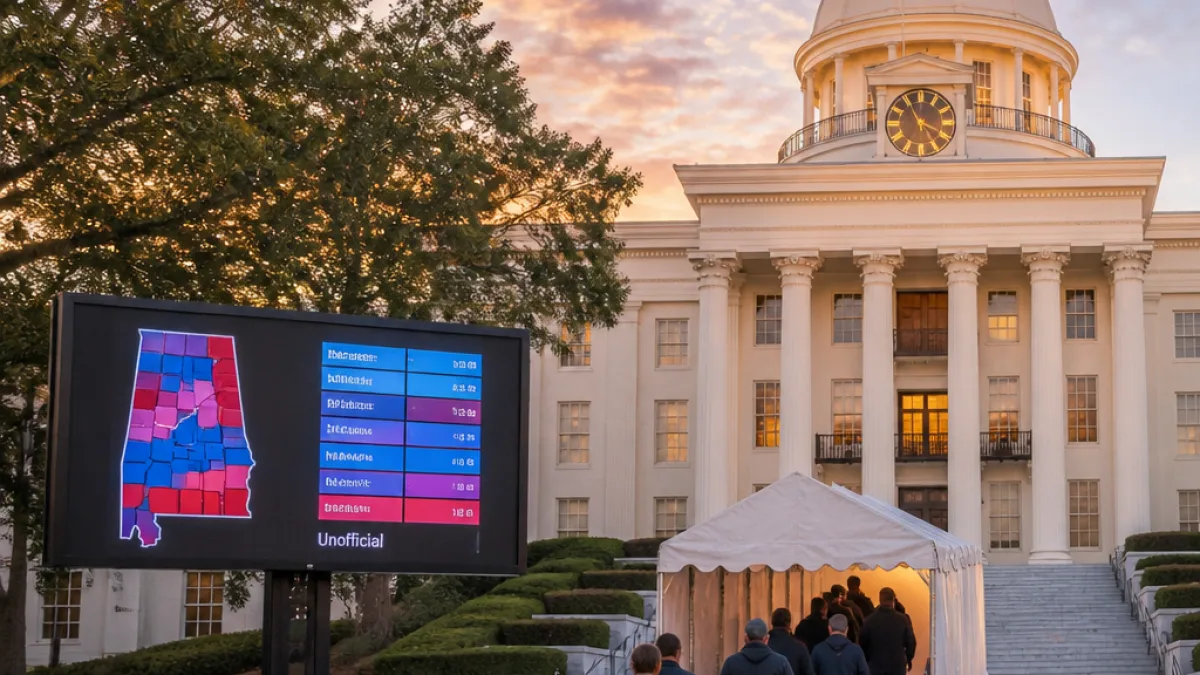
Alabama voters returned to polls Aug. 11 for special primary contests in multiple U.S. House districts, and the unofficial returns showed decisive wins for several Republican candidates and one clear Democratic nominee in the only district with a contested Democratic field. Winners from the special primaries will appear on the November general election ballot, with no runoff scheduled before that contest.
Who won and by how much
Incomplete, unofficial tallies released overnight showed strong margins for leading candidates in the four districts impacted by the special election. The most closely watched contests covered much of the state's populous southern and central regions, including portions of Mobile, Dothan, Montgomery, Tuscaloosa and Birmingham.
| District | Party | Top Finishers | Vote Share (approx.) |
|---|---|---|---|
| 1 | Republican | Jerry Carl; Austin Sidwell; John Mills | Carl ~74.7%; Sidwell ~17.6%; Mills ~5.8% |
| 2 | Republican | R. Marques; H. Harris; D. Matthews | Marques ~50.0%; Harris ~21.6%; Matthews ~17.4% |
| 6 | Both | Gary Palmer (R); Case Dixon (R); Maurice Mercer (D) | Palmer ~86.6% (R); Dixon ~13.4% (R); Mercer ~64.2% (D) |
| 7 | Republican | G. Palmer; C. Dixon | G. Palmer ~87.0%; C. Dixon ~13.0% |
District highlights and context
District 1, which includes parts of the Mobile area, featured a four-way Republican contest. Jerry Carl, who previously served in local government, led the field with roughly three-quarters of the reported vote. Austin Sidwell and John Mills trailed with single-digit and mid-teen shares, respectively.
In District 6 — the only district on the Aug. 11 ballot with competitive candidates from both parties — incumbent Republican Gary Palmer captured an overwhelming share of the GOP vote against challenger Case Dixon. On the Democratic side, Maurice Mercer, a long-serving former Pelham City Council member and the first African American to hold that seat, emerged as the leading vote-getter among four Democrats.
Districts 2 and 7 also resolved contested Republican primaries. In District 2, R. Marques led with about half of the vote, with H. Harris and D. Matthews following. In District 7, GOP voters strongly backed G. Palmer over C. Dixon.
What comes next
- Winners from these special primaries will appear on the November general election ballot.
- Because state election officials did not schedule runoffs for these seats, there will be no additional primary-round voting before the general election.
- Campaigns now shift to the general election calendar, where nominees will face one another in November.
Voter turnout and counting
The posted results were incomplete and unofficial at the time they were released. Vote tallies reflected reporting from county election offices and were compiled by news outlets from Associated Press data and decision desks. Election-night figures can change as remaining precincts and absentee ballots are counted and certified.
Election watchers and local party officials are already preparing for the November contests. For districts where the primary winner captured a commanding share of the vote, campaigns will likely focus on fundraising, voter outreach and general-election messaging ahead of the fall.
Local impact
These districts span a broad geographic area of Alabama and contain several of the state’s largest cities. The candidates advancing will vie for constituencies that include urban, suburban and rural voters with varied priorities — from coastal concerns in Mobile to agricultural issues in the Wiregrass and economic development and infrastructure needs in central Alabama.
With the field set for November, local voters can expect heightened campaigning in the months ahead as nominees seek to build support across diverse communities within their districts.