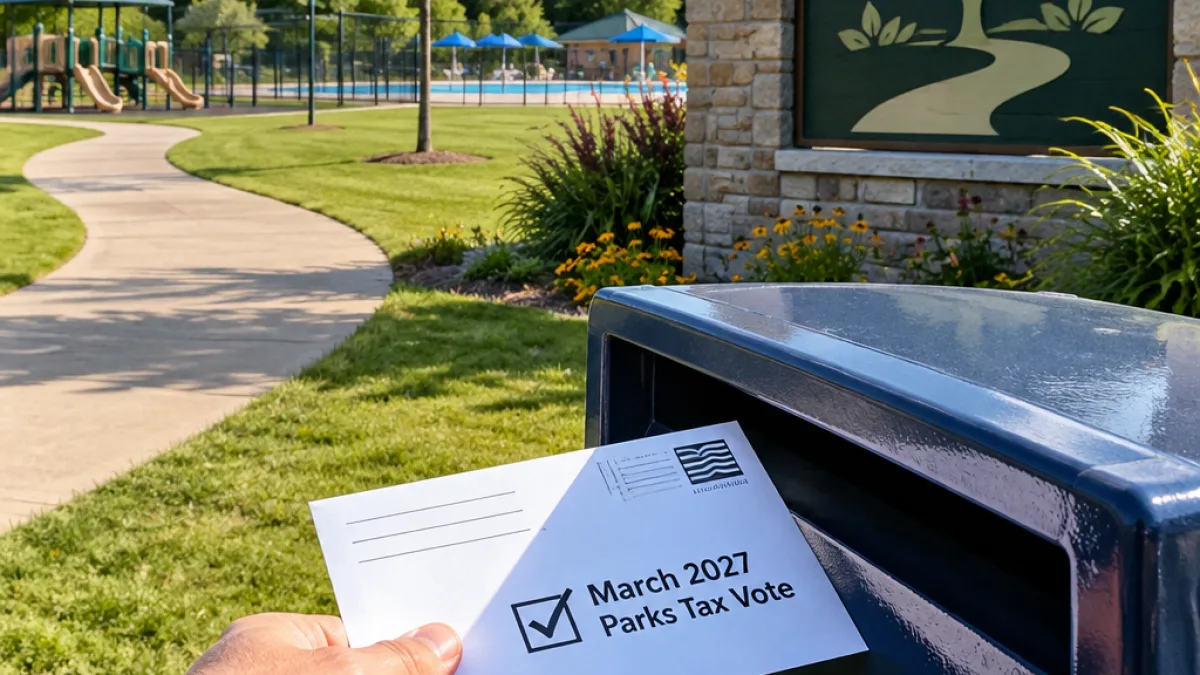
OVERLAND PARK, Kan. — Overland Park voters will decide next spring whether to create a dedicated funding source for the city’s parks and recreation system, after the City Council approved a special mail-in ballot election for March 2, 2027.
The proposed tax would add one-fourth of a cent to applicable sales purchases and could generate as much as $176 million over 10 years, according to the information presented about the measure. If approved, the tax would begin Oct. 1, 2027, and remain in effect through Sept. 30, 2037.
A citywide vote on long-term park funding
The council’s vote to send the question to residents passed 9-3. Council members Andrew Payne, Chris Newlin and Josh Beck voted against holding the election. The March vote will give residents the decision on whether parks and recreation projects should receive a dedicated stream of sales-tax revenue rather than continue relying on general city funds for improvements.
The proposal follows Playbook OP, the city’s long-range parks and recreation plan approved by the council earlier this year. That plan recommended a dedicated tax as a way to support ongoing capital needs throughout the system. The ballot question would allow the money to be used by itself or alongside other city funds for parks and recreation infrastructure, including existing facilities and new projects.
Four areas identified for spending
City officials have grouped the potential work into four broad categories. The plan covers both visible improvements, such as playground and pool upgrades, and less noticeable maintenance and land-management needs that affect how parks function over time.
- Parks: Improvements to playgrounds, sports courts, sidewalks and restrooms, along with projects identified at Linwood Park, Osage Park, Brookridge Park and the Switzer Park skate park.
- Trails: Converting heavily used trails to concrete to reduce maintenance costs, adding wayfinding signs and constructing additional trails.
- Regional pools: Modernizing the Tomahawk Ridge Aquatic Center and Young’s Pool to extend the useful life of the city’s aging aquatic facilities.
- Greenspaces: Controlling invasive species, planting native prairie and medians, caring for trees on public property and acquiring land for future parks.
What the measure would mean
| Proposal detail | Information presented |
|---|---|
| Tax rate | One-fourth cent |
| Potential revenue | Up to $176 million over 10 years |
| Election | March 2, 2027, by mail-in ballot |
| Proposed term | Oct. 1, 2027, through Sept. 30, 2037 |
For residents, the central question will be whether the benefits of a dedicated parks program justify creating a new sales-tax commitment. The measure would not provide a single construction project or a short-term repair fund. Instead, it would establish a decade-long source for a range of needs, from recreation facilities and trails to environmental care and future park land.
The city’s stated project categories also give voters a framework for evaluating how the proposed revenue could affect different parts of Overland Park. Pool users would see the issue through the condition of aquatic centers, while trail users could focus on surfaces, signs and new connections. Neighborhood residents may weigh playgrounds, sports courts, restrooms and local park renovations, while broader city residents may consider greenspace preservation and long-term maintenance.
The council’s action sets the election process in motion, but the funding plan will ultimately depend on voters. If the measure passes, the tax would not start until October 2027, and the revenue would be available for the listed parks and recreation purposes during the 10-year period. If it fails, the city would not receive the proposed dedicated tax stream under this ballot question, leaving the funding approach described in the proposal unresolved.