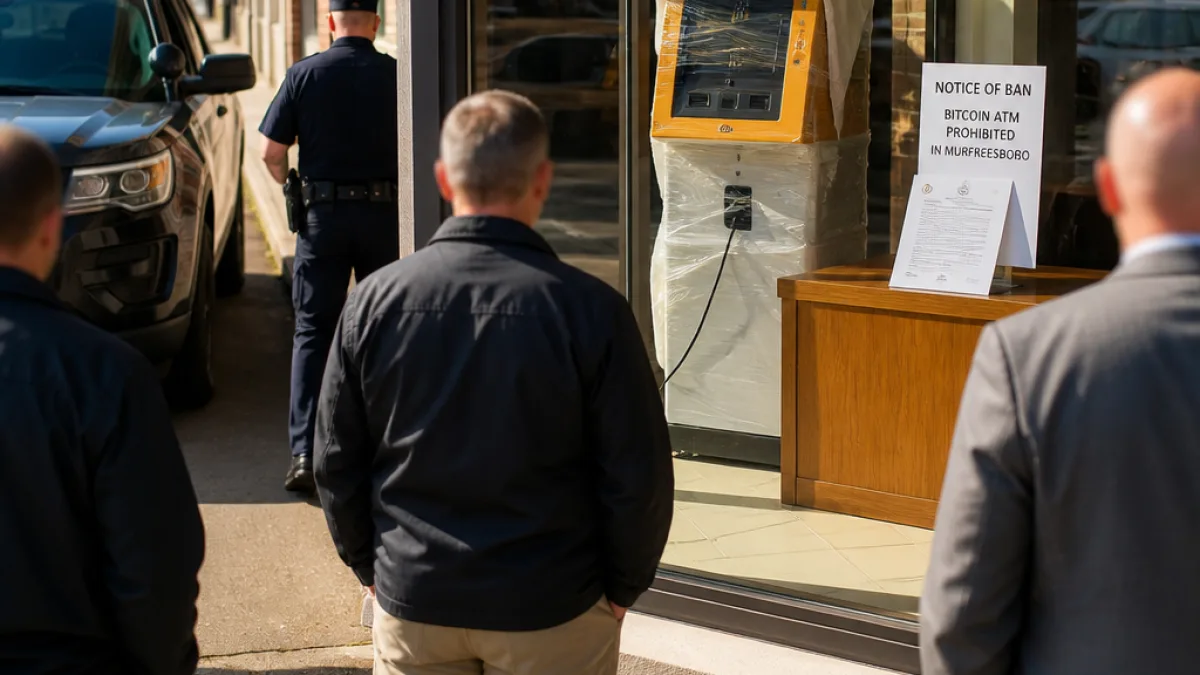
Murfreesboro law enforcement says businesses in the city are following Tennessee’s ban on Bitcoin ATMs that took effect July 1, after detectives inspected 30 locations previously hosting cryptocurrency kiosks and found the devices either disconnected or in the process of being removed.
Local inspections aimed at cutting scams
Police fraud investigators delivered letters from Police Chief Michael Bowen and copies of the new state law to business owners during recent visits. Officers reported that vendors have taken down machines or deactivated them while arrangements are made for full removal.
The local enforcement activity follows a string of incidents that prompted the legislation: Murfreesboro police said victims lost nearly $4.1 million over six months to scams involving cryptocurrency kiosks, often targeting older residents.
Detectives see an immediate drop but warn of shifting tactics
Detective Sgt. Tommy Massey told investigators there has been a notable decrease in reports connected to cryptocurrency kiosks since the ban went into effect. Still, police cautioned that scammers adapt quickly and may change techniques to try to separate residents from money.
Authorities asked the public to remain vigilant for other fraud methods and to report suspicious activity promptly.
Anyone who believes they have been targeted by a scam can contact Murfreesboro Police Criminal Investigations at 615-893-2717.
That contact point remains the primary route for local victims to report incidents and for detectives to gather intelligence that could lead to broader investigations or prosecutions.
What the ban covers and why it was enacted
Tennessee’s prohibition on cryptocurrency ATMs was approved after state and local officials raised concerns about the kiosks being used to facilitate fraud. Prosecutors and police described situations in which scammers used kiosks to have victims purchase cryptocurrency and transfer funds—transactions that can be difficult to reverse.
The city's compliance checks were a direct follow-up to those concerns, designed both to enforce the new law and to reassure residents that authorities are actively addressing a source of recent financial harm.
- Businesses checked: 30 locations in Murfreesboro
- Amount lost locally: nearly $4.1 million over six months
- Law effective: July 1 (statewide)
| Item | Detail |
|---|---|
| Inspections completed | 30 businesses |
| Reported losses | ~$4.1 million (six months) |
| Ban effective date | July 1 |
Local officials framed the inspections as both enforcement and education. Police provided business owners with formal documentation of the law so managers and staff would understand their legal obligations and the potential risks of leaving kiosks accessible to the public.
Some companies that operated the kiosks have already removed their equipment; others have left machines on-site while arranging pickup. Detectives said the presence of disconnected hardware is not an immediate violation so long as the kiosks are rendered inoperable and owners are cooperating with removal plans.
Advice for residents
Investigators urged residents—especially older adults and caregivers—to be cautious when anyone demands cryptocurrency payments, whether via ATM, kiosk, or online. They advised treating unsolicited requests as potential fraud and contacting police before transferring funds when in doubt.
Officers also encouraged families to discuss common scam tactics with elderly relatives, including pressure to make immediate payments, demands for secrecy, or instructions to use untraceable payment methods such as cryptocurrency.
Authorities said the city’s enforcement action is one piece of a broader effort to curb fraud. Continued cooperation between businesses, vendors and law enforcement is necessary, they added, to prevent scammers from exploiting loopholes or migrating to other venues.
Residents who believe they have been targeted or defrauded should contact Murfreesboro Police Criminal Investigations at 615-893-2717 to report the matter and provide details that may help investigators identify patterns or recover funds where possible.
As the enforcement effort continues, police will monitor whether the reduction in kiosk-related complaints persists and whether scammers shift to new methods that require updated outreach and investigative approaches.